
Last Updated on May 25, 2026
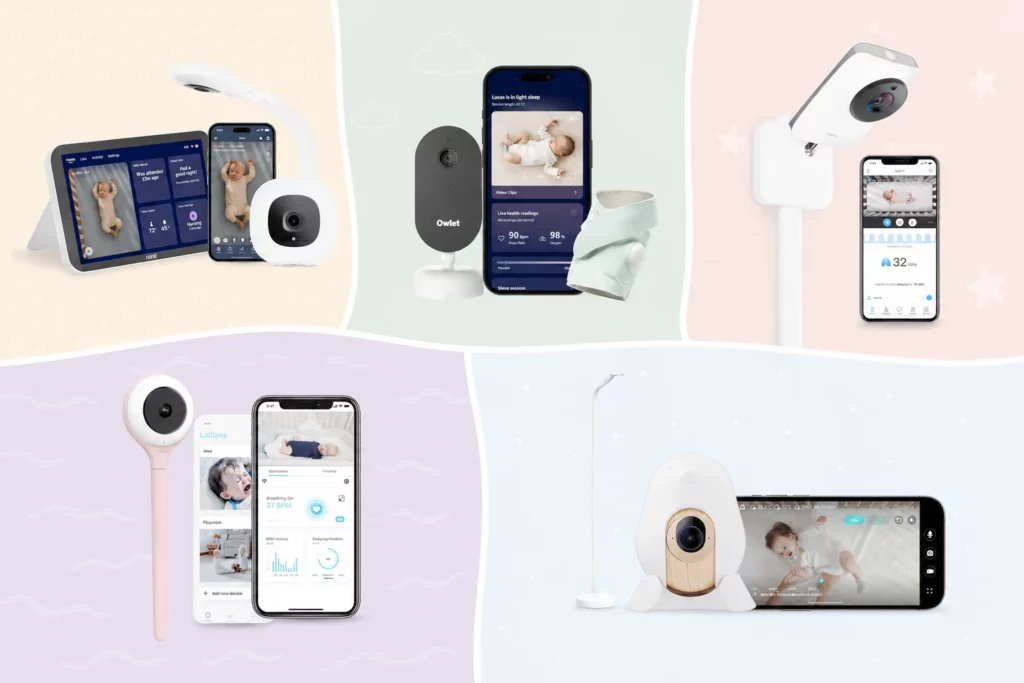
Parents today have access to more baby gear than ever before, and smart baby monitors are among the most talked-about products on the market. Unlike traditional audio-only monitors, smart baby monitors offer live video streaming, sleep tracking, movement detection, breathing monitoring, smartphone notifications, and even AI-powered insights.
But with premium models often costing hundreds of dollars, many parents ask the same question: are smart baby monitors really worth it?
The answer depends on your family’s needs, lifestyle, and expectations. For some parents, smart monitors provide reassurance and convenience that make daily life easier. For others, the extra features may feel unnecessary or even overwhelming.
Smart baby monitors can be worth it for parents who want remote access, sleep tracking, breathing monitoring, and smartphone alerts. While they are more expensive than traditional monitors, many families find the added convenience, monitoring features, and peace of mind valuable during the newborn and toddler stages.
In this article, we’ll explore the pros, cons, features, and important considerations to help you decide whether investing in a smart baby monitor is the right choice for your family.
- What Is a Smart Baby Monitor?
- Benefits of Smart Baby Monitors
- Drawbacks of Smart Baby Monitors
- Are Smart Baby Monitors Safe?
- Who Benefits Most From a Smart Baby Monitor?
- Who May Prefer a Traditional Monitor?
- Key Features to Consider Before Buying
- Popular Smart Baby Monitors Parents Are Choosing in 2026
- How Much Do Smart Baby Monitors Really Cost?
- What to Know About Smart Monitor Subscription Fees
- Are Expensive Smart Monitors Better?
- Final Verdict: Are Smart Baby Monitors Worth It?
What Is a Smart Baby Monitor?
A smart baby monitor is a Wi‑Fi-enabled monitoring device that connects to your smartphone, tablet, or other smart devices. Most models include a camera and app integration, allowing parents to watch their baby remotely in real time.
Many smart monitors go beyond simple video streaming and include advanced features such as:
- HD video and night vision
- Two-way audio communication
- Sleep and activity tracking
- Temperature and humidity monitoring
- Cry detection and sound alerts
- Motion detection
- Breathing or movement monitoring
- AI-powered sleep insights
- Cloud video storage
- Smart home integration
These devices are designed to help parents stay connected to their baby even when they’re not in the same room.
Benefits of Smart Baby Monitors
One of the biggest reasons parents choose smart baby monitors is the reassurance they provide. Being able to check on your baby from another room—or even while away from home—can reduce anxiety and help parents feel more connected.
Many parents especially appreciate:
- Real-time alerts
- Remote viewing access
- Night vision cameras
- Breathing or movement monitoring
For first-time parents, these features can offer an extra layer of confidence during the newborn stage.
Smart baby monitors allow parents to use their phones instead of carrying around a separate parent unit.
This flexibility means you can:
- Check the nursery while cooking or working
- Monitor naps from the backyard
- Share access with grandparents or caregivers
- Receive alerts even when outside the home
Some systems also support multiple cameras, making them useful for families with more than one child.
In addition to smartphone apps, some premium systems now include dedicated touchscreen displays. This gives parents, grandparents, or babysitters a convenient way to monitor the baby without constantly relying on a phone, especially during nighttime check-ins or everyday use.
Many smart monitors include sleep analytics that track:
- Sleep duration
- Wake windows
- Movement patterns
- Noise levels
- Room conditions
Some parents find these insights helpful for improving sleep routines and understanding their baby’s habits.
While the data should never replace medical advice, it can help identify patterns over time.
Compared to older audio monitors, modern smart monitors often provide crystal-clear HD video and enhanced sound quality.
Features like zoom, pan, and night vision allow parents to see their baby more clearly, even in dark rooms.
This can be especially useful for:
- Monitoring newborn breathing movements
- Checking if a toddler is asleep
- Watching multiple children
- Monitoring a sick child during the night
Instead of constantly checking the monitor, parents can receive notifications when:
- The baby cries
- Movement is detected
- Noise levels increase
- The room becomes too hot or too cold
- Breathing patterns change
This hands-free convenience is one of the major advantages of smart systems.
Best for Health & Wellness Monitoring
Owlet Dream Duo
Owlet stands out for parents who want additional wellness tracking alongside traditional video monitoring. Its FDA-cleared Dream Sock monitors pulse rate and oxygen levels, while the 2K camera provides clear live streaming and sleep-tracking features.
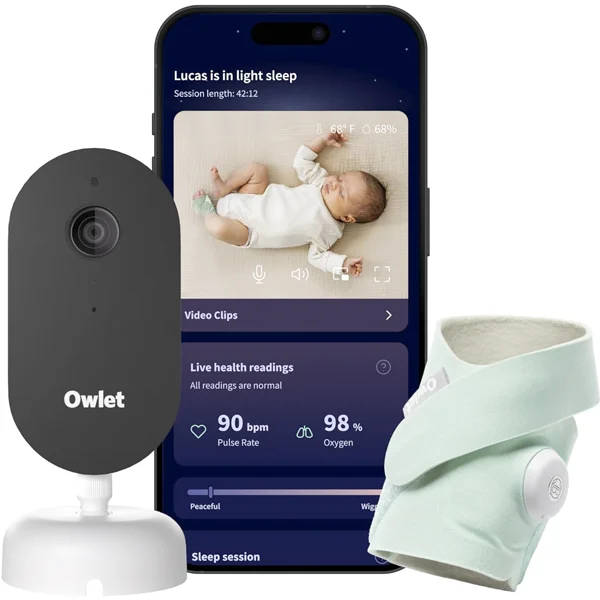
- Pulse rate & oxygen monitoring
- 2K HD video quality
- Real-time wellness alerts
- Sleep trend reports
Drawbacks of Smart Baby Monitors
While smart baby monitors offer many benefits, they also come with some disadvantages that parents should consider.
Smart monitors are significantly more expensive than traditional audio or basic video monitors.
Depending on the brand and features, prices can range from around $100 to over $400.
Additional costs may include:
- Subscription plans
- Cloud storage fees
- Extra cameras
- Accessories and mounts
Families on a tight budget may find that a basic monitor meets their needs just as well.
Many smart monitors rely heavily on a stable internet connection. If your Wi‑Fi goes down, you may temporarily lose access to live streaming or alerts.
This can be frustrating, especially during nighttime monitoring.
Some parents prefer non-Wi‑Fi monitors because they function independently of internet connectivity.
Because smart monitors connect to the internet, there are understandable concerns about privacy and hacking.
While reputable brands use encryption and security protections, no internet-connected device is completely risk-free.
Parents can improve security by:
- Using strong passwords
- Enabling two-factor authentication
- Keeping apps updated
- Using secure home Wi‑Fi networks
Choosing a trusted brand with strong security standards is essential.
Some smart monitors provide constant notifications and detailed analytics that may increase parental anxiety rather than reduce it.
For certain parents, frequent alerts about movement or sleep disruptions can lead to unnecessary worry.
It’s important to remember that babies naturally move, wake, and make noise during sleep.
A smart monitor should support peace of mind—not create more stress.
Since many smart monitors rely on apps and smartphones, technical issues can occasionally occur.
Potential frustrations include:
- App crashes
- Notification delays
- Phone battery drain
- Software bugs
- Connectivity interruptions
While many systems are reliable, no technology is perfect.
Are Smart Baby Monitors Safe?
Smart baby monitors are generally safe when used properly, but they should never replace safe sleep practices or medical supervision.
Parents should always follow guidelines such as:
- Placing babies on their backs to sleep
- Using a firm mattress
- Keeping the crib free from loose blankets and toys
- Following pediatric sleep recommendations
It’s also important to avoid relying too heavily on breathing monitors or movement tracking for medical reassurance unless recommended by a healthcare professional.
Even FDA-cleared wellness monitors should never replace safe sleep practices, professional medical care, or parental supervision.
Best for Sleep Tracking & Daily Insights
Nanit Smart Baby Monitor System
Nanit is one of the most advanced smart baby monitors for parents who want detailed sleep analytics, breathing monitoring, and long-term sleep insights. The combination of HD video, app features, and an optional dedicated display makes it especially popular with newborn families.
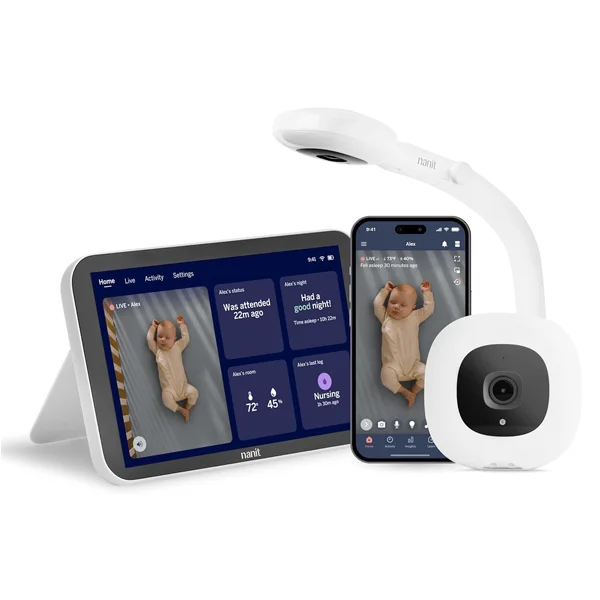
- HD video & night vision
- Dedicated touchscreen display available
- Breathing monitoring options
- Advanced sleep tracking
Who Benefits Most From a Smart Baby Monitor?
A smart baby monitor may be especially worthwhile for:
- First-Time Parents: New parents often appreciate the added reassurance and convenience of remote monitoring.
- Parents Returning to Work: The ability to check on a baby remotely during the day can provide comfort for working parents.
- Families in Larger Homes: Smart monitors make it easier to monitor children across multiple floors or rooms.
- Parents of Premature or Medically Fragile Babies: Some families value advanced movement or breathing tracking, although these features should not replace professional medical care.
- Tech-Savvy Families: Parents who already use smart home devices may enjoy integrating baby monitoring into their connected home setup.
Who May Prefer a Traditional Monitor?
A standard audio or non-Wi‑Fi video monitor may be a better fit for:
- Parents Who Prefer Simplicity: Traditional monitors are often easier to use and involve fewer settings or notifications.
- Families With Limited Internet Reliability: Non-Wi-Fi monitors continue working even during internet outages.
- Budget-Conscious Households: Basic monitors are usually much more affordable while still covering essential needs.
- Parents Concerned About Privacy: Some families prefer devices that do not connect to the internet.
- Families Who Do Not Need Remote Access: Parents who only monitor their baby from nearby rooms may not need advanced smart features
Best for Contact-Free Breathing Monitoring
Miku Pro
Miku Pro is known for its contact-free breathing monitoring technology that works without wearable accessories. Parents who prefer a minimalist setup often appreciate its sleek design and ability to monitor breathing directly through the camera system, although many advanced smart features now require a subscription membership.
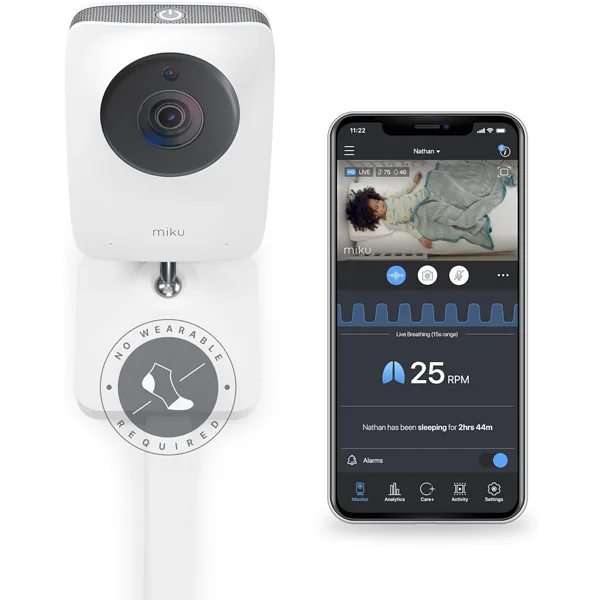
- Contact-free breathing monitoring
- No wearable sensor required
- HD video & smart alerts
- Modern minimalist design
Key Features to Consider Before Buying
If you’re considering a smart baby monitor, here are some important features to evaluate:
Choose a monitor with clear HD video, dependable night vision, and smooth live streaming so you can easily check on your baby during both daytime naps and nighttime sleep.
Some smart baby monitors rely entirely on Wi-Fi, while others also include a dedicated parent display alongside smartphone app access. This setup can be especially convenient for parents who want quick nursery access without constantly unlocking their phones.
However, many smart monitors still depend on a stable Wi-Fi connection, even when using a separate display. If you prefer a monitor that works completely without internet access, a traditional non-Wi-Fi video monitor may be a better fit.
Because smart monitors connect to the internet, strong security matters. Look for encrypted connections, two-factor authentication, regular software updates, and brands with a solid privacy reputation.
A well-designed app can make daily use much easier. Look for intuitive controls, fast loading times, reliable notifications, and easy access to recordings or sleep information.
Too many alerts can quickly become overwhelming. Customizable notification settings allow parents to choose which alerts matter most and reduce unnecessary interruptions throughout the day.
Some smart monitors provide detailed sleep analytics, wake windows, and movement tracking. Consider whether these insights would genuinely support your routine or simply add extra stress.
Many smart monitors charge monthly or yearly fees for premium features like cloud storage, sleep reports, or video history, so it’s important to factor long-term costs into your budget.
If you plan to grow your family, consider a system that supports multiple cameras and allows you to monitor more than one child through the same app or device.
Popular Smart Baby Monitors Parents Are Choosing in 2026
The smart baby monitor market has grown rapidly in recent years, with brands focusing on everything from sleep tracking to breathing monitoring and AI-powered safety alerts. While some monitors prioritize advanced analytics, others focus on simplicity and affordability.
Here are some of the most talked-about smart baby monitors in 2026:
| Monitor | Approximate Price | Standout Feature | Subscription Required? | Typical Subscription Cost |
|---|---|---|---|---|
| Nanit Smart Baby Monitor System | Around $399 | Combines smartphone access with a dedicated touchscreen display, sleep tracking, and breathing monitoring | No, optional Insights membership | Around $5–15/month depending on plan |
| Owlet Dream Duo | Around $400 | FDA-cleared pulse rate & oxygen monitoring + 2K HD camera | No, premium extras optional | Around $9.99/month |
| Miku Pro | Around $160 | Contact-free breathing monitoring | Subscription recommended for full smart features | Around $9.99/month |
| Cubo AI | Around $300 | AI-powered covered-face and rollover alerts | Optional premium features | Around $4–7/month depending on plan |
| Lollipop | Around $150–180 | Smart crying detection and flexible bendable design | Optional premium features | Around $8–24/month depending on plan |
Each monitor offers a different balance between convenience, health tracking, video quality, and long-term cost. For some families, advanced sleep data is the biggest selling point, while others simply want reliable video monitoring with a few smart features.
How Much Do Smart Baby Monitors Really Cost?
The purchase price is only one part of the overall cost. Many smart baby monitors include optional subscriptions that unlock additional features such as sleep reports, cloud video history, wellness trends, or AI-generated insights.
Over time, these recurring fees can significantly increase the total cost of ownership.
Premium systems like the Nanit Smart Baby Monitor System often include additional hardware such as a dedicated touchscreen display, floor stand or wall mount options, breathing monitoring accessories, and advanced sleep tracking tools. These extras can improve convenience, but they also increase the total long-term cost.
Here’s a general look at what parents may spend over approximately two years of use:
| Monitor Type | Estimated 2-Year Cost |
|---|---|
| Basic audio monitor | Around $35–50 |
| Standard non-Wi-Fi video monitor | Around $80–120 |
| Mid-range smart monitor | Around $150–300 |
| Premium smart monitor with subscriptions | Around $400–650 |
For families who only need basic monitoring, a traditional video monitor may provide excellent value. However, parents who regularly use sleep analytics, breathing tracking, and remote monitoring may feel the additional cost is worthwhile.
The best option often depends on which features you realistically expect to use long-term.
Best Budget-Friendly Smart Monitor
Lollipop Smart Baby Camera
Lollipop offers many smart monitoring features at a more affordable price point compared to premium competitors. Its flexible, bendable design, crying detection, and simple app experience make it especially appealing for parents who want smart features without overspending.
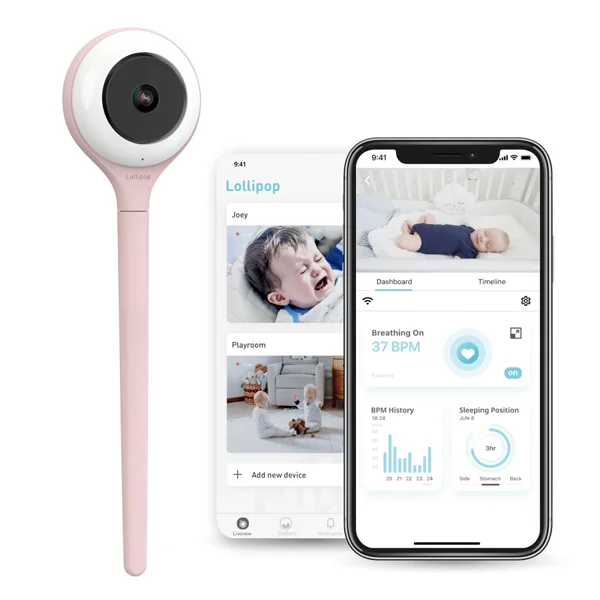
- Flexible bendable mounting design
- Crying & noise detection
- User-friendly mobile app
- Budget-friendly smart features
What to Know About Smart Monitor Subscription Fees
One of the biggest surprises for many parents is that some smart baby monitors require ongoing subscriptions to access their most advanced features.
Depending on the brand, premium memberships may include:
- Extended video history
- Sleep trend reports
- Personalized sleep recommendations
- Wellness tracking
- Cloud event storage
- AI-powered analytics
Some brands include most core features without additional fees, while others place advanced insights and remote access behind monthly or yearly subscriptions.
When buying a smart baby monitor, you should pay close attention to how brands define “smart” monitoring features. Some monitors prominently advertise breathing tracking, sleep analytics, or remote alerts, but certain features may only be fully available through paid memberships.
Here’s a simplified comparison of how different brands approach subscriptions:
| Brand | Included Without Subscription | Premium Features |
|---|---|---|
| Nanit | Live HD video, sound and motion alerts, two-way audio, temperature and humidity tracking, split-screen viewing, and basic activity monitoring | Advanced sleep analytics, milestone tracking, longer video history, personalized sleep insights, and memory features |
| Owlet | Live pulse rate and oxygen readings, 2K HD video streaming, sleep tracking, room temperature monitoring, and real-time notifications | Daily sleep reports, extended video history, sleep position tracking, environmental insights, comparison data, and additional historical trends |
| Miku | Live video, local monitoring, basic alerts and limited sleep/environment data | Remote viewing, breathing alerts, advanced analytics, video history, daily tracking |
| Cubo AI | Cry detection, cough detection, HD night vision, temperature and humidity alerts, playback history, two-way audio, and family sharing | Covered-face and rollover alerts, advanced sleep reports, danger zone alerts, extended cloud storage, and daily highlights |
| Lollipop | Live monitoring, crying and noise alerts, HD night vision, two-way audio, temperature monitoring, and limited event video storage | Breathing detection, sleep analysis, continuous recording, advanced sleep reports, video downloads, and extended cloud storage |
For parents who dislike recurring monthly costs, subscription-free models may feel like a better long-term investment. On the other hand, families who value detailed sleep tracking and advanced insights may appreciate the extra features offered through premium plans.
Are Expensive Smart Monitors Better?
Not necessarily.
Higher-priced models often include:
- Advanced analytics
- Better camera quality
- AI-powered features
- Breathing or movement tracking
- Longer video history
- More polished app experiences
However, many mid-range smart monitors still provide excellent performance for everyday parenting needs.
The best choice depends less on price alone and more on which features your family will realistically use on a daily basis.
It’s also important to consider long-term value. Some monitors reserve certain advanced features for optional memberships, which can increase the overall cost over time.
Best for AI Safety Alerts
Cubo AI Smart Baby Monitor
Cubo AI focuses heavily on AI-powered safety features like covered-face detection, rollover alerts, and danger zone notifications. It’s a strong option for parents who want proactive monitoring and detailed real-time alerts during sleep.
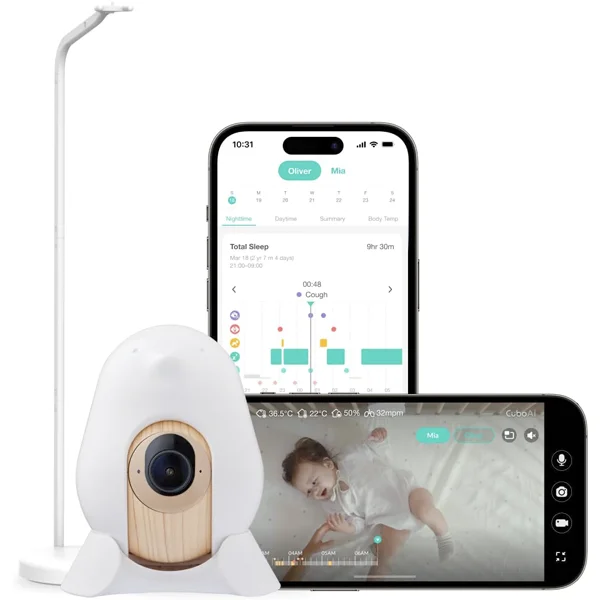
- Covered-face & rollover alerts
- AI-powered safety notifications
- Sleep analytics & playback history
- Clear night vision monitoring
Final Verdict: Are Smart Baby Monitors Worth It?
For many families, smart baby monitors can absolutely be worth it — especially for parents who value remote access, sleep tracking, detailed alerts, and added convenience during the newborn stage.
Features like HD video, smartphone monitoring, breathing or movement tracking, and AI-powered notifications can provide reassurance and make everyday parenting feel more manageable.
However, smart monitors are not essential for every household.
Some parents may prefer the simplicity, lower cost, and reliability of traditional audio or non-Wi-Fi video monitors. Others may find that advanced analytics and constant notifications create more stress rather than peace of mind.
It’s also important to consider long-term costs. Some smart monitors include most features upfront, while others place advanced monitoring tools, video history, or sleep insights behind monthly subscriptions.
Ultimately, the best baby monitor is the one that fits your family’s lifestyle, comfort level, and budget — whether that’s a simple audio monitor or a fully connected smart monitoring system.
*Subscription pricing and included features may change over time depending on the manufacturer and selected plan.
**Smart baby monitors are designed for wellness and convenience purposes and should never replace professional medical care, safe sleep practices, or direct parental supervision.