
Last Updated on May 12, 2026
Safe, practical bassinets and bedside sleepers for better newborn sleep (for both of you)
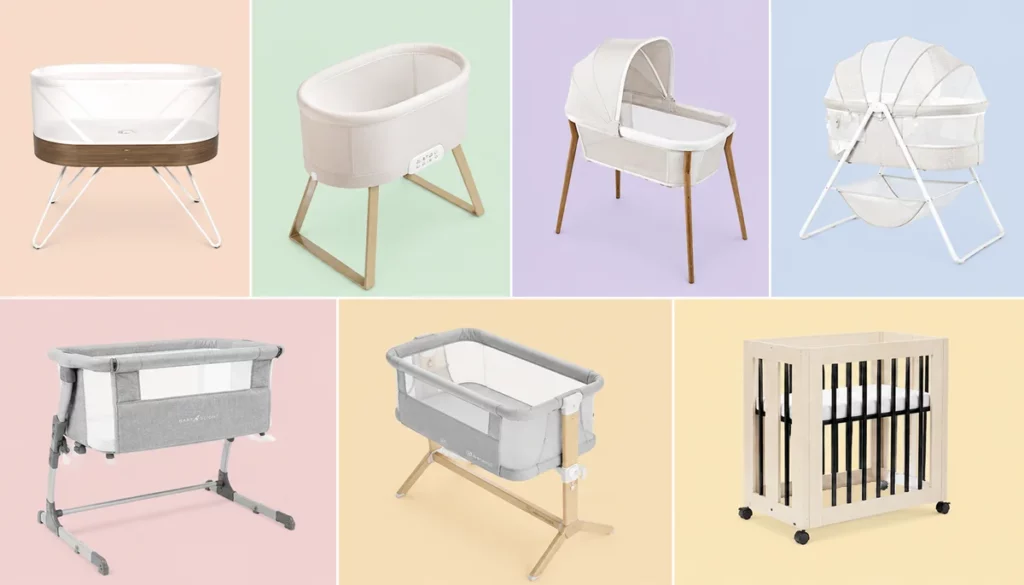
Choosing the best baby bassinet for your newborn doesn’t feel complicated at first—until you actually start looking.
Somewhere between comparing bassinets, bedside sleepers, cribs, and Pack ’n Plays, it turns into late-night Googling, second-guessing, and trying to figure out what you actually need (and what you don’t).
And suddenly, this small decision starts to feel a lot bigger than you expected.
Most parents don’t need more options. They need the right shortlist—something that cuts through the noise and makes it easier to choose a bassinet that actually fits their space, routine, and those exhausting first weeks.
That’s exactly what this guide is here for!
We’ve rounded up the best baby bassinets and bedside sleepers for 2026, focusing on what actually matters in real life: safety, ease of use during nighttime feeds, and how each option fits into your day-to-day routine.
Most Practical Choice
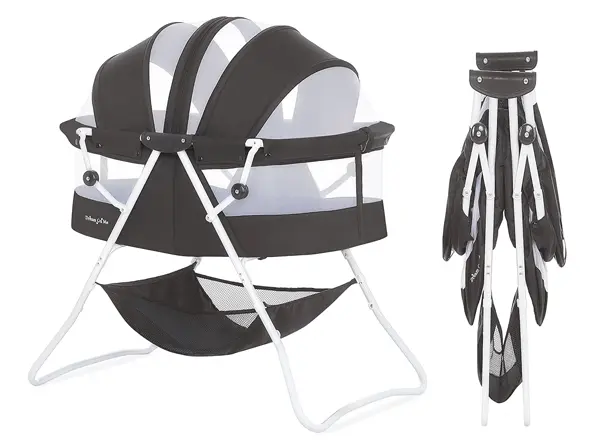
Dream On Me Karley Bassinet
Simple, affordable, and one of the most practical options for everyday use.
If you’re feeling overwhelmed and just want one safe, no-stress option to start with, this is the bassinet I’d choose first for most parents.
Not Sure Which Bassinet to Choose? Start Here
If you just want a quick answer without overthinking it:
- Best overall for most parents → Dream On Me Karley
- Best for hands-off sleep support → SNOO Smart Sleeper
- Best for small spaces → Chicco LullaGo Anywhere
- Best for bedside convenience → Baby Delight Beside Me Dreamer
- Best for airflow & peace of mind → Newton Baby Bassinet
- Best long-term alternative → Babyletto Yuzu Bassinet-To-Crib
- Not Sure Which Bassinet to Choose? Start Here
- Compare the Best Baby Bassinets at a Glance
- Do You Really Need a Bassinet?
- The Best Baby Bassinets for 2026
- How We Choose the Best Bassinets
- How We Evaluate Bassinets
- How to Choose the Right Bassinet (Without Overthinking It)
- How to Use a Bassinet Safely (Quick Checklist)
- How Long Can a Baby Sleep in a Bassinet?
- Frequently Asked Questions About Baby Bassinets
- Final Thoughts: Which Bassinet Should You Actually Choose?
Compare the Best Baby Bassinets at a Glance
| Bassinet | Best For | Type | Portability | Footprint | Price Range | Check Price |
|---|---|---|---|---|---|---|
| SNOO | Hands-off sleep support | Smart bassinet | Moderate | Medium | $1000+ | Check Price |
| Maydolly S700 | Budget smart features | Smart bassinet | Moderate | Medium | $200–$500 | Check Price |
| Chicco LullaGo Anywhere | Travel & portability | Portable bassinet | Excellent | Compact | Under $200 | Check Price |
| Dream On Me Karley | Budget-friendly everyday use | Traditional bassinet | Excellent | Compact | Under $200 | Check Price |
| Baby Delight Beside Me Dreamer | Easier night feeds | Bedside sleeper | Good | Medium | Under $200 | Check Price |
| Newton Baby Bassinet | Breathability & airflow | Bedside bassinet | Moderate | Large | $200–$500 | Check Price |
| Babyletto Yuzu | Long-term use | Convertible crib | Moderate | Large | $500–$1000 | Check Price |
Quick tip: If you’re overwhelmed by options, start by deciding what matters most to you: bedside access, portability, smart soothing, or long-term use. That alone usually narrows the list down fast.
Do You Really Need a Bassinet?
No—you don’t. Your newborn can safely sleep in a crib or a Pack ’n Play from day one. A bassinet isn’t a must-have.
But here’s the part most guides skip: why so many parents still choose one anyway.
In those first weeks, when you’re feeding around the clock and running on very little sleep, convenience starts to matter a lot more than you expect.
A bassinet gives your baby a safe, separate sleep space while keeping them right within arm’s reach.
And that setup isn’t just practical—it’s also what experts recommend. The American Academy of Pediatrics advises room-sharing (but not bed-sharing) for at least the first 6 months. In other words, your baby should sleep in the same room as you—but on a separate, safe sleep surface.
This is where bassinets (and bedside sleepers) really shine. Because they’re compact and easy to move, they make it much easier to actually follow that recommendation in real life—whether that’s next to your bed at night, in the living room for naps, or even when you’re traveling.
Why many parents end up choosing a bassinet:
- Keeps your baby close during nighttime feeds
- Easier on your body (especially postpartum or after a C-section)
- Fits comfortably in smaller bedrooms
- Lightweight and easy to move around the house
Most babies will outgrow a bassinet within a few months, so yes, it’s not a long-term solution. But for that newborn stage? It can make everyday life feel a whole lot more manageable.
If you’re still unsure, I go deeper into this in my full guide on whether you really need a bassinet—but for now, this is the key takeaway:
A bassinet isn’t a necessity—it’s a convenience that can make those first months significantly easier.
The Best Baby Bassinets for 2026
Here are the baby bassinets that consistently stand out for safety, ease of use, and real-life practicality.
Each one solves a slightly different need—so as you go through, think less about features on paper and more about what your nights will actually look like.
1. Best Smart Bassinet
Happiest Baby SNOO Smart Sleeper Bassinet
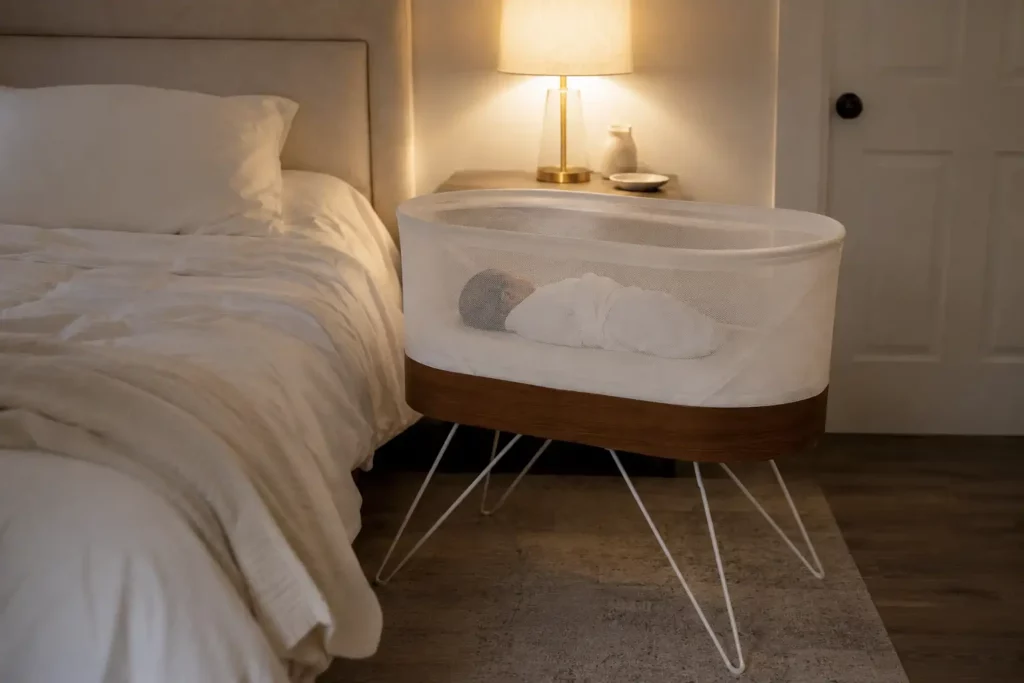
If you’re going into this thinking, “I just need something that helps my baby stay asleep longer,” this is the bassinet that comes up again and again—for a reason.
But here’s the honest reality: this is one of those products parents either absolutely love—or decide wasn’t worth it. There’s rarely an in-between.
What makes the SNOO different is how it responds in the moment. When your baby starts fussing, it automatically increases motion and white noise to try to settle them—often before you fully wake up.
At 2 a.m., that can be the difference between getting out of bed… or staying under the covers for a few extra minutes.
It’s not magic—some babies still want to be held—but when it works, it can noticeably reduce how often you need to step in during the night. And over time, that consistency can help create a more predictable sleep rhythm.
Best for: Parents who want as much hands-off sleep support as possible—and are okay paying for it.
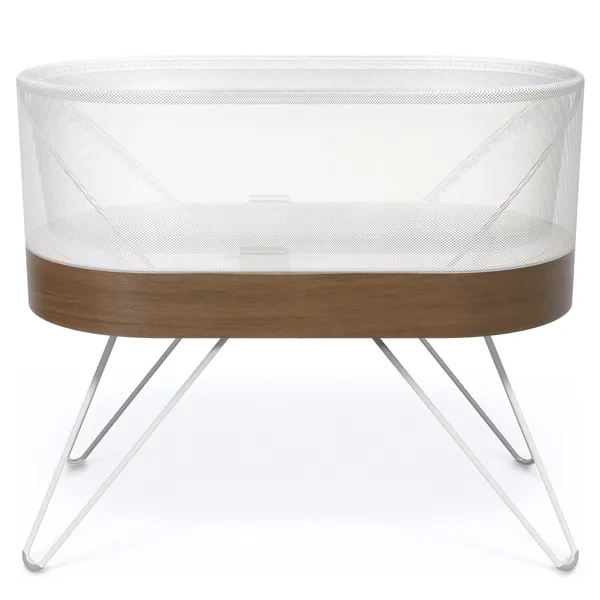
Quick Specs:
- Type: Smart bassinet
- Weight limit: Up to 25 lbs
- Room-to-room mobility: Limited
- Travel-friendly: No
- Foldable: No
- Height adjustable: No
- Side opens for bedside use: No
- Footprint: Medium
What stands out in real life:
What to keep in mind:
Bottom line: This is a premium, hands-off sleep solution. For some families, it’s a game-changer during those early weeks. For others, it ends up being more than they actually need.
2. Best Budget Smart Alternative
Maydolly S700 Smart Electric Bassinet

If you like the idea of a smart bassinet but can’t justify spending over $1,000, this is where a lot of parents start looking.
From what we’ve seen, the S700 sits in that middle ground—it offers some of the same core features as higher-end smart bassinets, but in a much simpler and more affordable package.
It responds to fussing with built-in motion and sound, helping take some of the guesswork out of those middle-of-the-night wakeups. You’re not getting the same level of precision or consistency as premium models, but for many families, that’s not the goal.
For parents considering the SNOO but struggling to justify the price, this is one of the more realistic lower-cost alternatives.
What matters more is that it gives you some hands-free support—without the premium price tag.
Best for: Parents who want basic smart soothing features without committing to a high-end system.

Quick Specs:
- Type: Smart bassinet
- Weight limit: Up to 20 lbs
- Room-to-room mobility: Limited
- Travel-friendly: No
- Foldable: No
- Height adjustable: No
- Side opens for bedside use: No
- Footprint: Medium
What stands out in real life:
What to keep in mind:
Bottom line: This is a solid middle-ground option. It won’t fully replace hands-on soothing, but it can take the edge off those early weeks—without the price tag of a premium smart bassinet.
3. Best Lightweight / Portable Bassinet
Chicco LullaGo Anywhere LE Portable Bassinet
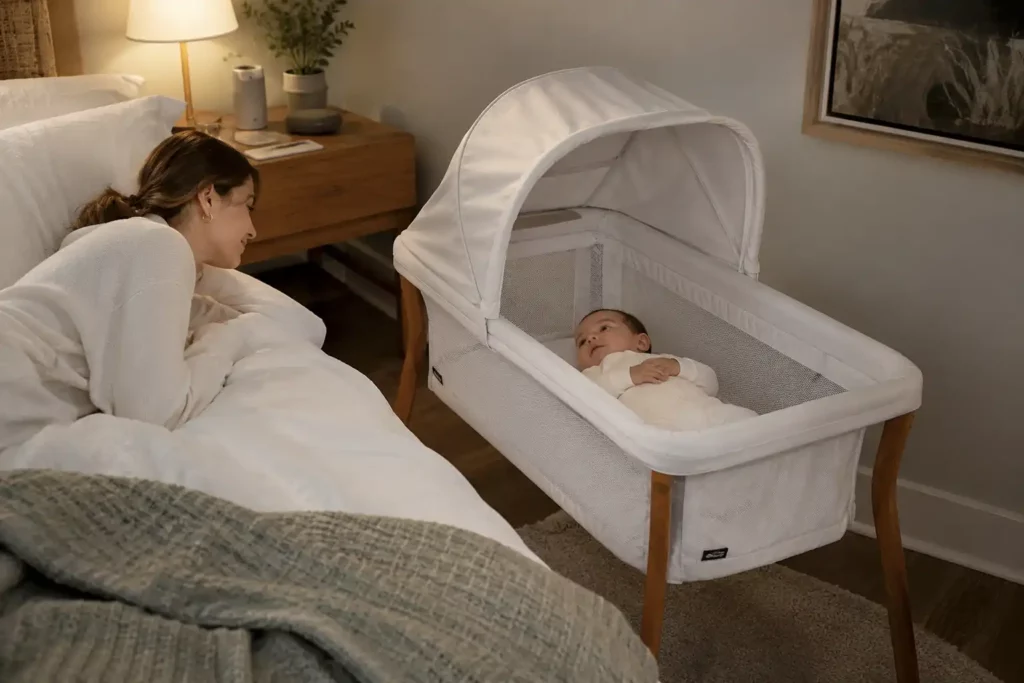
If you need a bassinet you can easily move around the house—or pack up without turning it into a whole project—this is one of the simplest options that actually delivers.
Some bassinets are designed to stay next to your bed full-time. This isn’t one of them.
In real-world use, the LullaGo works best as a flexible, go-anywhere sleep space you can use throughout the day. It’s light enough to carry from room to room without thinking twice, and simple enough to set up or take down in just a few minutes—no tools, no complicated steps.
It also works especially well in smaller homes or apartments where a full bedside sleeper can start to feel bulky.
And because it packs down so easily, it’s one of those bassinets parents often end up bringing to grandparents’ houses, weekend trips, or vacations without much planning.
It doesn’t try to add extra features—and that’s exactly why it works so well.
Best for: Parents who want a lightweight, no-fuss bassinet they can easily move around the house or take on the go.

Quick Specs:
- Type: Traditional/Portable bassinet
- Weight limit: Up to 20 lbs
- Room-to-room mobility: Great
- Travel-friendly: Yes
- Foldable: Yes
- Height adjustable: No
- Side opens for bedside use: No
- Footprint: Medium
What stands out in real life:
What to keep in mind:
Bottom line: If portability is a priority—even just within your home—this is one of the easiest bassinets to live with day to day. It’s simple, reliable, and does exactly what you need without adding complexity.
4. Best Budget / Most Practical Choice
Dream On Me Karley Bassinet
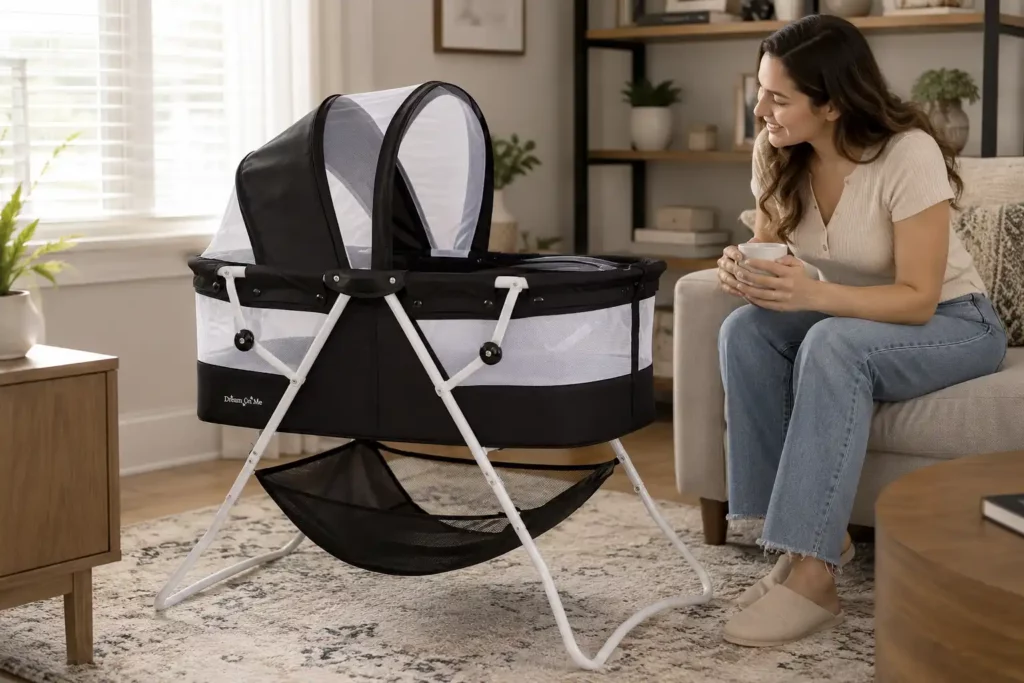
If you’re trying to keep things simple and not overspend on something your baby will only use for a few months, this is one of the easiest bassinets to say yes to.
This isn’t a feature-heavy bassinet, and it doesn’t try to be. What it does well is cover the basics in a way that actually works in everyday life.
In real-world use, what stands out most is how easy it is to live with. It’s light enough to carry from room to room without thinking twice, folds down quickly when you need the space, and doesn’t add any unnecessary complexity during those already overwhelming first weeks.
Its compact footprint also makes it one of the easier bassinets to live with in apartments, smaller bedrooms, or shared spaces where every bit of room matters.
It’s also one of those products that can feel a bit underwhelming at first glance—but once it’s fully set up, it’s more stable and usable than most parents expect at this price point.
Best for: Parents who want a simple, budget-friendly bassinet that covers the basics without overcomplicating things.
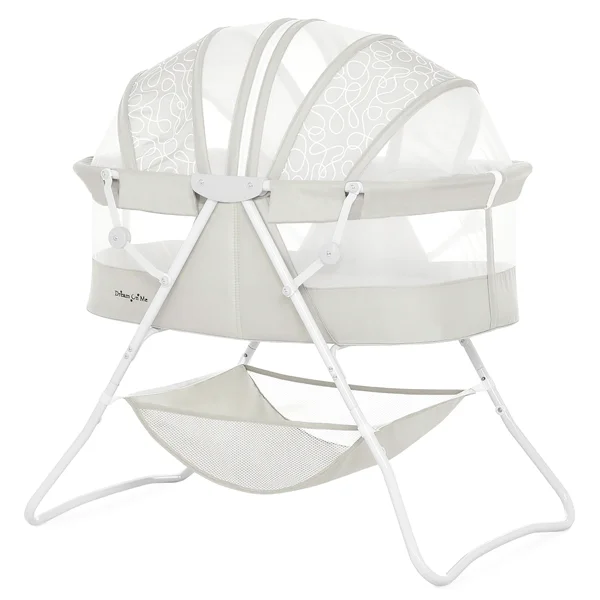
Quick Specs:
- Type: Traditional bassinet
- Weight limit: Up to 25 lbs
- Room-to-room mobility: Excellent
- Travel-friendly: Yes
- Foldable: Yes
- Height adjustable: No
- Side opens for bedside use: No
- Footprint: Compact
What stands out in real life:
What to keep in mind:
Bottom line: This is a no-frills bassinet that focuses on what actually matters: a safe sleep space that’s easy to use every day.
If you don’t need extra features and just want something simple, lightweight, and budget-friendly, it’s one of the most practical choices you can make.
5. Best Bedside Sleeper
Baby Delight Beside Me Dreamer Bassinet & Bedside Sleeper
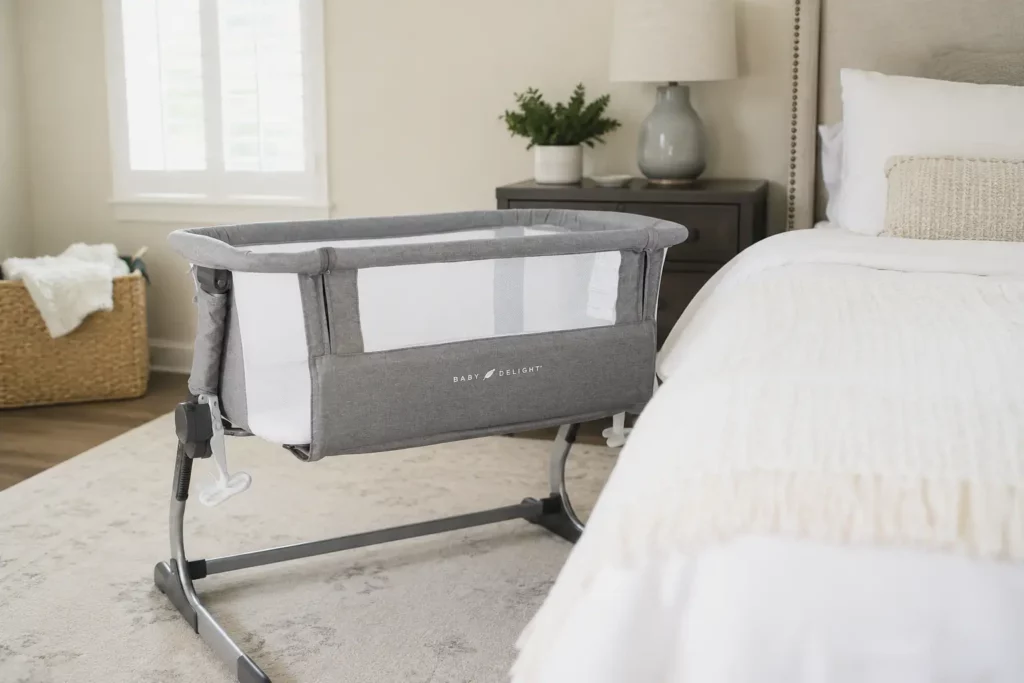
If your main goal is to keep your baby right next to you at night—and make feeds easier without fully getting out of bed—this is exactly what a bedside sleeper is designed for.
From what we’ve seen, this is one of the simplest ways to make nighttime care feel more manageable, especially in those early weeks when you’re up multiple times a night.
The drop-down side gives you direct access to your baby from bed, so you’re not constantly standing up, walking across the room, and fully waking yourself up each time. It’s a small change—but it can make a big difference over time.
It doesn’t try to add unnecessary features. It just focuses on doing one job well: keeping your baby close, safe, and easy to reach.
Best for: Parents who want easy nighttime access and a more convenient room-sharing setup.
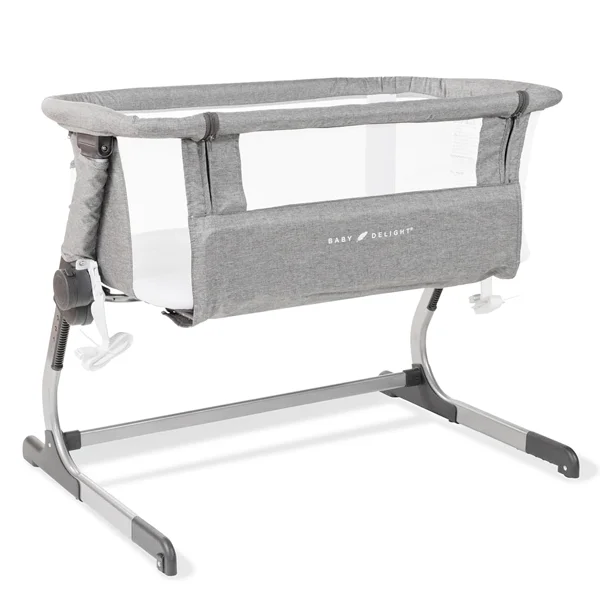
Quick Specs:
- Type: Bedside sleeper
- Weight limit: Up to 20 lbs
- Room-to-room mobility: Good
- Travel-friendly: No
- Foldable: Yes
- Height adjustable: Yes
- Side opens for bedside use: Yes
- Footprint: Medium
What stands out in real life:
What to keep in mind:
Bottom line: This is a practical, no-fuss bedside sleeper that does exactly what most parents need in those early months. If your priority is easier nights—not extra features—it’s a very solid choice.
6. Best Breathable Bassinet
Newton Baby Bassinet & Bedside Sleeper
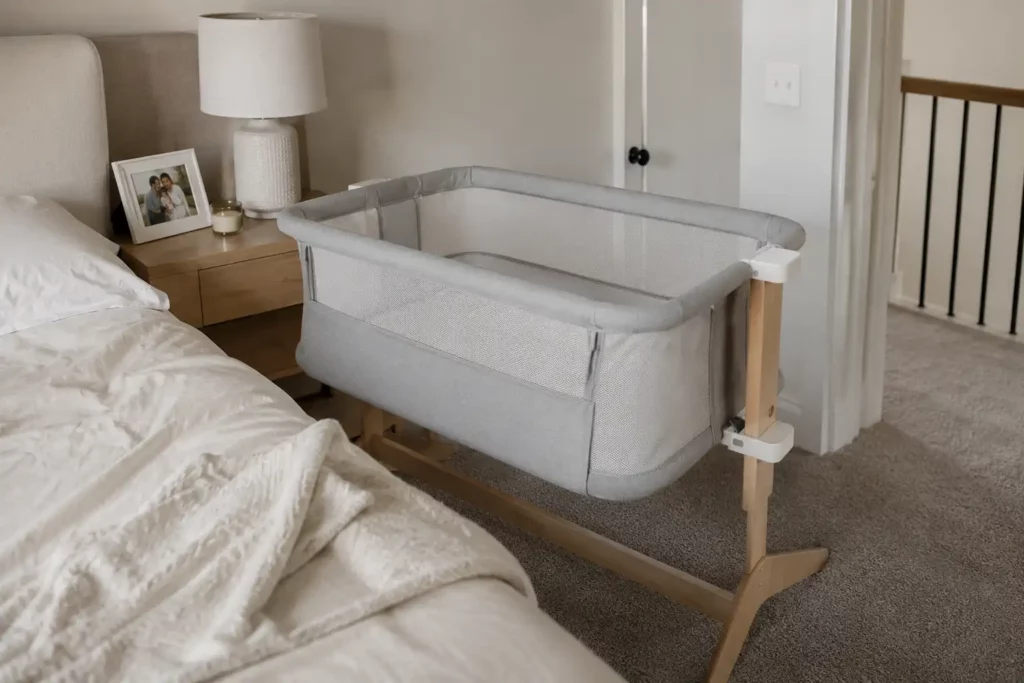
If you’re the kind of parent who keeps coming back to one question—“Is this actually safe for my baby?”—this is one of the few bassinets designed with that priority front and center.
While all of the bassinets in this guide focus on safe, breathable sleep, the Newton takes it a step further by building the entire sleep space around airflow—from the sides to the mattress itself.
In real life, that translates to something simple but important: peace of mind. You can clearly see your baby from any angle, and the open design makes the sleep space feel less enclosed—especially during overnight sleep.
Some parents who feel especially anxious about airflow, visibility, or room-sharing comfort tend to gravitate toward more open, breathable designs like this.
It’s not trying to be smart or high-tech. It’s designed to be consistently safe, simple, and easy to use every single day.
Best for: Parents who want a more airflow-focused, visibility-first sleep setup.
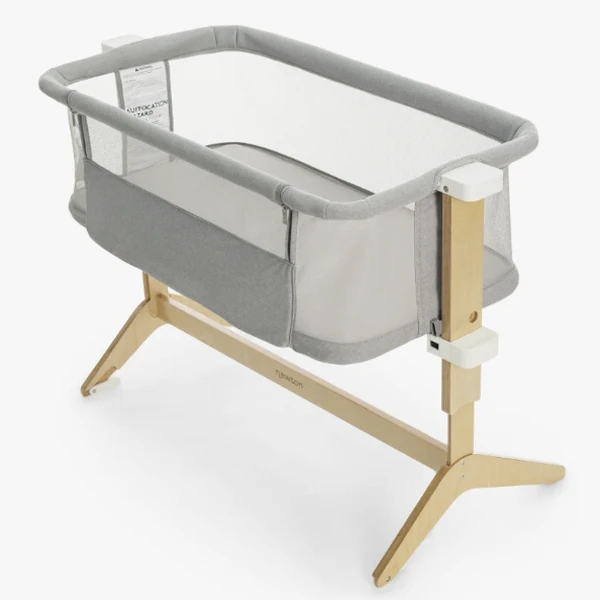
Quick Specs:
- Type: Bedside sleeper
- Weight limit: Up to 20 lbs
- Room-to-room mobility: Moderate
- Travel-friendly: Partial
- Foldable: No
- Height adjustable: Yes
- Side opens for bedside use: Yes
- Footprint: Large
What stands out in real life:
What to keep in mind:
Bottom line: This is a safety-first bassinet that focuses on airflow, visibility, and ease of use. It’s not the most feature-packed option—but for parents who value simplicity and peace of mind, it’s one of the most reassuring choices.
7. Best Long-Term Alternative (Bassinet → Crib)
Babyletto Yuzu Convertible All-Stages Crib
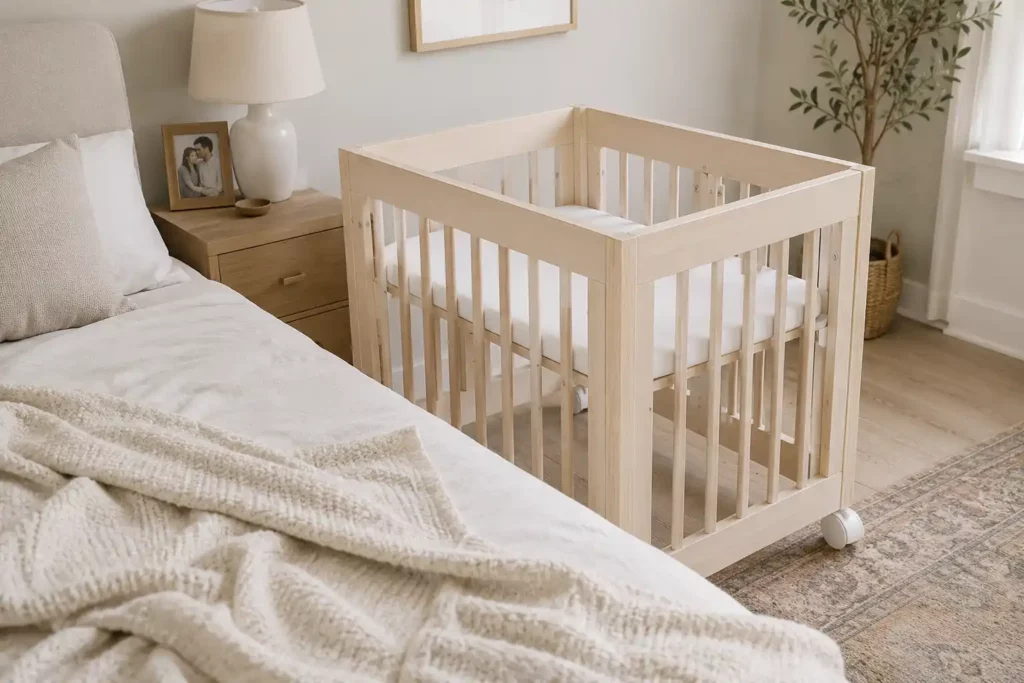
If you’re already thinking a few steps ahead, this is one of the few options that can actually replace both a bassinet and a crib.
This isn’t a traditional bassinet—and that’s exactly the point.
Instead of buying a bassinet for a few months and then upgrading later, the Yuzu starts as a bassinet-sized setup and converts into a midi crib, a full-size crib, and eventually a toddler bed.
From what we’ve seen, this approach makes the most sense for parents who want fewer baby products overall—and are willing to invest upfront to avoid replacing them later.
It’s not about convenience or portability. It’s about long-term use, durability, and having one consistent sleep setup from day one.
Best for: Parents who want a long-term sleep solution that grows with their baby.
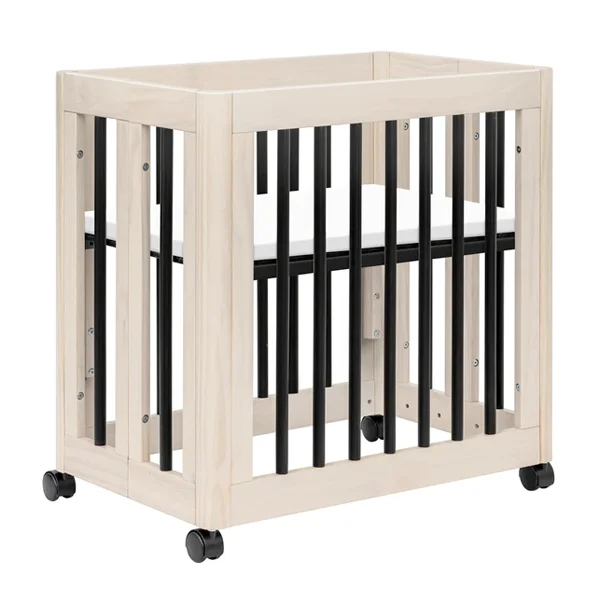
Quick Specs:
- Type: Convertible bassinet to crib system
- Weight limit: Up to 18 lbs (bassinet stage)
- Room-to-room mobility: Good
- Travel-friendly: No
- Foldable: No
- Height adjustable: No
- Side opens for bedside use: No
- Footprint: Compact
What stands out in real life:
What to keep in mind:
Bottom line: This is a completely different approach to newborn sleep. It won’t replace a lightweight, move-anywhere bassinet—but if you want one well-designed setup that grows with your baby and eliminates the need to upgrade later, it’s one of the most practical long-term options available.
Honorable Mentions
These bassinets didn’t quite make our main list—but they’re still worth considering depending on your specific needs and setup.
Premium Bedside Option
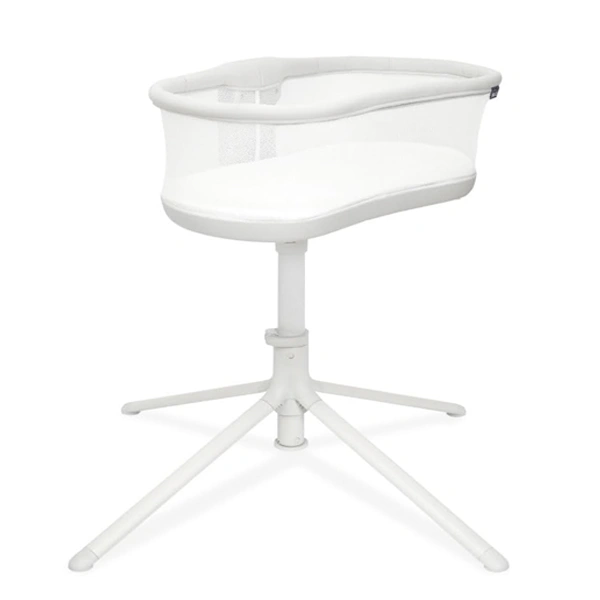
One of the most well-known bedside sleepers in the U.S., especially popular among parents recovering postpartum thanks to its swivel design and easy access. While it’s very functional, it feels bulkier and less practical for everyday use compared to newer, more streamlined bedside options—which is why it just missed our top picks.
Strong Bedside Alternative
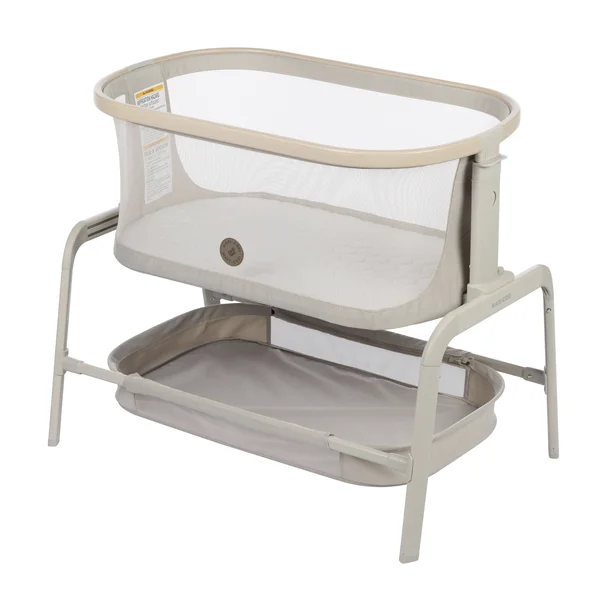
A well-built, reliable bedside sleeper that checks all the basics—comfort, adjustability, and ease of use. It’s a solid choice overall, but it overlaps quite a bit with other options on our list without offering a standout feature that would push it higher.
Minimalist Premium Option
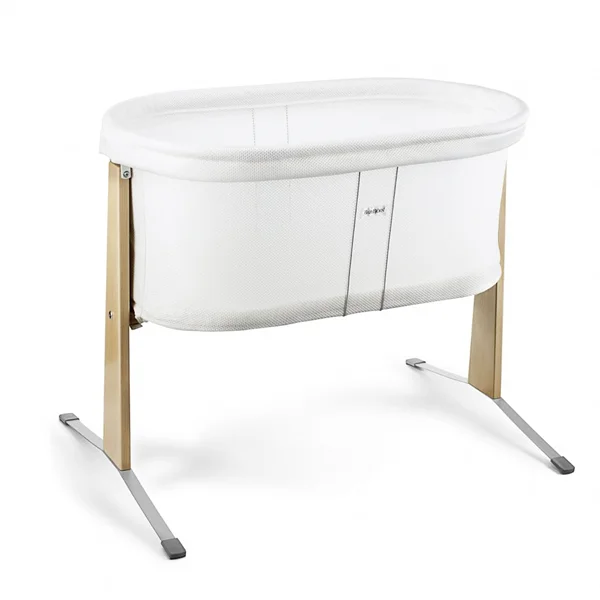
A beautifully designed bassinet with a lightweight, minimalist feel and gentle natural rocking. It’s a great fit if aesthetics and simplicity matter most—but for the price, it lacks some of the functionality most parents end up wanting day to day.
Travel / Ultra-Compact Option

A versatile, multi-use option that can adapt as your baby grows, which makes it appealing for long-term use. That said, it leans more toward a hybrid design and isn’t as refined or space-efficient as dedicated bassinets for everyday newborn sleep.
How We Choose the Best Bassinets
Not all bassinets are created equal—and many advertised features matter far less in real life than they seem.
When we evaluate bassinets at Baby’s Little Place, we focus on the factors that have the biggest impact on safety, usability, and everyday convenience.
Here’s what matters most:
Every bassinet we recommend must provide a firm, flat sleeping surface.
We prioritize:
- No incline (or within safe limits)
- A firm mattress that doesn’t sink
- A snug fit with no gaps along the sides
If a bassinet doesn’t meet these basic safety expectations, it doesn’t make our list.
A bassinet should make nighttime care easier—not more frustrating.
We look for:
- Easy access when placing or lifting a baby
- Adjustable height for bedside use
- Simple, intuitive adjustments
- Minimal setup complexity
Small inconveniences tend to feel much bigger when you’re tired.
A stable bassinet is essential for both safety and peace of mind.
We prioritize designs that:
- Feel sturdy and well-balanced
- Don’t wobble with normal movement
- Have a secure, well-designed base
We also consider how the design fits into a real bedroom setup.
We favor bassinets that support airflow and use materials parents can feel confident about.
That includes:
- Mesh sides for visibility and ventilation
- Durable, well-constructed fabrics
- Clear information about materials and certifications
Not all “breathable” claims are equal, so we focus on practical design—not just marketing.
Extra features only matter if they improve everyday use.
We consider:
- Storage accessibility
- Portability and foldability
- Ease of cleaning
- Added features like motion or sound (only if genuinely useful)
We don’t give extra weight to features that add complexity without clear benefit.
Finally, we look at how well a bassinet fits into daily life.
That includes:
- Footprint and bedside fit
- Ease of moving it around the home
- Overall convenience during regular use
Because the best bassinet isn’t just safe—it needs to work in real-world conditions.
How We Evaluate Bassinets
At Baby’s Little Place, we don’t rank bassinets based on marketing claims alone.
For this guide, we compared bassinets based on the factors that tend to matter most during real day-to-day use — especially safety, nighttime accessibility, portability, stability, and overall practicality in smaller home and bedroom setups.
Our evaluation process includes reviewing product specifications, safety information, parent feedback patterns, long-term usability concerns, and overall ease of use in realistic home environments.
Whenever possible, we also inspect bassinets directly to evaluate factors like stability, mattress firmness, portability, and bedside usability.
Rather than focusing on flashy features, we prioritize products that consistently feel safe, practical, and easy to live with during the newborn stage.
→ Read our full bassinet evaluation process here.
How to Choose the Right Bassinet (Without Overthinking It)
There are a lot of features out there—but only a few actually matter. Here’s what I always tell parents to focus on first:
At this point, every bassinet on this list already meets basic safety expectations—but it still helps to know what actually matters:
- A firm, flat mattress
- Breathable sides (mesh is ideal)
- A stable base that won’t tip or wobble
If a bassinet checks these three boxes, you’re on solid ground. Everything else comes down to convenience and preference.
There’s no single “best” type—only what fits your routine and sleep setup:
- Bedside sleepers → easiest for night feeds and keeping your baby close
- Traditional bassinets → simple, lightweight, and easy to move
- Travel bassinets → compact and foldable for smaller spaces or trips
- Smart bassinets → offer automated soothing (helpful for some babies, unnecessary for others)
If you’re unsure, a bedside sleeper is usually the easiest starting point for most parents.
This is where small details can make a big difference—especially in the middle of the night.
Ask yourself:
- Will it actually fit next to your bed?
- Do you need to move it between rooms?
- Will you be traveling with it?
Footprint and mobility tend to matter more than extra features once you start using it every day.
It’s easy to get pulled toward feature-heavy models—but more features don’t automatically mean better sleep.
Usually worth it:
- Adjustable height
- Wheels (with locks)
- Easy-to-access storage
Often unnecessary:
- Built-in lights
- Sound machines
- App controls
Most of the bassinets we recommend already focus on the features that actually make a difference—so don’t feel like you need to upgrade beyond that.
→ In many cases, the simplest option is the one that ends up being the easiest to live with.
If you want a deeper breakdown of materials, safety standards, and every feature to consider, you can read my full guide on how to choose a baby bassinet.
How to Use a Bassinet Safely (Quick Checklist)
Once you’ve chosen a safe bassinet, how you use it matters just as much. These are the key rules to follow every time your baby sleeps:
- Always place your baby on their back
- Use only a fitted sheet (no blankets, pillows, or bumpers)
- Keep the sleep surface flat and uncluttered
- Place the bassinet in your room—but not in your bed
- Share a room (not a bed) for at least the first 6 months
Bassinet Safety Details Parents Often Miss
These small details can make a big difference in everyday use:
- Lock the wheels when the bassinet is not moving
- Make sure all parts are fully assembled and secured
- Always place it on a flat, stable surface (never on a bed or couch)
- Check that the mattress fits snugly with no gaps
- Keep it away from cords, curtains, and blinds
- Lock rocking features when not actively soothing
For a complete breakdown of bassinet safety standards and recommendations, read my full bassinet safety guide.
How Long Can a Baby Sleep in a Bassinet?
Most babies use a bassinet for around 4 to 6 months, but the exact timing depends on their development—not just age.
You’ll need to transition sooner if your baby:
- Starts rolling
- Pushes up on hands and knees
- Reaches the weight limit
→ When that happens, it’s time to move to a crib or Pack ‘n Play.
Frequently Asked Questions About Baby Bassinets
Do you really need a baby bassinet?
No—you don’t. A newborn can safely sleep in a crib or Pack ’n Play from day one. A bassinet is mainly about convenience: keeping your baby close, making nighttime feeds easier, and simplifying those first few weeks.
Are bassinets safe for overnight sleep?
Yes—as long as they meet safety standards and are used correctly. Look for a firm, flat mattress, breathable sides, and a stable base, and always follow safe sleep guidelines.
How long can a baby sleep in a bassinet?
Most babies use a bassinet for about 4 to 6 months. You’ll need to transition sooner if your baby starts rolling, pushing up, or reaches the weight limit.
What’s the difference between a bassinet and a bedside sleeper?
A bassinet is a standalone sleep space, while a bedside sleeper attaches or sits directly next to your bed—often with a drop-down side for easier access during the night.
Are smart bassinets worth it?
For some parents, yes—especially if your baby responds well to motion and sound. But they’re not essential. Many families do just as well with a simple, non-electric bassinet.
Final Thoughts: Which Bassinet Should You Actually Choose?
If you’ve made it this far, you’ve probably realized something important—there isn’t one “perfect” bassinet for every parent.
It really comes down to how you plan to use it day to day.
- If you want the most hands-off sleep support → the SNOO stands out
- If you’re working with a tighter budget → the Dream On Me Karley is more than enough
- If nighttime convenience is your top priority → a bedside sleeper like the Baby Delight makes a real difference
- And if you’re thinking long-term → something like the Babyletto Yuzu can simplify things later on
For most parents, though, the best choice isn’t the most advanced—it’s the one that fits your space, your routine, and how involved you want to be during the night.
Because in those first few months, simplicity and ease of use usually matter more than extra features.
If you’re still unsure, start with the basics: a safe, stable bassinet that keeps your baby close. You can always adjust as you go—but having a setup that works from day one makes a bigger difference than you might expect.