Last Updated on September 7, 2026
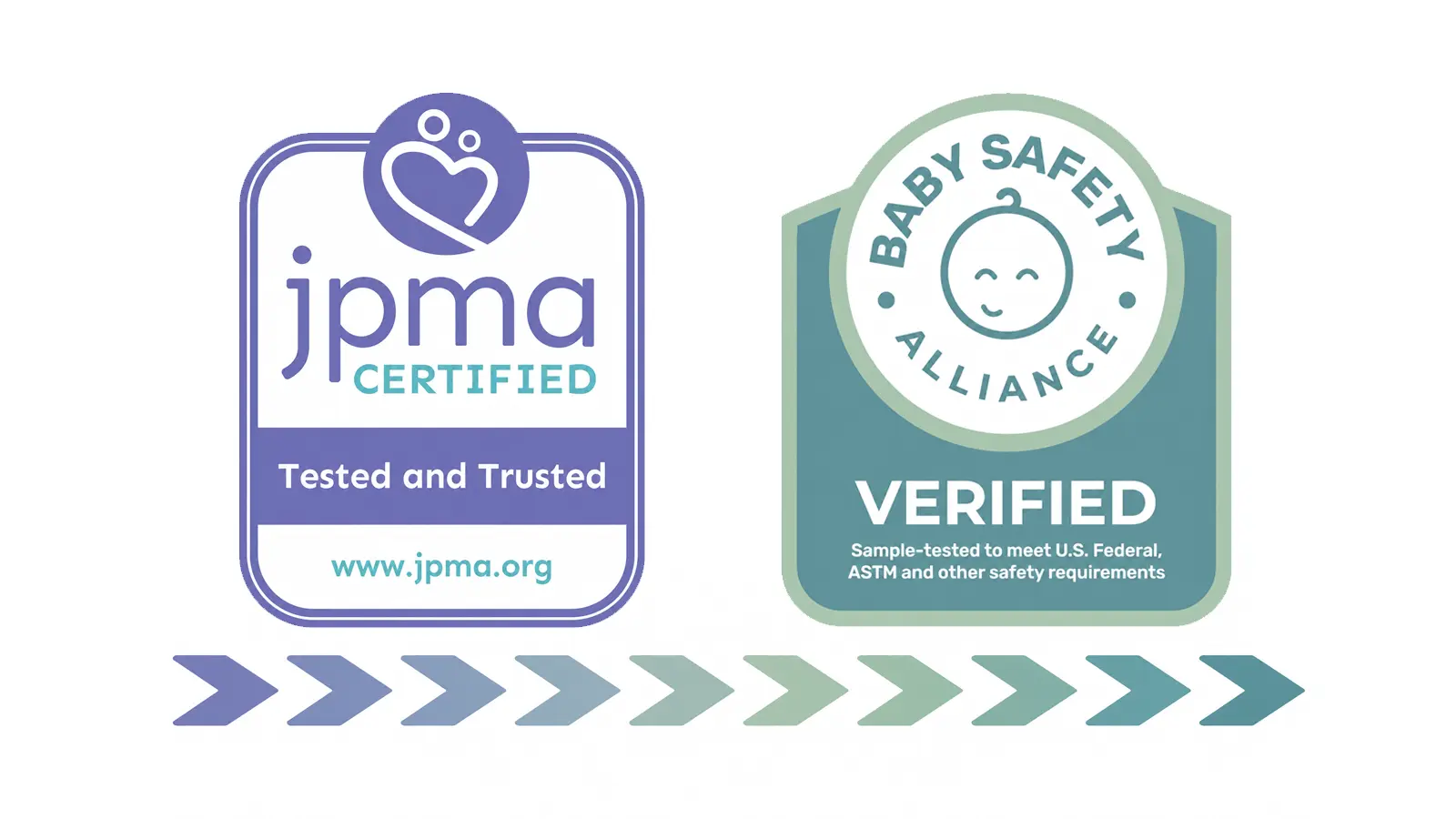
If you have ever shopped for a crib, stroller, high chair, play yard, or another baby product, you may have seen the words “JPMA Certified” on the packaging or product listing. The label indicated that the product had been tested through JPMA’s voluntary certification program to verify that it met applicable safety, performance, and functionality requirements.
But what if you are shopping today and looking for the familiar JPMA Certified Seal, only to find a different name instead?
There is no reason to be concerned. On June 24, 2025, the Juvenile Products Manufacturers Association (JPMA) became the Baby Safety Alliance (BSA), and its former JPMA Certification Program transitioned to the Baby Safety Alliance Verification Program. The familiar JPMA Certified Seal is now the BSA Verified Seal.
In other words, if you see JPMA Certified on an older product or listing, you are looking at the former name of the program. For products currently carrying the organization’s verification seal, the name to look for is BSA Verified.
So, what does “JPMA Certified” mean today, and what does the new BSA Verified Seal actually tell parents about a baby product’s safety? This guide explains what changed, how the current verification program works, and how BSA Verification differs from ASTM standards and government requirements enforced by the U.S. Consumer Product Safety Commission (CPSC).
- Key Points About JPMA Certification:
- What Happened to JPMA Certification?
- What Does JPMA Certified Mean?
- JPMA vs. ASTM vs. CPSC: What's the Difference?
- Why Does BSA Verification Matter for Parents?
- What Does the BSA Verified Seal Actually Tell You?
- Does a Product Without JPMA or BSA Verification Mean It Is Unsafe?
- How to Check Whether a Product Is BSA Verified
- Is JPMA Certification Still Used?
- What Parents Should Know Before Relying on a Safety Seal
- JPMA Certified vs. BSA Verified: A Quick Comparison
- Frequently Asked Questions
- The Bottom Line: What Does JPMA Certified Mean Today?
Key Points About JPMA Certification:
- JPMA Certified is the former name associated with the Baby Safety Alliance’s current verification program.
- The program is voluntary, rather than a government certification.
- The current BSA Verified Seal replaces the former JPMA Certified Seal.
- Products are sample-tested by independent laboratories as part of the verification process.
- The program is based on applicable ASTM standards, federal and state laws, and certain retail requirements.
- A product without the BSA Verified Seal is not automatically unsafe or non-compliant. Certification or verification is only one part of evaluating a baby product’s safety.
What Happened to JPMA Certification?
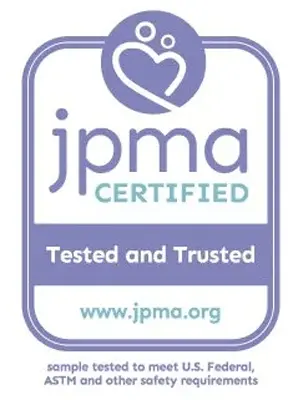
For decades, the Juvenile Products Manufacturers Association (JPMA) operated a voluntary certification program for juvenile products.
The organization later expanded its focus beyond product certification to include product safety, education, advocacy, and collaboration across the baby and children’s product industry.
The change was more than simply replacing one logo with another. The program also shifted from a traditional “certification” model to a “verification” model, with an emphasis on making product-safety information more transparent and streamlining compliance and testing processes. The updated program was also designed to help reduce duplicative testing for manufacturers dealing with overlapping regulatory and retailer requirements.
For parents, however, the most important takeaway is simple:
If you previously looked for a JPMA Certified Seal, you should now look for the Baby Safety Alliance Verified Seal.
The BSA itself describes the current seal as the “Baby Safety Alliance Verified Seal—formerly JPMA Certified Seal.”
What Does JPMA Certified Mean?
Historically, JPMA Certified meant that a product had gone through JPMA’s voluntary certification program and was tested for compliance with the applicable requirements of the program.
The current BSA Verification Program continues this basic safety-assurance approach. Products seeking verification are sample-tested to determine whether they meet applicable requirements for safety, performance, and functionality. Testing is conducted through independent laboratories as required by the program.
The program is built around applicable ASTM standards, along with relevant federal and state requirements and certain retail requirements.
This makes the BSA Verified Seal a useful piece of information when comparing juvenile products—but it should not be interpreted as a guarantee that a product can never cause an injury or that parents no longer need to follow safe-use instructions.
JPMA vs. ASTM vs. CPSC: What’s the Difference?
These terms can easily become confusing because they often appear together in baby-product safety information. They do not mean the same thing.
ASTM Standards
ASTM International develops voluntary consensus standards for many types of products, including children’s and juvenile products.
An ASTM standard describes technical safety, performance, or design requirements for a particular product category. The CPSC explains that ASTM is one of the organizations involved in developing voluntary safety standards used for children’s products.
CPSC Requirements
The U.S. Consumer Product Safety Commission (CPSC) is a federal government agency responsible for enforcing applicable consumer-product safety laws and regulations in the United States.
Some children’s products are subject to mandatory federal safety rules and third-party testing requirements. Manufacturers and importers may have to certify compliance with applicable mandatory requirements.
JPMA Certification / BSA Verification
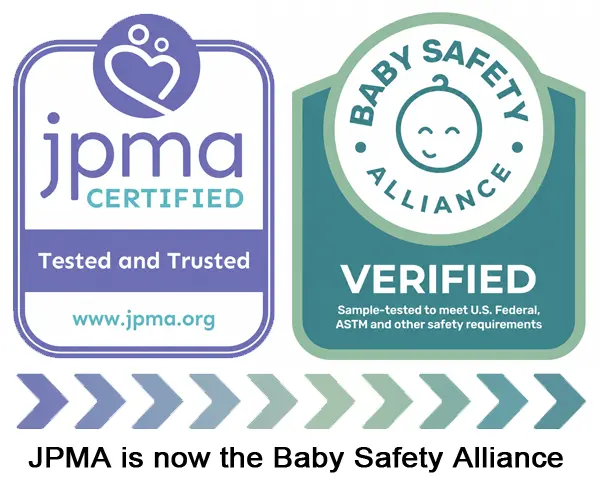
JPMA Certification was a voluntary industry certification program. It is now the Baby Safety Alliance Verification Program.
The current BSA program is based on applicable ASTM standards, federal and state laws, and certain retail requirements, and includes independent product testing.
In other words:
| Term | What it means |
|---|---|
| ASTM | Develops technical voluntary consensus standards |
| CPSC | U.S. federal agency responsible for applicable consumer-product safety rules and enforcement |
| JPMA Certified | Former name of a voluntary juvenile-product certification program |
| BSA Verified | Current name/seal associated with the successor Baby Safety Alliance Verification Program |
Why Does BSA Verification Matter for Parents?
When you are comparing products for a baby or young child, safety information can be difficult to evaluate.
A product may have dozens of reviews, impressive marketing claims, and multiple safety-related labels. The BSA Verified Seal gives parents another way to identify products that have gone through the program’s independent testing and verification process.
The program covers a wide range of juvenile-product categories. The Baby Safety Alliance says its Verification Program independently tests thousands of products annually across more than 30 categories.
For a parent, the benefit is therefore not that the seal means “this product is guaranteed safe.” Instead, it provides additional information that the particular product has been evaluated through the BSA program against applicable safety, performance, and functionality requirements.
What Does the BSA Verified Seal Actually Tell You?
The current BSA Verified Seal indicates that the product has gone through the Baby Safety Alliance’s verification program.
According to BSA, products are sample-tested to verify compliance with applicable requirements for safety, performance, and functionality. The program is voluntary and is based on applicable ASTM standards, federal and state laws, and some retail requirements.
The seal can therefore be viewed as one useful safety signal when evaluating a baby product, rather than as a guarantee of perfect safety.
This distinction matters because the safety of a baby product also depends on factors such as:
- Correct assembly
- Following the manufacturer’s instructions
- Using the product only for its intended purpose
- Observing age, height, and weight limits
- Using the correct mattress or accessories where applicable
- Avoiding unauthorized modifications
- Checking for product recalls or safety notices
Even a product that has been independently tested still needs to be used correctly.
Does a Product Without JPMA or BSA Verification Mean It Is Unsafe?
No.
The absence of a JPMA Certified or BSA Verified seal does not, by itself, prove that a product is unsafe or fails to meet applicable requirements.
The BSA Verification Program is voluntary. Some products may comply with applicable mandatory government requirements without participating in the BSA program. The CPSC also distinguishes between mandatory safety requirements and voluntary standards and certification programs.
If a product does not have the BSA Verified Seal, consider looking at the broader safety picture instead.
Check these things before buying:
- Find the exact product and model number.
- Check whether the product is listed in the BSA Verified Product Directory.
- Review the manufacturer’s safety and compliance information.
- Check which ASTM standard applies to the product category, if applicable.
- Look for applicable CPSC requirements.
- Search for recalls or safety notices for the specific product.
- Read the manufacturer’s instructions and safety warnings.
This is especially important when comparing products from lesser-known brands or products sold through online marketplaces.
How to Check Whether a Product Is BSA Verified
The old advice to “look for the JPMA seal” needs a small update.
Today, look for the Baby Safety Alliance Verified Seal on the product, packaging, or product listing. BSA also provides information about verified products through its online resources.
When checking a product, don’t rely only on the brand name. Instead, try to identify the:
- Manufacturer
- Exact product name
- Model number
- Product category
This helps you verify that the information applies to the specific product you’re considering, rather than assuming that one verified product means every product from the same manufacturer is verified.
The BSA Verified Seal is also now displayed on eligible Amazon product detail pages through Amazon’s safety badging program, giving shoppers another way to identify products that have been independently verified.
Is JPMA Certification Still Used?
You may still see “JPMA Certified” on older packaging, product listings, retailer pages, or articles.
That does not necessarily mean you are looking at a completely different safety program.
The Baby Safety Alliance describes its current seal as the BSA Verified Seal, formerly the JPMA Certified Seal, because the organization and its verification program transitioned from the former JPMA structure.
This is why both terms may appear online for some time.
If you are researching an older product, however, it is still worth checking the exact model and current verification information rather than assuming that an old product listing is still current.
What Parents Should Know Before Relying on a Safety Seal
A certification or verification seal can be useful, but it should not be the only factor in your buying decision.
For baby products, consider the complete safety picture:
1. Product compliance
Check applicable federal, state, and voluntary safety requirements.
2. Independent testing or verification
Look for evidence that the specific product has undergone appropriate testing.
3. Product-specific information
Check the exact model, not just the manufacturer’s overall reputation.
4. Recalls
Make sure the product has not been recalled or subject to a current safety notice.
5. Safe use
Follow the manufacturer’s instructions, limitations, and warnings.
6. Current information
Be cautious with older second-hand listings, outdated product pages, or claims that cannot be verified.
The BSA Verified Seal can be an important part of this process, but it should be viewed as one piece of the safety puzzle—not a substitute for safe use or independent judgment.
JPMA Certified vs. BSA Verified: A Quick Comparison
| JPMA Certified | BSA Verified | |
| Organization | Juvenile Products Manufacturers Association | Baby Safety Alliance |
| Status | Former program name | Current verification program |
| Program type | Voluntary certification | Voluntary verification |
| Testing | Independent product testing | Independent product testing |
| Standards | Applicable ASTM standards and other program requirements | Applicable ASTM standards, federal and state laws, and certain retail requirements |
| Consumer seal | JPMA Certified Seal | BSA Verified Seal |
| Current? | Historical/former terminology | Current terminology |
The important point is that BSA Verified is the current successor to the former JPMA Certified program, rather than an unrelated safety label.
Frequently Asked Questions
The Bottom Line: What Does JPMA Certified Mean Today?
If you see JPMA Certified on an older baby-product listing, think of it as the former name of a voluntary product-safety certification program that has now transitioned to the Baby Safety Alliance Verification Program.
Today, the seal to look for is the BSA Verified Seal.
The program provides parents with useful information because verified products are independently tested against applicable requirements for safety, performance, and functionality. But the seal should not be interpreted as a guarantee that a product is completely risk-free, nor does the absence of the seal automatically mean that a product is unsafe.
For parents, the best approach is to treat BSA Verification as one part of a broader safety check—alongside applicable government requirements, product-specific testing and compliance information, recalls, manufacturer instructions, and safe use.
In short: JPMA Certified is the term you may still see on older products, while BSA Verified is the current seal to look for.