
Last Updated on September 12, 2026

If your baby has started chewing on the rails of a mini crib, you may be wondering how to protect the wood — and your baby — from all that gnawing.
The safest place to start is with the crib itself: check for damage and see whether the manufacturer offers a teething rail or replacement part for your specific model. Adding a random padded cover or homemade wrap is usually not the safest solution.
Why Do Babies Chew on Crib Rails?
Chewing is common when babies are teething. Once a baby can pull up and stand, the top rail can become an easy target for sore gums.
The bigger concern isn’t the bite marks themselves. If chewing has caused the finish to peel, the wood to splinter, or a plastic component to crack, pieces could become a safety hazard. That’s why it’s worth checking the crib regularly once your baby starts chewing on the rails.
What Is the Safest Way to Protect a Mini Crib Rail?
Rather than automatically adding an aftermarket cover, I would start with these three steps.
1. Check for a Manufacturer-Approved Teething Rail
This is the option I’d look for first because the part was designed for that particular crib rather than being a one-size-fits-all accessory. If you’re currently shopping for a mini crib and your baby is already in the chewing stage, it is worth checking the manual or the replacement parts section before you make your purchase.
Some cribs are designed with a dedicated teething rail or protective surface on the top rail. If your mini crib came with one, follow the manufacturer’s instructions for using and replacing it.
2. Replace or Repair a Damaged Rail
If your baby has already chewed through the finish or damaged the rail, don’t try to cover up a structural problem with a fabric protector. Look closely for splintered wood, peeling finish, or cracks.
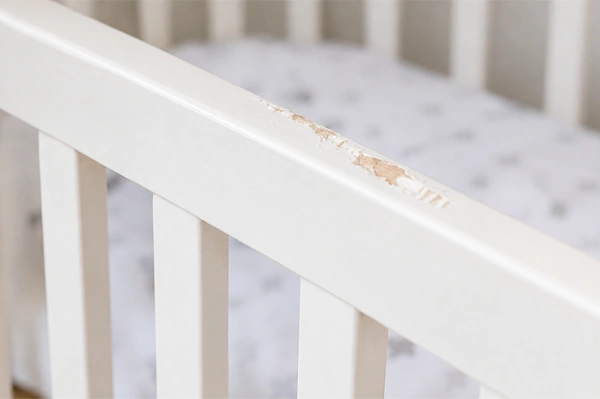
If any part has become loose after repeated chewing, contact the manufacturer about a replacement part. This is particularly important with plastic components. The CPSC has previously recalled certain plastic crib teething rails due to concerns that the plastic could become brittle and crack when chewed, creating small broken pieces that an infant could swallow.
3. Be Careful With Aftermarket Rail Covers
There are many products sold as crib rail covers or teething guards, but they aren’t all the same. Before buying one for a mini crib, look at what the product actually covers and how it attaches.
A cover designed only to go over the top rail is different from a padded product that wraps around the crib sides or covers the slats. The CPSC specifically distinguishes top-rail-only covers from traditional crib bumpers. That distinction matters immensely when you’re choosing something for a baby’s sleep space.
→ You can brush up on all modern federal rules in our comprehensive crib safety standards guide.
Evaluating Different Types of Rail Covers
1. Padded Fabric Crib Rail Covers
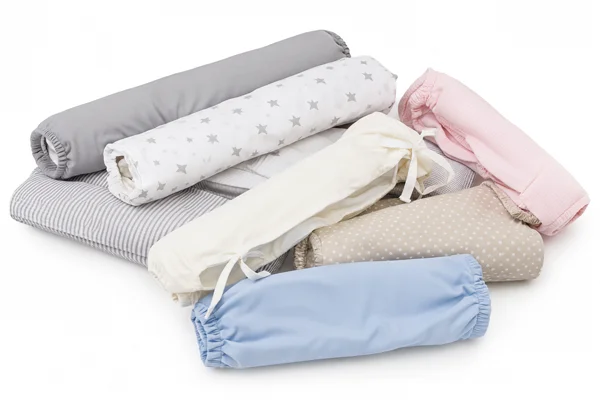
Padded fabric rail covers are easy to find, and many are marketed specifically for teething babies. However, I’d be cautious with these, especially if the cover is thick, pillow-like, heavily padded, or wraps around the slats.
The American Academy of Pediatrics (AAP) recommends keeping soft objects and loose bedding out of a baby’s sleep space, and the CPSC has strict restrictions on crib bumpers. For that reason, I wouldn’t use a padded, bumper-style fabric wrap as a general solution. The fact that a product is sold as a “protector” doesn’t automatically mean it’s safe for every sleep situation.
2. Breathable Mesh Rail Covers
There is another category that can be easy to confuse with padded crib bumpers: non-padded mesh rail covers. These products are designed to cover the top rail with a lightweight, breathable material rather than surrounding the crib with thick padding. The CPSC’s crib-bumper definition specifically excludes non-padded mesh crib liners, meaning a top-rail-only mesh cover falls outside the federal crib-bumper ban.
However, that doesn’t mean every mesh cover fits every crib. For example, BreathableBaby makes a mesh railguard teething cover designed to protect top rails. At the time of writing, the company offers its current long-panel models for full-size cribs. However, check the company’s website for the latest options, as mini-crib versions may become available.
Always check the exact dimensions, attachment method, and manufacturer’s instructions for your particular mini crib model. And if you are unsure about your bed type, check out our comparison between mini cribs and standard full-size cribs.
3. Silicone or Plastic Teething Guards
Silicone and plastic teething guards are widely available, but be careful about choosing one based simply on the material. A product may be labeled “BPA-free” or “non-toxic,” but that doesn’t tell you whether it fits your crib rail properly or securely.
If your crib manufacturer provides a plastic or silicone teething rail specifically for your model, use it and follow their guidelines. I would be much more cautious about adding a generic, third-party plastic or silicone guard that wasn’t designed for your exact crib layout, as babies can sometimes pull them loose.
4. DIY Cloth Wraps
Wrapping a towel, blanket, or burp cloth around the crib rail might seem like an easy, budget-friendly solution, but I wouldn’t recommend it.
The problem isn’t just the material itself. A homemade wrap can easily loosen, shift, bunch up, or introduce loose fabric into the baby’s sleep space. Baby products used inside the crib should be secured exactly as intended by their manufacturer.
What to Check Before Buying a Cover
If you are still considering a third-party teething rail or rail cover, verify these details first:
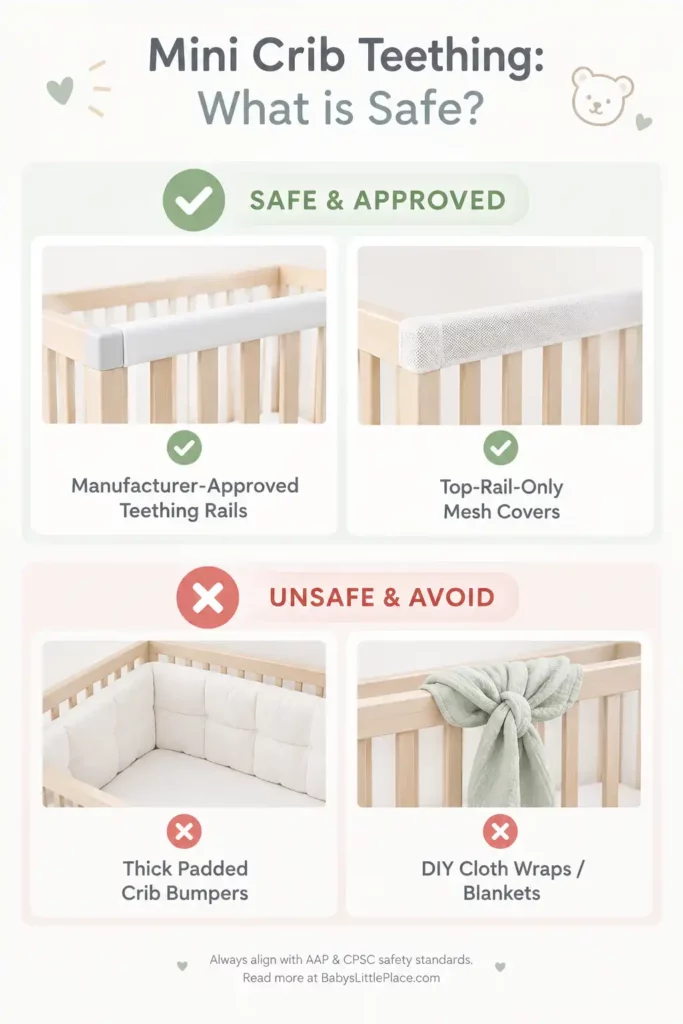
- Measure the Exact Rail: Don’t rely only on the phrase “mini crib.” Two mini cribs can have very similar footprints but completely different rail lengths, shapes, widths, or attachment points. Measure the actual rail you’re trying to protect.
- Inspect the Underlying Finish: Look at the rail before hiding it. If the wood is already splintering or the paint is flaking, a cover shouldn’t be used as a substitute for replacing the damaged component.
- Don’t Rely on Marketing Buzzwords: Labels like “BPA-free” are useful, but they don’t answer the more important questions about fit, attachment security, durability, and compatibility with your original crib design.
Mini Crib Teething Guard: My Recommended Order
If I were choosing a solution for a mini crib, I’d prioritize options in this exact order:
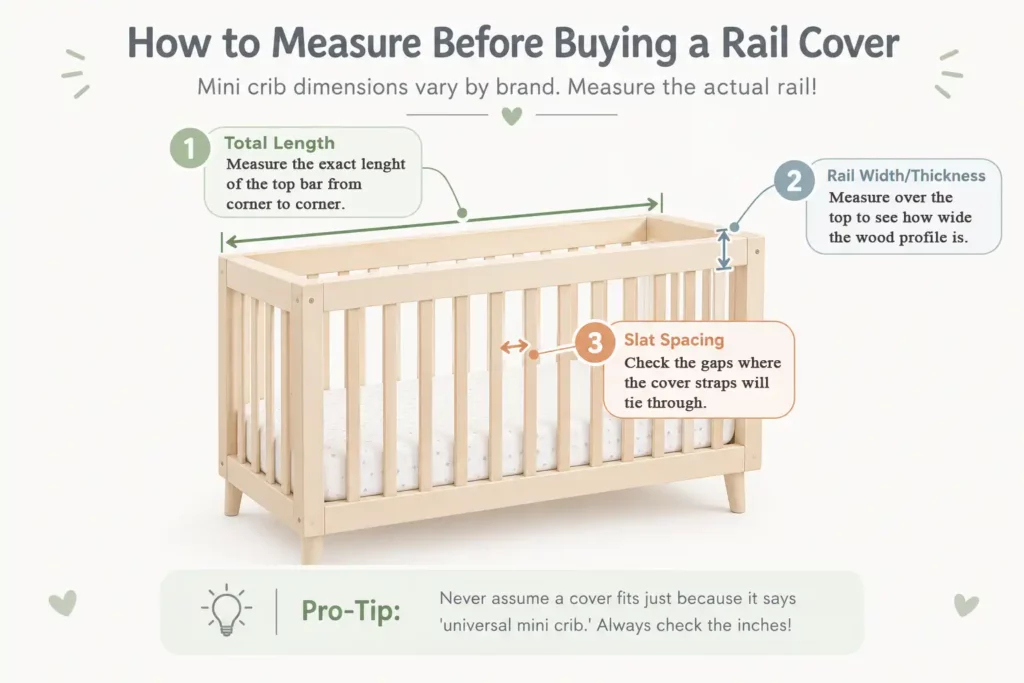
- A manufacturer-provided teething rail or replacement part: This is always the best choice because it was custom-molded for your specific crib model.
- A full replacement for a damaged rail: If the rail is already cracked or peeling, fix the underlying problem instead of hiding it.
- A properly sized, non-padded top-rail cover: If an aftermarket product is necessary, choose a slim top-rail-only guard that attaches tightly and matches your exact crib measurements.
What I’d avoid entirely: Homemade wraps, thick padded fabric covers, and generic plastic guards that can easily be pulled loose while your baby sleeps.
FAQs
The Bottom Line
Teething is a normal part of babyhood, but once your little one starts chewing on the mini crib rail, it’s time to pay close attention to the condition of the wood.
Start by checking whether your crib manufacturer offers an approved teething guard or a direct replacement rail. If you do consider an aftermarket protector, make sure it is a low-profile, top-rail-only product that is perfectly compatible with your mini crib’s dimensions. When it comes to the place where your baby sleeps every night, a simple, manufacturer-approved setup is always a better choice than a clever DIY fix.