
Last Updated on September 16, 2026
Editor’s Note:This article was originally published in December 2019 and was completely rewritten on September 16, 2026, to align with the latest CPSC safety regulations and updated infant sleep guidelines.
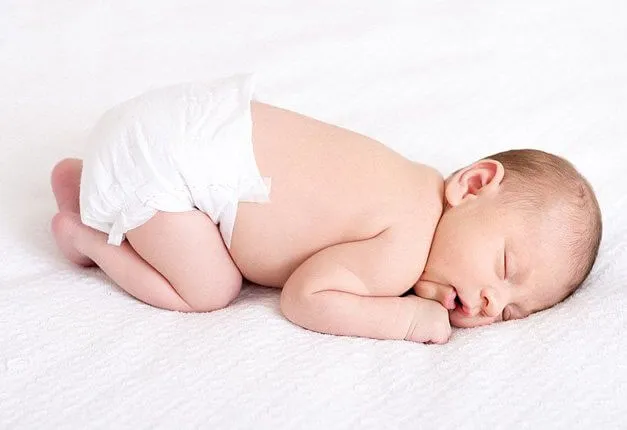
If you’ve ever pressed a crib mattress and thought, “This feels really hard,” you’re not alone. A crib mattress is much firmer than the mattress most adults sleep on—and that is intentional.
But why? The short answer is that a firm crib mattress helps provide a safer sleep surface for your baby.
For infant sleep, the American Academy of Pediatrics (AAP) recommends not only a firm sleep surface, but also a flat, non-inclined surface covered with a fitted sheet.
Why Do Babies Need a Firm Crib Mattress?
Babies, especially newborns, have less strength and motor control than older children and adults. If a sleep surface is very soft, it can allow a baby’s head or face to sink into or conform to the mattress, which can make it harder for the baby to move away from the surface and increase the risk of suffocation.
Firmness also works together with proper mattress fit to help reduce hazards such as entrapment and wedging.
Another benefit of a firm sleep surface becomes more relevant as babies become more mobile. As your baby starts pushing up, rolling, and moving around the crib, a firm mattress provides a stable, supportive surface rather than one that easily gives way underneath them.
What Does “Firm” Actually Mean?
In its safe-sleep guidance, the AAP describes a firm surface as one that maintains its shape and does not indent or conform to the shape of the infant’s head or body.
“Firm” can be confusing because there isn’t an adult-style 1-to-10 firmness scale that parents should use when shopping for a crib mattress. A crib mattress may feel surprisingly hard when you press it with your hand—and that isn’t a problem. It isn’t supposed to feel like a plush adult mattress.
The goal isn’t to make your baby’s sleep surface uncomfortable. Firmness provides the stable, supportive surface recommended for infant sleep.
How Firm Should a Crib Mattress Be?
There isn’t a specific firmness number you need to look for on a product page. A crib mattress should simply be firm enough to maintain its shape rather than noticeably sinking or conforming around your baby’s head or body.
A mattress can feel very hard when you press it with your hand and still be appropriate for infant sleep. However, firm does not mean “the hardest mattress you can find.” The goal is a firm, stable sleep surface—not the hardest mattress possible.
The CPSC has federal safety requirements for crib mattresses, including requirements for firmness, fit, dimensions, and other potential hazards. (For current requirements, see 16 CFR Part 1241.) Therefore, when buying a new crib mattress, look for a product intended for infant sleep that is designed to meet applicable federal safety requirements, rather than trying to determine firmness by testing at home.
Can you test a crib mattress at home?
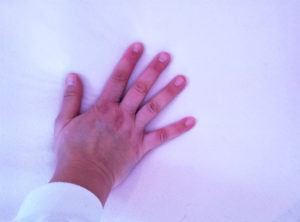
Yes. You can do a simple hand-press test to get a general sense of how the mattress responds to pressure. But this can only give you a useful indication of whether the mattress feels unusually soft. It cannot tell you whether the mattress complies with federal safety requirements. Compliance testing uses specific methods and equipment that aren’t available through a simple home test.
To perform the test, press your open hand firmly into the center of the mattress, then release it. The surface should feel firm and should not easily sink deeply or remain noticeably compressed after you remove your hand.
You can also inspect your crib mattress for obvious signs of damage or deterioration, such as:
- Sagging
- A permanent or deep indentation
- Tears or damage
- Exposed or broken components
- A misshapen surface
- A mattress that doesn’t fit the crib properly
What Else Should You Look for in a Crib Mattress?
Firmness is important, but it isn’t the only thing to consider when choosing a crib mattress. The mattress also needs to fit the crib correctly, be in good condition, meet applicable safety requirements, and more.
Here is a quick overview of what else is worth looking at:
The mattress should fit snugly inside the crib, with no large gaps between the mattress and the crib frame. A poorly fitting mattress can create an entrapment hazard.
For a full-size crib, federal requirements specify a mattress at least 27¼ inches wide by 51¼ inches long, with a thickness of no more than 6 inches. The internal dimensions of full-size cribs are also standardized; thus, any new standard-size crib mattress should fit into any new full-size crib. For more about the current federal crib safety requirements, see our guide to New CPSC Crib Safety Standards
On the other hand, mini cribs and other non-full-size cribs can have different dimensions, so always check the exact mini crib and mini crib mattress specifications before buying a replacement.
For more information, see our guide to Baby Crib Mattress Sizes.
Crib mattresses are commonly made with either foam or innerspring construction. Neither type is automatically the safer choice.
If you’re deciding between the two, see our guide Foam vs. Coil/Innerspring Crib Mattress: Which One Is Better.
Some crib mattresses have a firmer infant side and a slightly softer toddler side. This can be convenient if the mattress is designed to stay in use as your child grows.
If you choose a dual-sided mattress, follow the manufacturer’s instructions about which side is intended for infants and when the toddler side can be used. Don’t flip the mattress simply because a softer surface seems more comfortable.
“Breathable” is a common marketing term for crib mattresses, but it shouldn’t take priority over the basics of safe sleep. A firm, flat, properly fitted sleep surface is more important than choosing a mattress simply because it is marketed as breathable.
That doesn’t mean breathability should be ignored, though. A well-ventilated mattress can help air and moisture move through the mattress, which can be useful if moisture gets inside the mattress after spills or accidents. Better airflow may also help the mattress dry more quickly and reduce the conditions that can contribute to moisture buildup inside the mattress.
Breathability can also be a useful feature for temperature regulation, as materials that allow better airflow may help prevent heat from becoming trapped within the mattress. However, it should be considered a practical feature rather than a substitute for the basic requirements of a safe infant sleep surface.
Babies are messy, so an easy-to-clean mattress cover can be genuinely useful. Look for a cover that is durable and can be cleaned according to the manufacturer’s instructions.
Pay attention to the overall construction of the mattress. It should remain flat and intact during normal use, with secure seams and edges and no visible damage.
You may also want to consider the materials used in the mattress and certifications such as GREENGUARD Gold. These can be useful factors when comparing products, but they are separate from the basic safe-sleep requirements for a firm, flat, properly fitted sleep surface.
For more detailed information on choosing a crib mattress, see our Crib Mattress Buying Guide.
Crib Mattress FAQs
If you haven’t bought a crib mattress yet, you may find our crib mattress reviews helpful. We’ve reviewed a range of crib mattresses and are continuing to add new ones, looking at important factors such as firmness, fit, construction, materials, and other safety-related features.
The Bottom Line
A firm crib mattress isn’t supposed to feel like a comfortable adult mattress. For babies, the goal is a firm, flat, non-inclined sleep surface that maintains its shape and fits the crib correctly.
You don’t need to make the mattress softer with a topper or extra padding, and you don’t need to choose a mattress simply because it feels “comfortable” to an adult.
When shopping for a crib mattress, start with safety and fit. Then consider the practical features that matter to your family, such as cleaning, durability, materials, and construction.
And remember: the mattress is only one part of a safe sleep space. See our Baby Safe Sleep Guidelines for the complete safe-sleep basics.