
Last Updated on September 23, 2026
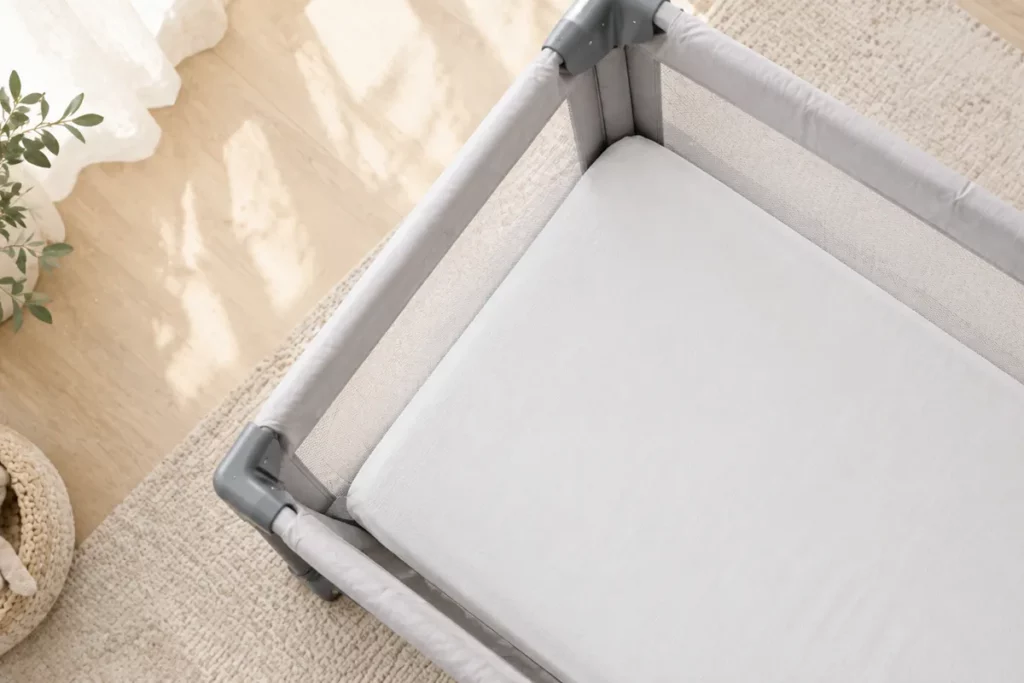
Many parents wonder how to make a Pack ’n Play more comfortable for their baby, especially when the included mattress or pad feels firmer than a traditional crib mattress.
The good news is that you do not need to make the sleep surface softer to make your baby more comfortable. In fact, adding a thicker mattress, topper, pillow, or other soft material can create safety risks.
Instead, focus on the things you can safely adjust: the fitted sheet, room environment, temperature, clothing, lighting, and overall sleep setup.
In this guide, I’ll explain six ways to make your baby’s sleep environment more comfortable without changing the original Pack ’n Play sleep surface.
Important: For infant sleep, always follow the instructions for your specific Pack ’n Play or playard. Use the mattress or pad designed for that product and keep the sleep space free of pillows, blankets, toys, positioners, and other soft or loose items.
- Can You Make a Pack ’n Play More Comfortable?
- How Can You Make a Pack ’n Play More Comfortable?
- Can You Put a Thicker Mattress in a Pack ’n Play?
- What About Pack ’n Play Mattress Toppers?
- Can You Use a Padded Pack ’n Play Sheet?
- What If My Baby Does Not Like Sleeping in the Pack ’n Play?
- Final Thoughts: How to Make a Pack ’n Play More Comfortable
Can You Make a Pack ’n Play More Comfortable?
Yes—but comfort should not come from making the sleep surface softer.
A Pack ’n Play, also called a playard, is designed to provide a portable space for sleeping and playing. Its sleep surface may feel firmer and thinner than a traditional crib mattress, but that does not mean you should replace it with a thicker or softer mattress.
The American Academy of Pediatrics recommends that infants sleep on a firm, flat, noninclined sleep surface covered with a fitted sheet and no other bedding or soft objects. It also recommends using only a mattress designed for the specific product.
The U.S. Consumer Product Safety Commission similarly recommends keeping a playard’s sleep space bare except for a fitted sheet.
So, rather than trying to make the Pack ’n Play mattress softer, look at the rest of your baby’s sleep environment.
How Can You Make a Pack ’n Play More Comfortable?
Here are six things you can try without changing the approved sleep surface.
1. Use a Properly Fitted Pack ’n Play Sheet
A properly fitted sheet can make the sleep surface feel more pleasant against your baby’s skin while also making cleanup easier.
Choose a sheet that is specifically designed for your Pack ’n Play or playard mattress, and check the manufacturer’s recommended dimensions before buying.
The sheet should fit snugly without excess fabric, bunching, or loose areas. Most importantly, the sheet should not change the shape or firmness of the original sleep surface.
If you are looking for a new sheet, see our guide to The Best Pack ’n Play Sheets.
2. Keep Your Baby Comfortable Without Adding Bedding
If your baby seems too warm or too cold, adjust the room and your baby’s clothing rather than adding bedding to the Pack ’n Play.
Dress your baby appropriately for the room temperature and avoid overheating. A properly fitted sheet should be the only item on the sleep surface. Appropriate sleepwear, such as a wearable blanket or sleep sack, can help keep your baby comfortable without adding loose bedding.
3. Make the Sleep Environment Darker When Needed
Sometimes the Pack ’n Play itself is not the problem. Your baby may simply have difficulty settling because the room is too bright.
This can be particularly noticeable during daytime naps, travel, or when you are sharing a room.
Instead of adding something to the sleep surface, try improving the room environment:
- Close curtains or blinds during naps.
- Reduce unnecessary light around the playard.
- Keep nighttime lighting dim.
- Keep the sleep environment as consistent as possible.
If you need more darkness, you can also read our guide on how to make a Pack ’n Play dark enough for sleep, which covers ways to reduce light without adding bedding or other loose items to the sleep space.
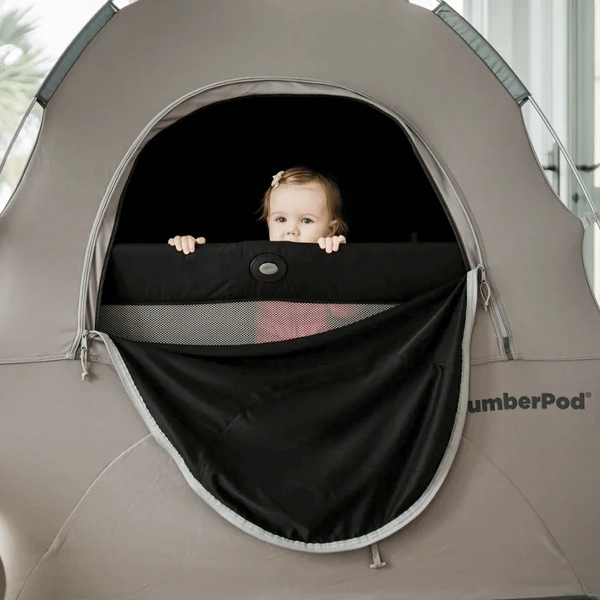
If you use a playard accessory, make sure it is specifically designed and approved for use with your exact model and follow the manufacturer’s instructions. Do not improvise with blankets, sheets, towels, or other fabric coverings, and do not use anything that changes the intended sleep setup or introduces loose fabric around your baby.
4. Keep the Room Comfortable
A room that is too warm, too cold, or stuffy can make it harder for your baby to settle.
Keep the room at a comfortable temperature and provide normal airflow. There is no need to make the room excessively cold or place a fan directly next to your baby.
Also keep cords, wires, and window-covering cords away from the playard. The AAP recommends keeping the infant sleep area free of these potential hazards.
5. Keep the Pack ’n Play Simple
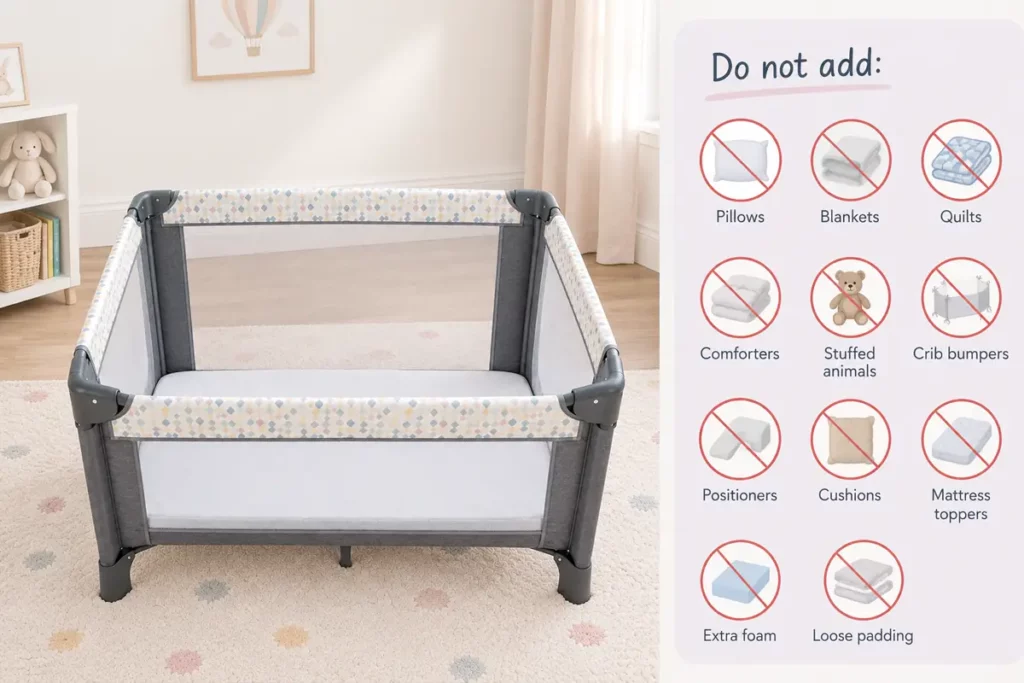
It can be tempting to add things to a Pack ’n Play to make it feel more cozy. For infant sleep, however, more is not better. Keep the sleep surface clear except for the fitted sheet.
Do not add:
- Pillows
- Blankets
- Quilts
- Comforters
- Stuffed animals
- Crib bumpers
- Positioners
- Cushions
- Mattress toppers
- Extra foam
- Loose padding
The AAP recommends keeping soft objects and loose bedding out of an infant’s sleep area because they can increase the risk of suffocation, wedging, or entrapment. The CPSC’s safe-sleep guidance similarly emphasizes “Bare is Best” for cribs, bassinets, and playards.
6. Check the Overall Sleep Setup
Before changing anything about the mattress, take a quick look at the entire sleep setup.
Ask yourself:
- Is the room too warm or too cold?
- Is the sleep space too bright?
- Is your baby dressed appropriately for the room?
- Does the fitted sheet fit correctly?
- Is the Pack ’n Play positioned somewhere relatively quiet?
- Is anything in or around the playard distracting or creating a safety hazard?
Sometimes a simple environmental change can make a bigger difference than changing the sleep surface.
Can You Put a Thicker Mattress in a Pack ’n Play?
No, not unless the manufacturer specifically says that a particular replacement mattress is approved for your exact Pack ’n Play or playard model.
A thicker or softer mattress may seem like an obvious way to make a Pack ’n Play more comfortable, but adding an unapproved mattress can change the fit, firmness, or height of the sleep surface.
If you are considering a different mattress for your Pack ’n Play, see our guide, Can I Put a Mattress in a Pack ’n Play, for more information on mattress replacement, fit, and safety.
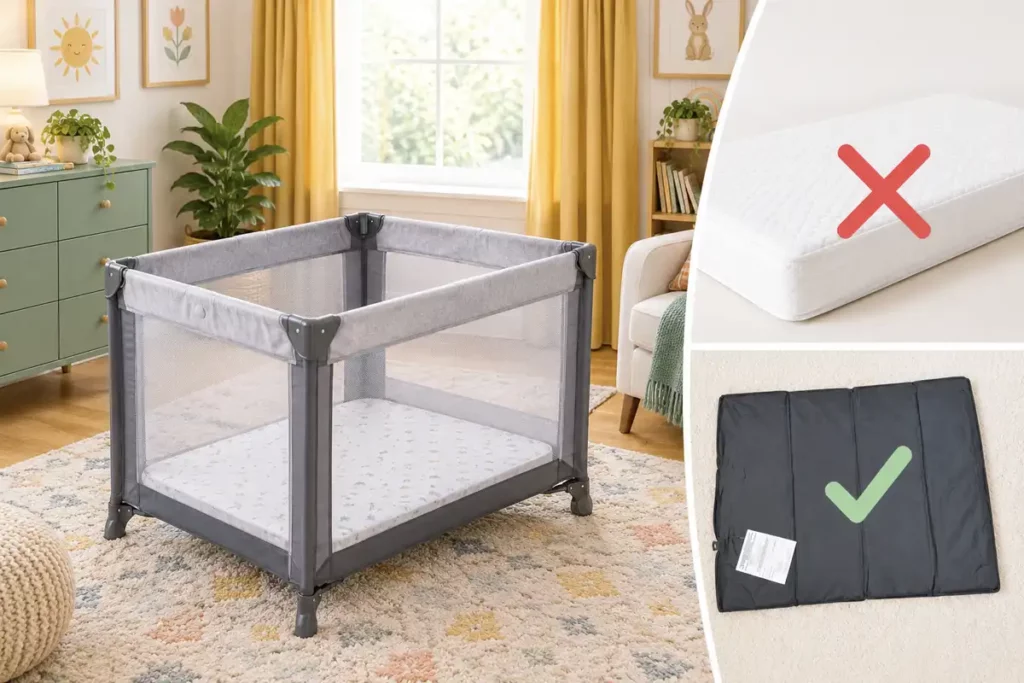
Do not add a crib mattress, mini crib mattress, foam insert, topper, or homemade padding simply because the original Pack ’n Play pad feels too firm.
What About Pack ’n Play Mattress Toppers?
Mattress toppers are marketed as a way to make a sleep surface softer or more comfortable, but they are not appropriate for an infant’s Pack ’n Play sleep space.
The AAP specifically states that mattress toppers designed to make the sleep surface softer are not safe for infants younger than 1 year.
More broadly, adding an unapproved topper can change the firmness, fit, or dimensions of the original sleep surface.
For infant sleep, do not add a mattress topper to a Pack ’n Play.
Can You Use a Padded Pack ’n Play Sheet?
Be cautious with Pack ’n Play sheets marketed as “padded,” “quilted,” or “extra soft.” A sheet should not add enough padding to change the firmness or fit of the original sleep surface.
For infant sleep, use a fitted sheet that is specifically designed or permitted for your playard and fits securely without excess material.
If you are shopping for a Pack ’n Play sheet, see our guide to The Best Pack ’n Play Sheets of 2026.
What If My Baby Does Not Like Sleeping in the Pack ’n Play?
This can be common when babies use a Pack ’n Play only occasionally, such as when traveling or staying somewhere away from home.
A Pack ’n Play may feel different from the crib at home. Your baby may also have trouble settling because of a change in routine, unfamiliar surroundings, light, temperature, or noise.
But what if your baby has been sleeping well in the Pack ’n Play and suddenly seems uncomfortable or has trouble settling? In that case, consider whether something about the sleep environment or setup has changed.
Before changing the sleep surface, check the room temperature, your baby’s clothing, the fitted sheet, and the overall setup. Also consider whether the room is brighter, noisier, warmer, or otherwise different than usual.
Sometimes the simplest change is the most helpful.
Final Thoughts: How to Make a Pack ’n Play More Comfortable
You don’t need to make a Pack ’n Play mattress softer to make your baby’s sleep environment more comfortable.
Instead, focus on the things you can safely control: use a properly fitted sheet, keep the room comfortable, dress your baby appropriately, reduce excessive light, maintain normal airflow, and keep the sleep space clear.
Most importantly, don’t replace or modify the original Pack ’n Play sleep surface just because it feels firm.
For infant sleep, the recommended setup is a firm, flat, non-inclined sleep surface with a fitted sheet and no other bedding or soft objects. Use only the mattress or pad designed for your specific playard, and follow the manufacturer’s instructions.