
Last Updated on October 14, 2026
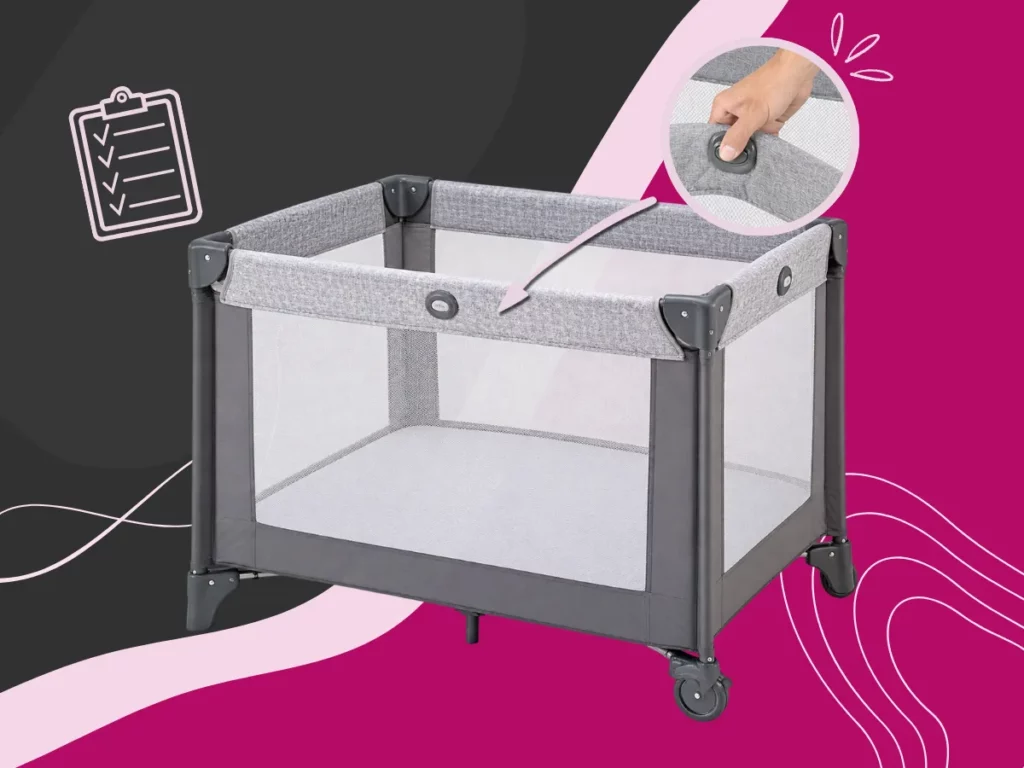
A secondhand Pack ’n Play can be a practical way to save money, especially if you need one for a grandparent’s house or occasional trips. But before your baby sleeps in it, take a few minutes to check the model, look for recalls, and make sure nothing important is missing or damaged.
After more than 10 years of researching and evaluating baby gear, I wouldn’t judge an older playard by its age alone. I’d start with its safety history, condition, and whether I could verify that it was assembled and used as intended.
Old Pack ’n Play Safety Checklist
Before using an older Pack ’n Play for your baby to sleep in, check these important safety details.
1. Find the Model Number and Manufacture Date
Start with the product label. Depending on the model, it may be attached to the frame or located elsewhere on the unit.
Look for the brand, model number, and manufacture date. These details help you check for recalls and find the correct assembly instructions.
Don’t rely on appearance alone. Similar-looking Pack ’n Play models may have different parts and compatible accessories. If the label is missing or unreadable, ask the manufacturer whether they can identify the model. If you still can’t confirm the correct assembly instructions, choose another sleep space.
2. Check for Recalls
A Pack ’n Play can look perfectly fine and still be subject to a safety recall. Always check before using a secondhand unit.
Search the CPSC recalls database using the brand and model number. Compare the product details with the official recall notice, including any manufacture dates or other identifying information.
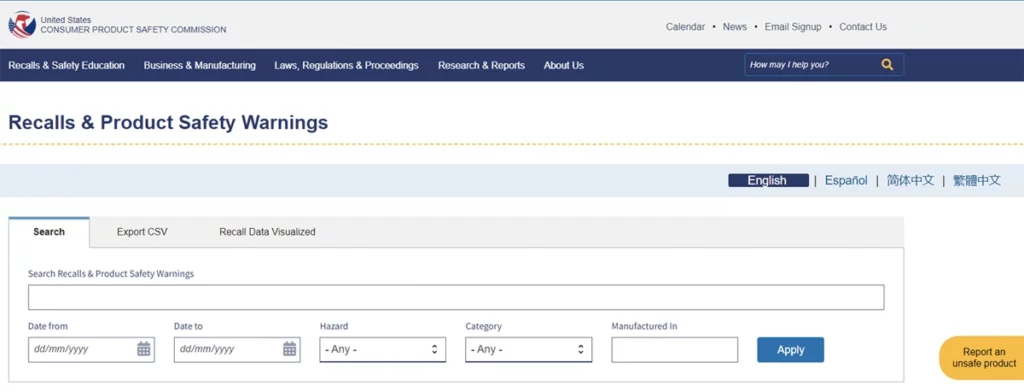
Tip: When searching the CPSC database, keep your search terms simple. Instead of typing the full commercial name (e.g., “Graco Pack ‘n Play Snuggle Seat”), start by searching just the brand and the primary keyword, like “Graco Playard” or “Graco Pack ‘n Play”. If that yields too many results, filter by the manufacture date or narrow it down using your specific model number.
If your unit is affected, follow the instructions in the recall notice. The remedy may involve replacement parts, a repair, a refund, or stopping use altogether. Don’t use the product until you’ve followed the specified instructions.
3. Make Sure All Essential Parts are Present
A Pack ’n Play may have been folded away for years or passed through several families. Before setting it up, compare the parts you have with the original manual.
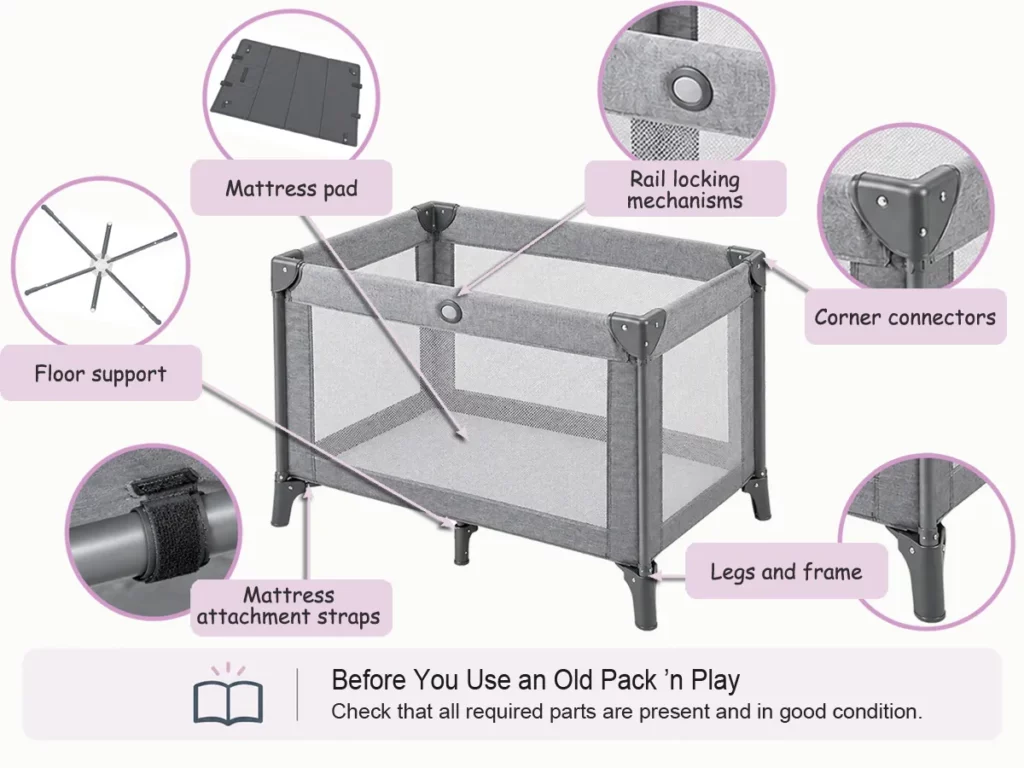
Check for missing fasteners, connectors, floor supports, locking components, and any other parts required for your model. Also look for signs that a previous owner altered the frame or replaced original components with parts that weren’t approved for your model.
Not every missing accessory means you can’t use the Pack ’n Play, but if you’re missing any structural or locking parts, that’s a whole different story. Don’t try to improvise with pieces from another model or fix things yourself. If a required part is missing, check whether the manufacturer offers an appropriate replacement. If you can’t get it, choose another sleeping space.
4. Inspect the Mesh and Fabric
Check all four sides, the corners, seams, and points where the mesh attaches to the frame.
Look for:
- Holes, tears, or fraying
- Loose stitching or separated seams
- Mesh pulling away from the frame
- Damaged fabric around attachment points
- Signs of a previous repair
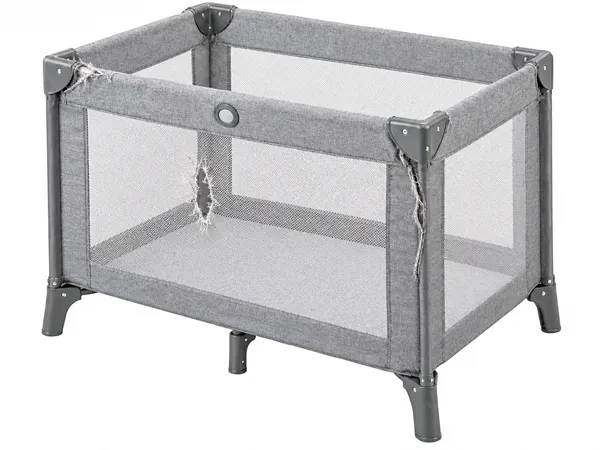
Warning: If you find damage, don’t use the unit for your baby’s sleep unless the issue can be resolved through an appropriate manufacturer-approved repair or replacement.
Even a small tear or loose seam can be a concern. Sewing or patching damaged areas doesn’t necessarily restore the play yard to its intended condition.
5. Check the Rails and Locking Mechanisms
Set up the Pack ’n Play exactly as described in its manual. Every rail should lock as intended, and the frame and floor support should be correctly assembled.
Check for bent rails, cracked plastic, loose joints, damaged locking mechanisms, or parts that don’t align properly. The frame should be stable, and you shouldn’t have to force components into place or work around a faulty lock.
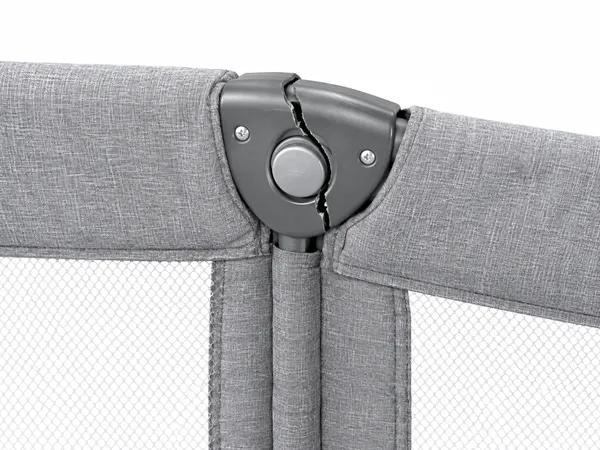
Warning: If the plastic around a rail’s locking mechanism is cracked, or the lock doesn’t work as intended, don’t use the playard. A faulty lock can allow a rail to collapse. Follow the manufacturer’s instructions for an approved repair or replacement, or stop using the unit.
Pay attention to the locking sequence. Some models require the rails to be locked in a particular order, so don’t assume a familiar-looking design works the same way as another model.
If a rail won’t lock or the frame doesn’t assemble correctly, stop using the playard and check the manufacturer’s instructions before attempting any repair.
6. Check the Original Mattress Pad
The mattress pad is just as important as the frame. Make sure it’s the correct one for your model, lies flat, attaches as instructed, and has no damage that could affect its use.
Keep these points in mind:
- Don’t add a crib mattress or extra padding. An additional mattress can create dangerous gaps between the sleep surface and the playard’s sides.
- Don’t assume a replacement pad will fit safely. Use the supplied pad or a replacement specifically approved by the manufacturer for your exact model.
- Check its condition. If the pad is torn, misshapen, or no longer fits as intended, do not use it.
A mattress pad that looks clean and comfortable isn’t necessarily suitable if it’s the wrong size or model. The fit matters just as much as its appearance.
7. Check Accessories and Attachments
If you’re buying a secondhand Pack ’n Play, check which accessories come with it.
Be especially careful with older bassinet, napper, and changing attachments. An accessory that fits the frame isn’t necessarily approved for your model or intended for sleep. Avoid aftermarket accessories unless the manufacturer confirms they’re compatible.
If you plan to use a bassinet attachment, read our guide to Pack ’n Play bassinet safety.
When to Pass on a Used Pack ’n Play
Sometimes, passing on a used Pack ’n Play is the safest choice.
Don’t use it for your baby’s sleep if you can’t identify the model, verify its recall status, find the correct assembly instructions, or confirm that all required parts are present. The same applies if the frame, locking mechanisms, mesh, or mattress pad are damaged and the problem can’t be resolved through an appropriate manufacturer-approved remedy.
If you’re considering buying a used playard, ask the seller for the model information and inspect the unit before paying, if possible. If important safety questions remain unanswered, choose another option.
Does a Pack ’n Play Have an Expiration Date?
Pack ’n Plays don’t have a single expiration age like some other baby products. An older model isn’t automatically unsafe, but its age makes it especially important to check its condition, recall status, and applicable safety requirements.
Why February 28, 2013, Matters
February 28, 2013, is an important date because the first mandatory U.S. safety standard for play yards took effect then. However, that doesn’t mean every playard made before that date is unsafe or that every newer model is automatically safe.
Regardless of its age, check the specific model and make sure it’s in good condition, has all required parts, and can be assembled according to the manufacturer’s instructions.
For more details, see the CPSC’s play yard safety guidance and our guide to Pack ’n Play safety.