
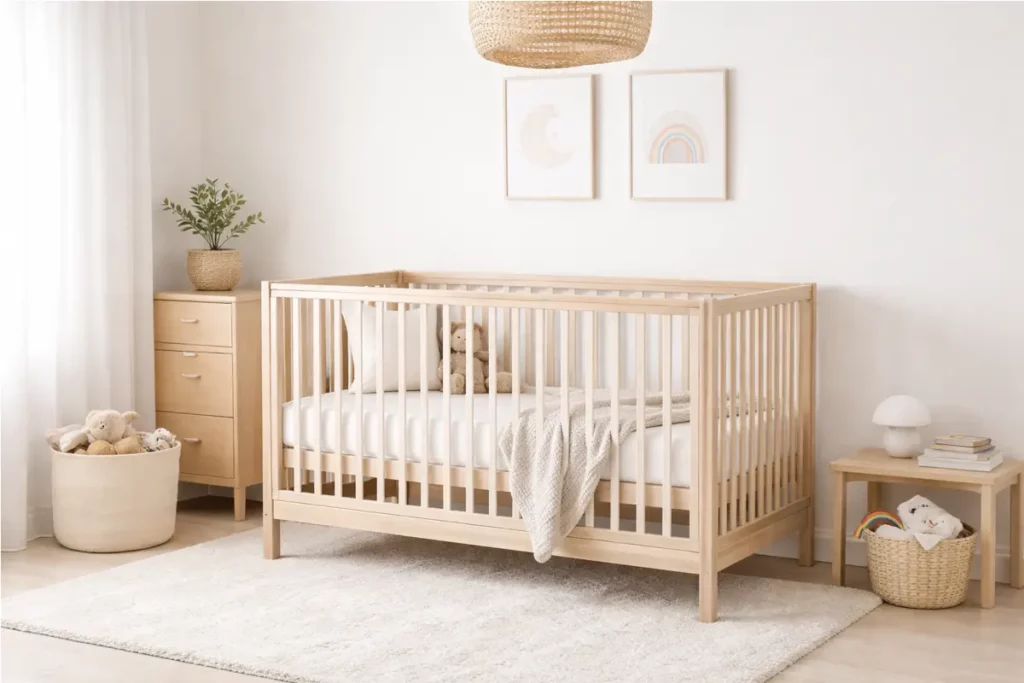
Scandinavian-style cribs have become incredibly popular over the past few years. They show up everywhere — modern nurseries, Pinterest boards, and baby gear roundups.
But is this style actually built to last, or is it just a design trend that will feel outdated in a few years?
This article is especially helpful for parents choosing a crib they plan to keep through multiple stages, not just the baby months. Below, we’re taking a realistic look at how Scandinavian cribs hold up over time, both in durability and in everyday family use.
- Why Scandinavian Cribs Became So Popular
- Do Scandinavian Cribs Hold Up Physically Over Time?
- Are Scandinavian Cribs Just a Trend?
- How Scandinavian Cribs Hold Up in Everyday Family Life
- When Scandinavian Cribs Might Feel “Overhyped”
- Realistic Expectations for Long-Term Use
- Frequently Asked Questions About Scandinavian Crib Longevity
- Bottom Line: Trend or Timeless?
Why Scandinavian Cribs Became So Popular
Scandinavian design isn’t new. It’s rooted in decades of emphasis on simplicity, function, and calm living spaces. In nurseries, that translates into cribs that feel visually lighter, avoid overly decorative details, and blend into the home instead of standing out.
Parents were drawn to the idea that baby furniture didn’t have to look temporary or childish.
Do Scandinavian Cribs Hold Up Physically Over Time?
A crib can look beautiful in the nursery, but if it’s not solid, stable, and well-made, that’s a problem.
After assembling and living with several cribs over time — in real homes, with real kids — one thing becomes very clear: build quality matters far more than design style. In everyday life, cribs get bumped, leaned on, climbed, and occasionally chewed on. That’s where quality construction really shows.
Questions about long-term durability often come up with light wood designs, especially when parents worry about scratches, stains, or visible wear. It’s one of the most common concerns we hear — and one we address directly in our guide on whether light wood cribs scratch or stain easily.
Higher-quality cribs tend to have fewer long-term issues: less frame movement, fewer loose joints, and a much lower chance of cracked or splintering wood, which can become a safety concern over time. And as parents, we all know that baby safety always comes first.
Scandinavian-style cribs aren’t automatically weaker or stronger than traditional cribs. Longevity has much more to do with how the crib is made, not how it looks.
What really affects long-term durability:
- Materials (solid wood vs. engineered wood)
- Joinery and hardware quality
- How well the crib is assembled and maintained
We’ve seen well-made Scandinavian cribs last through multiple children just as reliably as classic traditional cribs. If the frame is solid and the joints stay tight, the minimalist design holds up beautifully over time.
On the flip side, lower-priced Scandinavian cribs can show wear sooner. That isn’t a flaw of Scandinavian design itself — it’s simply a difference in materials and price tier.
As long as a crib meets current ASTM and CPSC safety standards, is properly assembled, and uses durable materials, a Scandinavian crib can be just as sturdy, safe, and long-lasting as any traditional option.
Are Scandinavian Cribs Just a Trend?
Some crib styles feel very “of the moment.” Bold colors, unusual leg shapes, or highly decorative details may look great now, but they can also feel dated surprisingly fast.
Scandinavian cribs tend to age differently. While specific finishes or small details may change over time, the core principles of Scandinavian design — clean lines, functionality, and natural tones — have been consistent for decades.
That’s exactly why Scandinavian cribs usually age better visually than highly themed or overly decorative nursery furniture. They don’t scream “baby phase.” They blend in.
If you’re curious which models consistently stand out for both design and build quality, we’ve rounded them up in our guide to Best Scandinavian-Style Cribs.
Design Takeaway
✔ Trend-driven finishes come and go
✔ Scandinavian design principles stay consistent
How Scandinavian Cribs Hold Up in Everyday Family Life
Parents who keep Scandinavian cribs long-term often mention the same things:
- Fewer visual signs of “nursery age”
- An easier transition into the toddler stage
- Less pressure to replace furniture just for aesthetic reasons
This becomes especially noticeable during crib-to-toddler-bed conversions. Because the design is neutral and clean, the crib doesn’t suddenly feel out of place once the room starts shifting from baby to toddler. Many families end up keeping it longer — not because they have to, but because it still fits the space.
When Scandinavian Cribs Might Feel “Overhyped”
Scandinavian cribs may not be the best long-term choice if:
- You prefer heavy, traditional furniture
- You expect heirloom-level solid wood at all price points
- You don’t care about design continuity between baby and toddler years
In those cases, a classic traditional crib may feel more satisfying over time.
Realistic Expectations for Long-Term Use
It’s important to separate design longevity from material longevity.
A Scandinavian crib can:
- Stay visually relevant for years
- Transition smoothly into toddler spaces
- Blend into different room styles
But it still requires normal care:
- Tightening hardware periodically
- Protecting finishes from heavy wear
- Using rail guards if needed
Like any crib, long-term performance depends on how it’s used, maintained, and matched to the family’s expectations. Higher-priced Scandinavian cribs often come closer to that heirloom-level feel — something we noticed firsthand when reviewing the Dadada Soho Crib.
Frequently Asked Questions About Scandinavian Crib Longevity
Bottom Line: Trend or Timeless?
Scandinavian cribs aren’t just a passing trend, but they’re also not magical.
They tend to hold up long-term when:
- You choose a quality model
- Your expectations match the price point
- You value design that blends rather than stands out
For many families, that balance is exactly what makes Scandinavian cribs worth choosing in the first place.
Understanding the design principles behind Scandinavian cribs can help set realistic expectations for long-term use. And if you’re still unsure what actually defines a Scandinavian-style crib, we break down the key design features and common misconceptions in our detailed guide.