
Last Updated on March 18, 2026
Last updated: March 2026
If you’ve started shopping for a crib, you’ve probably seen the phrase convertible crib everywhere. 2-in-1, 3-in-1, and 4-in-1 convertible cribs … all promise long-term value, but what do those numbers actually mean?
In this guide, I’ll explain what a convertible crib is and how it works, including the real benefits (and hidden costs), safety standards, when to transition to a toddler bed, and how to choose the best convertible crib for your home, budget, and long-term plans. If you’re already comparing specific models, you can also see our guide to the best convertible cribs, where we tested and compared the most popular options.
- What Is a Convertible Crib?
- Types of Convertible Cribs Explained
- Convertible Crib Size
- Convertible Cribs with Extra Features
- How Do Convertible Cribs Work?
- Convertible Crib Mattress Compatibility
- 2-in-1 vs 3-in-1 vs 4-in-1 Convertible Cribs: What’s the Real Difference?
- Convertible Crib vs Traditional Crib: Which Is Better?
- Pros and Cons of Convertible Cribs
- Safety Considerations Parents Should Know
- Choosing a Convertible Crib Based on Budget, Space & Sustainability
- Cost Comparison: Do You Actually Save Money?
- Are Convertible Cribs Worth It — And Who Are They Best For?
- Final Verdict: Should You Buy a Convertible Crib?
After years of reviewing, assembling, and comparing different crib types for Baby’s Little Place, I can tell you this: convertible cribs can be an amazing long-term investment, but only if you understand how the stages work and choose one that truly fits your long-term plans.
Jason, Baby’s Little Place
What Is a Convertible Crib?
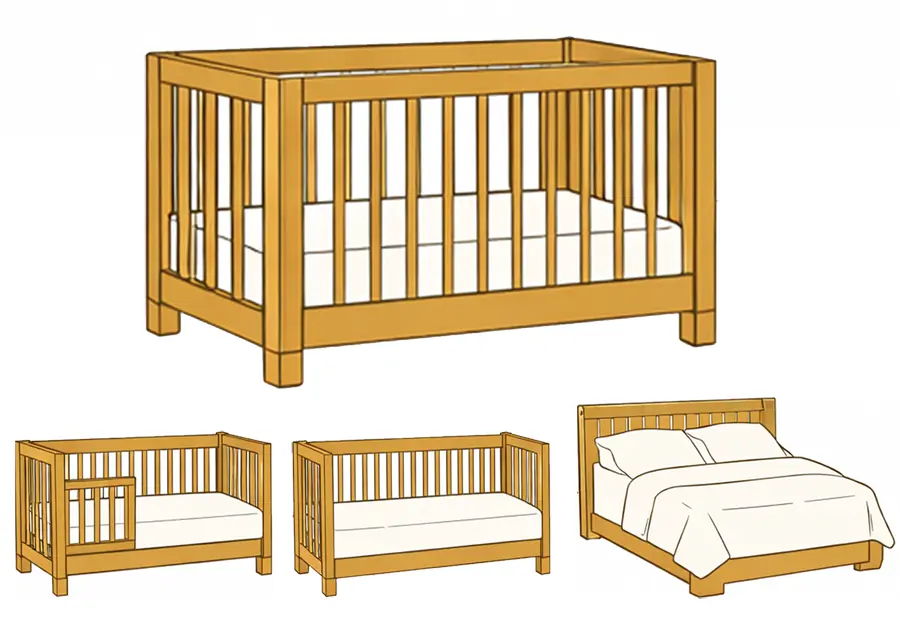
A convertible crib is a baby crib designed to transform into one or more larger bed configurations as your child grows. Instead of replacing the crib entirely, you reuse the main frame and modify it using the included parts or additional conversion kits.
Depending on the model, it may convert into:
- A toddler bed
- A daybed
- A twin or full-size bed
Recently, some newer designs even convert from a mini crib into a full-size crib — a hybrid approach we’ll break down in more detail below in section 4.
Types of Convertible Cribs Explained
The numbers can feel confusing at first — but they’re actually quite simple. The number in a crib’s name refers to the total number of bed configurations the crib can convert into, including the crib itself.
1. What Is a 2-in-1 Convertible Crib?
A 2-in-1 convertible crib is a baby crib that transforms into one additional bed configuration, most commonly a daybed.

This is the most basic type of convertible crib and can be a good option for smaller homes, shorter-term nursery setups, or parents who already plan to purchase a separate big-kid bed later.
From a budget perspective, it’s usually the most affordable convertible option upfront. If you expect to redesign your child’s room within a few years anyway, a 2-in-1 crib can be a very practical choice.
2. What Is a 3-in-1 Convertible Crib?
A 3-in-1 convertible crib is a baby crib that transforms into two bed configurations. In most cases, it converts from crib → toddler bed → daybed.
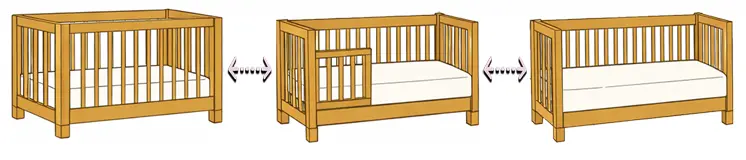
This is the most common type of convertible crib on the market. It provides more flexibility than a 2-in-1 crib without committing to a full-size bed conversion later. It also typically costs less than a 4-in-1 model.
📌 In our testing and review comparisons, 3-in-1 convertible cribs often hit the “sweet spot” between price and long-term usability.
3. What Is a 4-in-1 Convertible Crib?
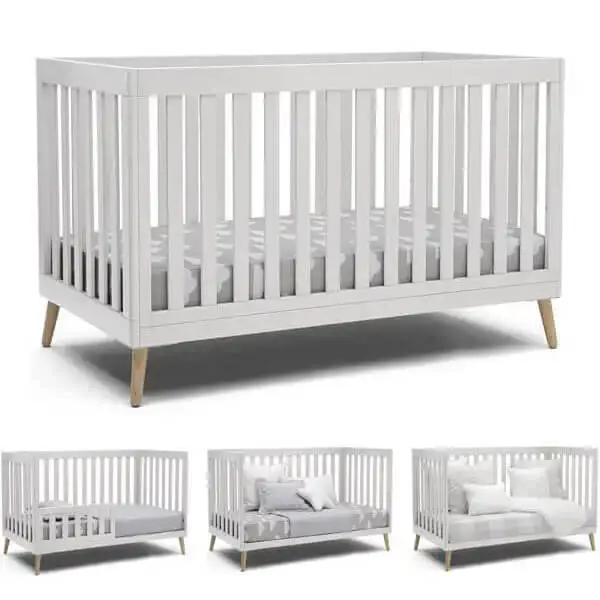
A 4-in-1 convertible crib transforms into three additional bed configurations. Most models convert from crib → toddler bed → daybed → full-size bed.

This option offers the longest potential lifespan, allowing the crib to eventually become a full-size bed that can be used well into the teen years.
However, the final stage usually requires a separate full-size conversion kit (bed rails and mattress support), which is rarely included with the crib. You’ll also need to purchase a standard full-size mattress.
A well-built 4-in-1 crib can provide excellent long-term value — but only if the construction quality is strong enough to support many years of use.
📌 If you’re considering a 4-in-1 crib and expect to use the full-size stage, I strongly recommend buying the conversion kit at the same time as the crib. These kits can sometimes be difficult to find years later.
4. Mini-to-Full Convertible Cribs
This is a newer category that has started gaining attention in recent years.
Mini-to-full convertible cribs expand from a mini crib into a full-size crib, essentially combining two crib sizes in a single system. This design allows parents to start with a compact footprint during the newborn stage. Many parents find this useful for keeping the baby close in their bedroom during the first few months. Later, the crib can easily be moved to the nursery and converted into a full-size crib as the baby grows.
A typical configuration might look like: mini crib → full-size crib → toddler bed → daybed. Some modular systems include additional stages, such as a bassinet, mini toddler bed, mini daybed, or full-size bed. As a result, there are models marketed as 6-in-1 or even 8-in-1 convertible cribs, offering maximum flexibility for growing families.
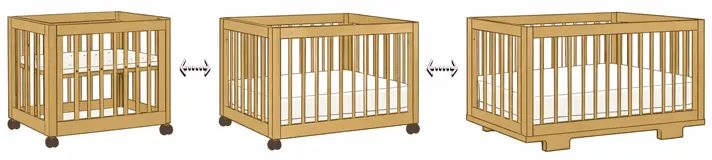
Table: Common types of convertible cribs and how they typically differ
| Type | Typical Conversions | Best For |
|---|---|---|
| 2-in-1 | Crib → Daybed | Short-term nursery plans |
| 3-in-1 | Crib → Toddler → Daybed | Most families |
| 4-in-1 | Crib → Toddler → Daybed → Full Bed | Long-term use |
| Mini-to-Full | Mini Crib → Full Crib → Toddler → Daybed | Flexible nursery setups |
Convertible Crib Size
Convertible cribs are available in two main sizes: full-size and mini. While both types can offer multiple conversion stages, the starting crib size significantly affects how long each stage will realistically last.
Full-size convertible cribs follow standard crib mattress dimensions and typically offer the longest usable lifespan. Mini convertible cribs, on the other hand, are designed for smaller spaces and start with a more compact sleeping area.
Below are examples of each size.
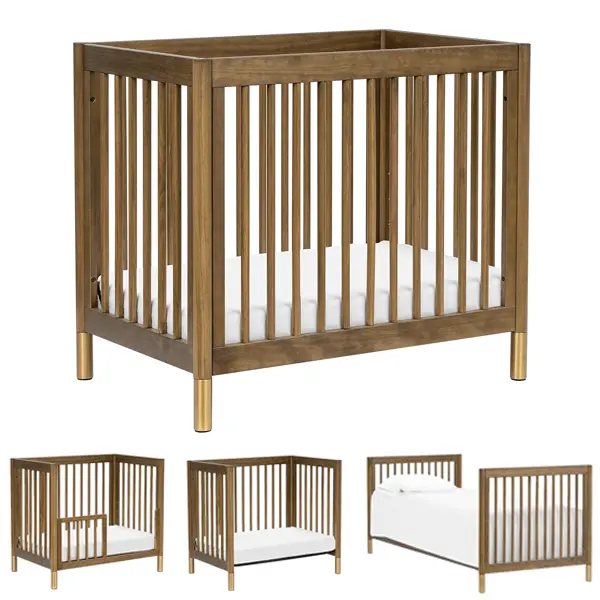
Mini convertible cribs can still transition into a toddler bed or daybed, and some models even convert into a twin bed. Keep in mind, though, that the sleeping surface stays the same length as the original mini crib mattress — meaning children outgrow these configurations sooner than they would a full-size model. If you’re considering a mini crib, think carefully about whether that shorter usable window aligns with your long-term plans.
Convertible Cribs with Extra Features
Many convertible cribs are also available in combination designs that add storage, changing areas, or even portability. These variations can be especially useful for families trying to maximize functionality in smaller nurseries.
Below are some of the most common feature combinations you’ll see.
Some convertible cribs include built-in drawers under the crib frame, providing extra storage for bedding, clothes, or baby essentials.
These drawers can be particularly helpful in nurseries with limited closet or dresser space. However, it’s worth noting that the drawer size and build quality vary widely between brands, and in some models the storage capacity is fairly limited.
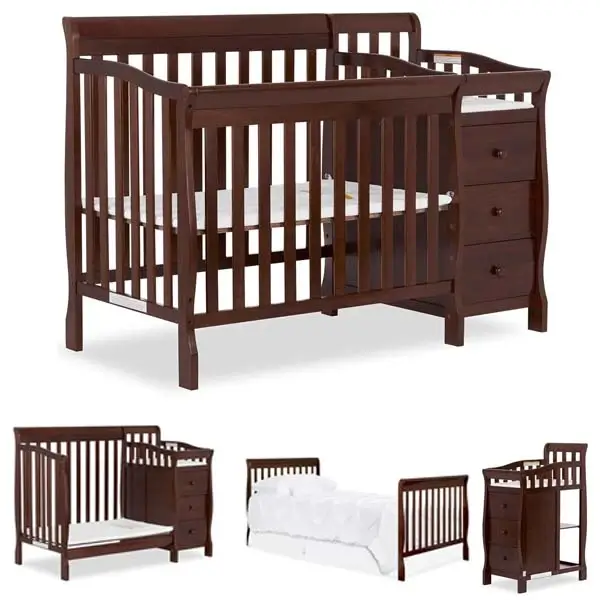
Another popular configuration combines a crib and attached changing table into a single piece of nursery furniture.
These models usually include open shelves, small drawers, or cabinets for storing diapers, wipes, and clothing. For smaller nurseries, this can be a practical way to consolidate two essential pieces of furniture into a single piece.
Some designs even combine both a storage drawer under the mattress area with a changing table, creating a complete nursery station around the crib.
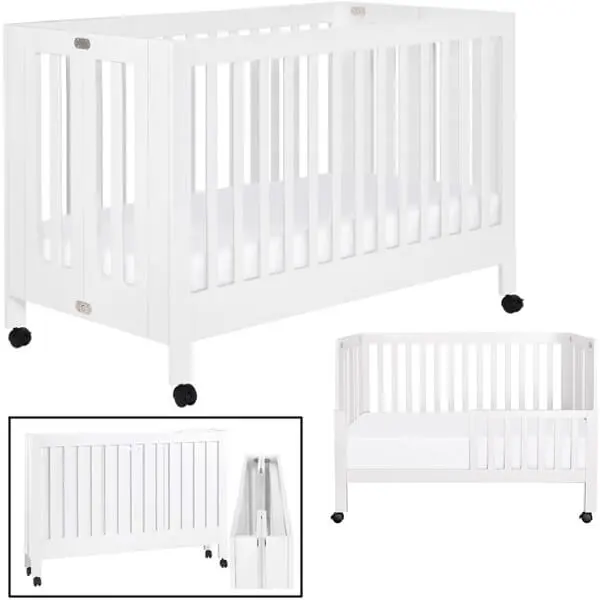
Although relatively rare, a few cribs combine portability with convertible functionality.
These models may include folding frames, wheels, or lightweight construction while still offering multiple growth stages. This makes them appealing for families who need flexibility or occasionally move the crib between rooms.
Below are examples of each type.
Convertible crib with built-in changing table
Convertible crib with under-crib drawer
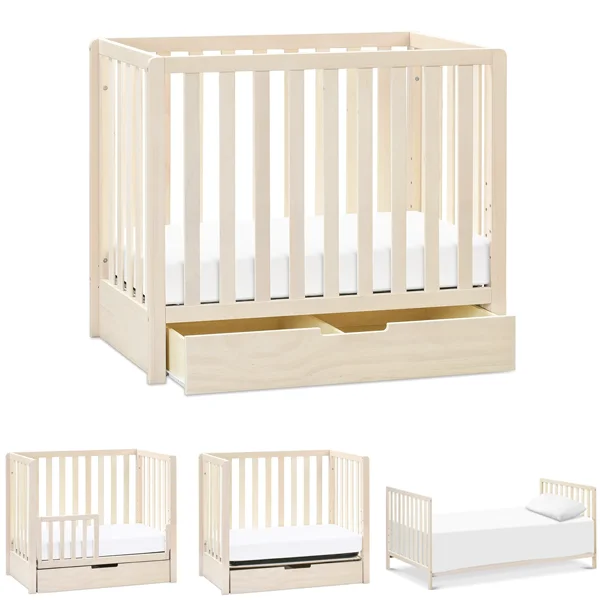
Carter’s by DaVinci Colby 4-in-1 Convertible Mini Crib with Drawer
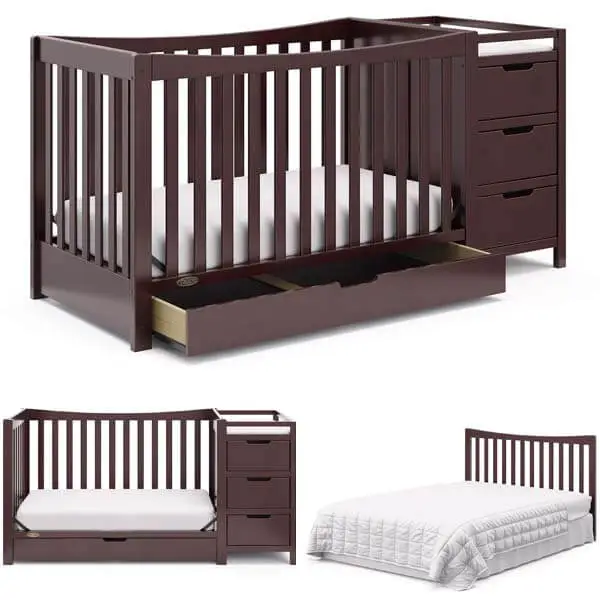
How Do Convertible Cribs Work?
At first glance, a convertible crib looks almost identical to a standard crib. The difference lies in the hardware and structural design, which allows parts of the crib to be removed, replaced, or reconfigured as your child grows.
When it’s time to convert the crib, the process is usually straightforward and can often be completed in less than an hour.
Here’s how the most common stages typically work:
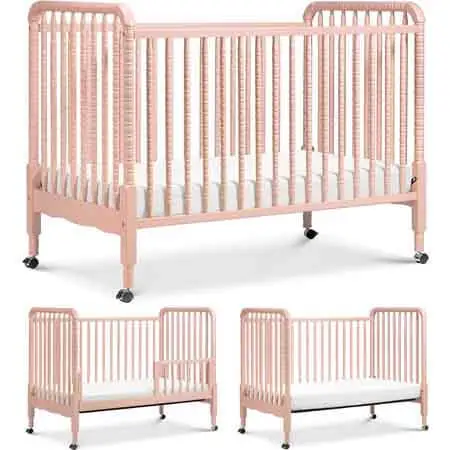
- Toddler bed: The front rail of the crib is removed. If the model includes (or offers) a toddler guardrail, it replaces the front panel to prevent nighttime falls while still allowing the child to climb in and out independently. Some designs, such as the Nestig Wave, replace both long sides with toddler rails, creating a more open, low-profile toddler bed.
- Daybed: In this stage, the front rail (or toddler guardrail) is removed entirely. Because there’s no barrier, the mattress must remain on the lowest height setting. In my experience, this stage isn’t always very practical. I personally prefer keeping a toddler rail installed until my kids are ready to transition directly to a full-size bed.
- Full-size bed mode: For the final stage, the longer crib sides usually become the headboard and footboard. The remaining frame is replaced with full-size side rails and mattress support slats.
💡 Note: Some brands, like Babyletto, include the toddler guardrail with the crib, but many sell it separately. Full-size conversion kits are almost never included in the original purchase, and you’ll also need a full-size mattress.
Typical Timeline for Each Conversion Stage
Convertible cribs are designed to last for years, but in reality, their usable lifespan depends on the crib’s size, your child’s growth, and how comfortable each stage feels for your child. Mini cribs, as well as their toddler and daybed versions, are shorter and narrower than full-size options. As a result, many children outgrow mini convertible setups sooner than parents expect.
Here’s how the transition timeline often looks in practice:
| Stage | Full-Size Convertible Crib | Mini Convertible Crib |
|---|---|---|
| Crib Stage | 0–24 months | 0–18 months |
| Toddler Bed | 18 months – 3 years | 18–30 months |
| Daybed | 3–5 years | Often skipped |
| Full-Size Conversion | 5+ years | Rarely used long-term |
Convertible Crib Mattress Compatibility
Choosing the right mattress is just as important as choosing the crib itself. Convertible cribs are designed to use the same mattress through multiple stages, so understanding sizing and height adjustments helps ensure both safety and long-term comfort.
Most convertible cribs offer three to four mattress height positions. These adjustments allow the crib to be used safely as your baby becomes more mobile.
- The highest position is used for newborns, making it easier to lift the baby in and out.
- Once your baby begins pushing up or rolling, the mattress should be lowered to a mid-level setting.
- When your baby can sit independently, the mattress should move lower again.
- The lowest position is used once your baby starts pulling up to stand.
Full-size convertible cribs follow standardized interior mattress dimensions of approximately 28″ × 52″. This means you can safely use any standard full-size crib mattress.
Mini convertible cribs, however, use smaller mattresses. Mini crib sizing is also not federally standardized in the same way. Thus, you have to carefully check the manufacturer’s recommended mattress dimensions before purchasing.
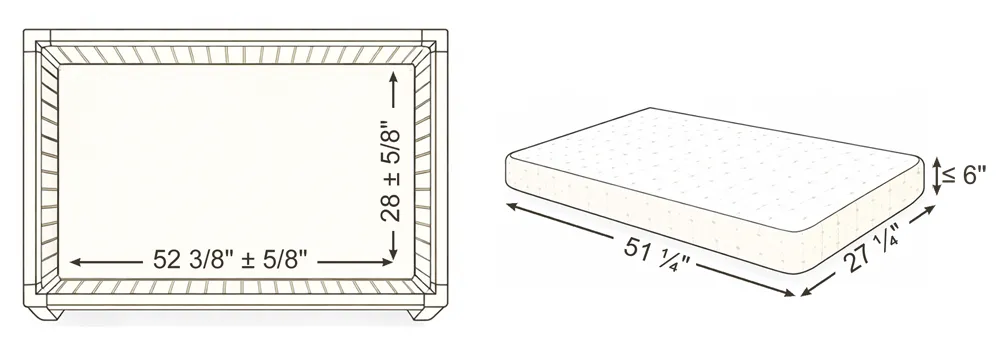
As for the toddler bed and daybed, both stages continue to use the same crib mattress, so you won’t need to replace it. For this reason, many parents choose a dual-sided crib mattress. Such a mattress is firmer on one side for infants and slightly softer on the other for toddlers, which can extend comfort through multiple stages.
If you want a deeper explanation of sizing and compatibility, see our guide to Baby Crib Mattress Size.
2-in-1 vs 3-in-1 vs 4-in-1 Convertible Cribs: What’s the Real Difference?
2-in-1, 3-in-1, 4-in-1 — what do those numbers actually mean?
The number simply tells you how many total bed configurations the convertible crib offers — including the crib itself.
Here’s the structural difference:
| Feature | 2-in-1 | 3-in-1 | 4-in-1 |
| Converts To | Crib → Daybed | Crib → Toddler bed → Daybed | Crib → Toddler → Daybed → Full-size bed |
| Lifespan | ~4–5 years | ~4–5 years | 8+ years (if fully converted) |
| Extra Parts Needed | Usually none | Toddler rail (sometimes included) | Toddler rail (sometimes included) + full-size conversion kit + full mattress |
| Typical Price Tier | $110–$250 | $130–$350 | $170–$700+ |
Convertible Crib vs Traditional Crib: Which Is Better?
A traditional crib does one thing: function as a crib. Once your child outgrows it (typically around age 2–3), you’ll need to purchase a separate toddler or twin bed. Traditional cribs are simple and often cost less upfront. No conversion kits. No hardware swaps.
Convertible cribs, on the other hand, offer flexibility. You may pay more initially, but you potentially avoid buying multiple beds over time.
So which is better?
- If you value simplicity and expect to redesign the room later, a traditional crib may work well.
- If you prefer long-term use and furniture continuity, a convertible crib is usually the smarter investment.
💡 It’s less about “better” and more about your long-term plan.
Pros and Cons of Convertible Cribs
Pros
- Long-term usability
- Lower cost per year of use
- Familiar sleep space during toddler transition
- Consistent nursery aesthetic
- Fewer furniture replacements
Cons
- Higher upfront price
- Conversion kits may be sold separately
- Not always used through all stages
- Some designs feel less “grown-up” in full-size form
Safety Considerations Parents Should Know
All cribs sold in the U.S. must comply with federal safety standards enforced by the Consumer Product Safety Commission (CPSC). That means if you’re purchasing a new crib from a reputable retailer, it has already passed required safety testing.
However, there are still a few practical safety checks every parent should make during assembly and use.
What You Should Personally Check:
Federal standards require slats to be no more than 2 3/8 inches apart. With a new crib, this is already regulated. However, it’s especially important to double-check spacing if you’re purchasing a secondhand convertible crib or reassembling one that has been stored.
Full-size crib mattresses are standardized, so compatibility is typically straightforward. Still, once everything is assembled, it’s important to confirm the mattress fits snugly — with no more than two fingers’ width between the mattress and crib frame.
This is particularly important for mini cribs, since mini mattress sizing is not federally standardized in the same way full-size models are.
Convertible cribs involve multiple stages and reassembly over time. After each conversion, double-check that all bolts, screws, and brackets are tightened fully. Even a well-built crib can become unstable if hardware loosens during transition.
While not legally required, these certifications add reassurance:
- JPMA Certification (indicates third-party testing beyond minimum federal requirements)
- GREENGUARD Gold Certification (low chemical emissions)
These labels don’t automatically make a crib “better,” but they can provide added peace of mind.
📌 For a full breakdown of safety standards, safe sleep guidelines, and proper crib setup, see our complete Baby Crib Safety Standards guide.
Choosing a Convertible Crib Based on Budget, Space & Sustainability
Once you understand safety standards and long-term value, the next step is choosing a crib that fits your real-life priorities.
For most families in 2026, that usually comes down to three things:
- Budget
- Available space
- Eco-conscious materials
In 2026, affordable convertible cribs typically fall between $110 and $200, and this price range now includes some of the most popular models on the market.
Unlike in the past, you no longer need a mid-range budget to get multi-stage functionality.
What to Expect in This Price Range
Most affordable convertible cribs include:
- 3-in-1 or even 4-in-1 functionality
- Pinewood or engineered wood construction
- Clean, minimal finishes
- Standard safety certification
At this level, design is usually simple and practical. You won’t see luxury materials or intricate detailing, but you can absolutely get a structurally sound crib that meets safety standards.
Where Budget Models Compromise
Lower-cost models may have:
- Lighter overall weight
- Thinner slats or panels
- Fewer finish options
- Conversion kits sold separately
That doesn’t make them unsafe; it simply means the build quality and long-term durability may not match those of higher-end solid-wood models.
Who an Affordable Convertible Crib Is Best For
This tier works well for families who:
- Want multi-stage functionality without a large upfront investment
- Plan to use the crib primarily through toddler years
- Prefer to upgrade to a separate big-kid bed later
Many families choose this route because it keeps the nursery budget manageable while still offering flexibility and safety.
If your main goal is minimizing upfront cost, this category provides the strongest value entry point into convertible cribs.
In smaller nurseries or apartments, footprint matters more than the number of conversions. Look for convertible cribs with slim-frame designs, compact overall dimensions, built-in storage, or crib-and-changing-table combos.
A mini convertible crib is another strong option for small spaces. However, in practice, mini convertible cribs usually function best as early-years solutions rather than long-term beds into elementary school.
If space is your biggest constraint, a mini model can absolutely work — just make sure the shorter usable window fits your long-term plan.
If sustainability is a priority, many convertible cribs in 2026 offer eco-conscious materials and certifications. Look for GREENGUARD Gold certification, low-VOC finishes, and sustainably sourced solid wood. These features help reduce indoor air pollutants and chemical exposure in the nursery.
Because “eco-friendly” isn’t a strictly regulated label, it’s important to verify specific third-party certifications rather than relying on general marketing claims.
Eco-focused models often cost more, so the goal for most families is balance — choosing safer materials where possible without exceeding budget.
How to Prioritize If You’re Balancing All Three
Most families aren’t choosing just one factor. If you’re weighing budget, space, and sustainability at the same time, use this order:
- Confirm safety and structural quality.
- Make sure it physically fits your space.
- Evaluate long-term usability.
- Then refine based on eco-features or design preferences.
A convertible crib is a long-term piece of furniture. The best choice isn’t the one with the most features but the one that realistically fits your home and your plans for the next several years.
Cost Comparison: Do You Actually Save Money?
Convertible cribs often cost more upfront — but whether they save money long term depends on how many stages you actually use.
Here’s a simplified look at realistic 2026 price ranges:
| 3-in-1 Convertible Crib | Crib + toddler rail | $150–$400 (depending on brand & included rail) |
| 4-in-1 Convertible Crib | Crib + toddler rail + full-size conversion kit + mattress (later) | $200–$900+ (crib + later conversion kit + mattress) |
| Separate Beds Over Time | Basic crib + toddler bed + twin/full bed | $600–$1,400+ |
(Ranges vary by brand, materials, and mattress choice.)
What This Means Financially?
- If you convert a 4-in-1 crib all the way to a full-size bed and use it for many years, it can cost less than buying multiple separate beds over time.
- If you only use the crib and toddler stages, the long-term savings become less significant.
- Many 4-in-1 cribs are not dramatically more expensive than 3-in-1 models at initial purchase. The larger cost difference usually appears later, when you decide whether to buy the full-size conversion kit and mattress.
For some families, an affordable convertible crib used through toddlerhood is the most budget-friendly choice. For others, a full 4-in-1 conversion truly functions as long-term furniture. The right financial decision depends less on the product category and more on your long-term plan.
Are Convertible Cribs Worth It — And Who Are They Best For?
Short answer? For many families — yes. But not automatically. Convertible cribs make the most sense when you plan to use at least two or three stages and prefer long-term furniture continuity.
They’re especially practical for:
- First-time parents building a nursery from scratch
- Families planning to stay in the same home for several years
- Parents who prefer a cohesive room design that evolves gradually
- Budget-conscious families thinking in terms of cost per year — not just upfront price
- Families planning multiple children, where the crib may eventually be reused
Where convertible cribs are particularly helpful is during the toddler transition. Converting a familiar crib into a toddler bed often feels less stressful than introducing a completely new sleep setup.
However, they aren’t automatically the best financial choice. You may need to purchase a toddler rail separately. Full-size conversion kits and mattresses are almost always sold separately. And not every family ends up using the final stage.
Convertible cribs are usually less ideal for families who:
- Move frequently
- Prefer redesigning rooms often
- Plan to switch to a themed big-kid bed later
The real question isn’t simply “Is it worth it?”, but:
Will you realistically use the additional stages?
- If yes, a convertible crib can be an excellent long-term investment.
- If not, paying for extra configurations may not add meaningful value.
The best decision comes down to how you actually live, not what the marketing promises.
Final Verdict: Should You Buy a Convertible Crib?
Convertible cribs make sense if you’ll actually use multiple stages. In my experience, they offer flexibility, solid long-term value, and help you avoid buying multiple pieces of furniture as your child grows. They also come in a wide range of styles and sizes—some compact, some full-sized, with or without extras like under-crib storage drawers or attached changing tables.
That said, they’re not automatically the best choice for everyone. If you don’t plan to use the additional stages, a simpler crib can be a smarter, more practical option. But in reality, fully “non-convertible” cribs are becoming rare. Basic models often convert at least into a daybed, and in many cases, the price difference is negligible, especially when no extra parts are required. Because of that, I don’t really see a strong reason to actively avoid convertible options.
Where I would pause is based on lifestyle needs. If you’ll be moving the crib frequently, a model with wheels might be more convenient. If you need something that can be folded and stored, a portable crib is likely a better fit. That said, there are also convertible cribs that include mobility or partial portability—fewer options, but some excellent ones do exist.
At the end of the day, don’t get too caught up in the “convertible” label. Focus on your space, your timeline, and how you’ll realistically use the crib day to day—that’s what matters most.
👉 Compare the top-rated convertible cribs in our guide to find the right fit.