
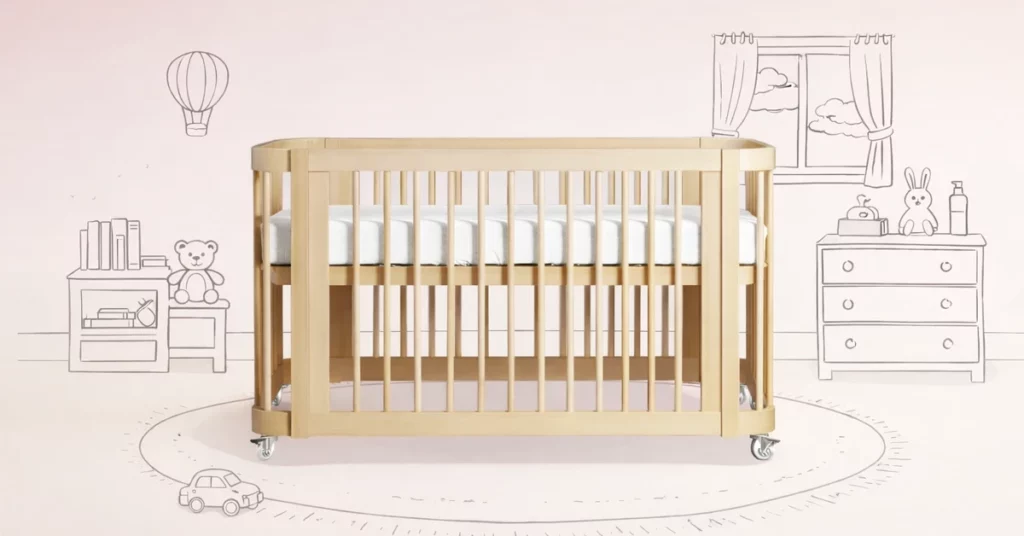
The Nestig Wave crib has become one of the most talked-about designer cribs online — but is it really worth the premium price tag? We decided to find out for ourselves, so we ordered the crib and put it through our full hands-on testing process.
We assembled every stage of the Nestig Wave crib, tested its stability, measured the slat spacing, checked mattress fit, and compared it against other convertible cribs we’ve reviewed. What I was most curious about? Stacking it up against the Babyletto Yuzu crib, since both are top picks for style-focused parents right now.
So, if you’re considering this mini-to-full convertible crib, here’s our full Nestig the Wave crib review with everything you need to know before you decide.
Quick Summary & Key Features of Nestig the Wave Crib
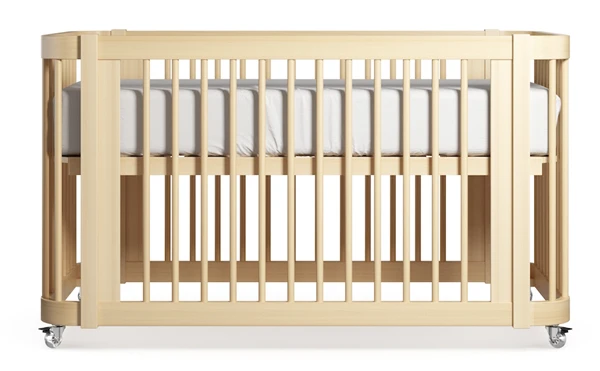
A design-forward 3-in-1 crib that transitions from mini crib to full crib to Montessori-style toddler bed.
Baby’s Little Place Score:
4.7 out of 5 stars
Crib Specifications:

Crib Type:
3-in-1 mini-to-full convertible crib

Compatible Mattress Size:
- Custom mini mattress
- Standard crib mattress

Assembled Dimensions:
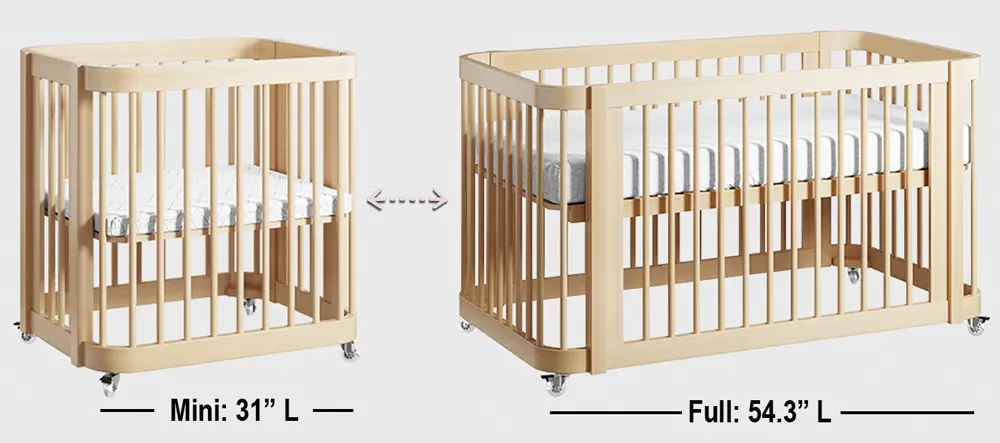
- Mini: 31” L x 24.5” W x 31.5” H
- Full: 54.3” L x 31” W x 31.5” H

Assembled Weight:
55–65 lbs (varies by stage)

Available Finishes:
Natural Wood, White, Walnut

Crib Design:
Modern sculptural design with wave-inspired curves and a minimalist silhouette
Key Features:
- Converts from mini crib to full crib to toddler bed
- Toddler bed configuration does not include a safety rail (sold separately)
- GREENGUARD Gold Certified
- Includes a mini mattress
- 3 adjustable mattress heights
- Optional wheels for mini and full crib
Who This Crib Is For:
- Parents who plan to use both a mini and a full-size crib
- Design-focused families who care about aesthetics
- Those planning to skip a separate bassinet
- Families who intend to use a toddler bed
- Those who need a crib that’s easy to move around
Not Ideal For:
- Budget-conscious shoppers
- Families planning to move to a floor bed very early
- Parents who prefer a traditional toddler bed safety rail
Why We Tested This Crib
The main reason for testing the Nestig Wave crib was its promised practicality of combining a mini and a full-size crib in one package.
While using a full-size crib from day one is perfectly safe, many parents (myself included) find that the scale can feel overwhelming during those early newborn weeks. A mini crib or bassinet often feels more manageable and better suited, especially if you use it in your bedroom for the first months.
The real challenge? Cost. Buying a bassinet or mini crib first and then investing in a separate full-size crib just a few months later typically means two major purchases in a short period of time. In many cases, that combined cost even exceeds the price of the Nestig Wave crib.
The second thing that caught my eye is the Wave’s beautiful design. However, after testing dozens of cribs over the years, I’ve learned that aesthetics alone don’t justify the price. What truly matters is build quality, ease of conversion, long-term usability, and whether the crib still feels solid and practical beyond the newborn stage. And that’s exactly what we set out to evaluate in our hands-on testing.
How We Tested
We assembled and converted the crib through all three stages — mini, full-size, and toddler bed — evaluating stability, mattress fit, materials, and ease of adjustment along the way. Our team performed hands-on shake tests, slat measurements to confirm CPSC compliance, and pressure tests on the mattress support system. We also compared our findings with consistent parent feedback to ensure our conclusions reflect real-life, long-term use.
About Nestig as a Brand
Nestig is a boutique nursery brand known for its small-batch, handcrafted cribs made in Brazil. Rather than mass-producing large furniture collections, the brand focuses on a limited lineup of thoughtfully designed pieces that prioritize sustainability and long-term usability.
If you’d like a deeper dive into Nestig’s materials, craftsmanship, and overall brand philosophy, we’ve covered that extensively in our full Nestig brand review.
What We Liked vs. Areas for Improvement

Pros
- Beautiful, modern curved design
- Includes a mini mattress
- GREENGUARD Gold Certified
- Solid Brazilian pine construction
- Optional wheels
- Wheels lock securely and roll smoothly
- Toddler bed sits low (Montessori-friendly)
- Toddler bed can be used with or without a guardrail
- 18-year limited warranty
Cons
- Included mini mattress is not waterproof
- Mini size requires custom sheets
- Higher-end price point
- Traditional toddler guardrail not included (sold separately)
- No elevated leg option (crib sits on wheels or directly on the floor)
Full In-Depth Review
Below, I break down everything our team discovered while testing the Nestig Wave crib — from delivery and assembly to long-term durability, safety, and real-life usability.
Before we get into assembly, one important detail to understand is Nestig’s production model. Nestig manufactures cribs to order, so delivery typically takes around four weeks. That’s important to keep in mind if you’re adding it to a registry or planning around a due date.
I. Assembly & Setup
Our assembly timing was very close to Nestig’s estimated 30 minutes for the mini crib and 20 minutes for each conversion stage:
- Mini crib: 28 minutes
- Full-size crib conversion: 23 minutes
- Toddler bed: 16 minutes
The crib arrived in multiple clearly labeled boxes, which made it easy to find exactly what was needed for each setup without opening everything at once. I can see this being especially helpful for parents assembling the Wave crib at home.
The assembly itself was straightforward. All hardware was included, and we only needed the Allen wrench provided. The instructions were clear and well illustrated. I do recommend having a second person help, especially when attaching the curved side panels — that was the only step where we needed to slow down a bit. It’s not complicated, but because of the shape, lining everything up carefully makes a difference in how secure it feels once assembled.
The conversion to the full-size crib went even faster, since the original mini crib side panels are reused as the shorter end panels. You simply attach the longer sides and swap in the larger mattress support. It feels more like expanding the crib than assembling a new one.
II. Convertibility & Versatility
The Nestig Wave crib converts from a mini crib → full-size crib → toddler bed. All primary components for these three stages are included.
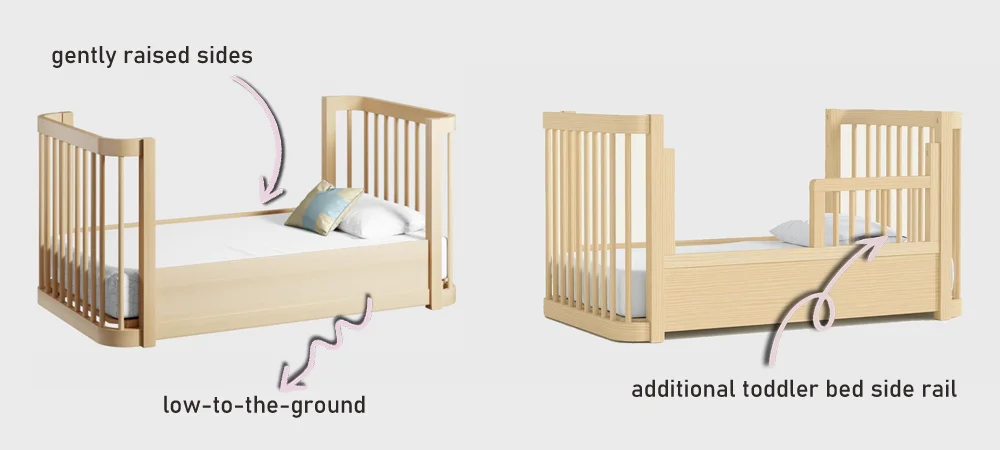
One important detail to understand is the toddler bed configuration. It does not include a traditional safety guardrail by default.
I prefer toddler beds with a guardrail, since many toddlers still move frequently in their sleep. That said, when converted, the Wave’s mattress sits just 3 inches from the floor, creating a Montessori-style sleep space that allows toddlers to climb in and out independently. Because the sides remain gently raised and the mattress sits so low, I did not consider this a major safety concern based on our testing.
For families who prefer added protection, the Wave toddler bed side rail is sold separately (currently $179). You can install one or two, but adding both significantly increases the overall cost.
How Long Can You Realistically Use Each Stage?
Based on our testing and parent feedback:
- Mini crib: typically 3–6 months, depending on growth and rolling milestones
- Full-size crib: from infancy through about 2–3 years
- Toddler bed: generally from around 18 months to 4–5 years, or up to approximately 50 lbs (whichever comes first)

III. Wheels & Mobility
One feature I particularly appreciate is the included locking wheels. They make it easy to move the crib around the room without lifting or dragging it. The wheels rolled smoothly across both hardwood floors and low-pile carpet and locked securely once in place.
For families who value flexibility — whether that means positioning the crib closer to your bed or shifting it slightly for cleaning — this small detail adds everyday convenience. The wheels can also be removed if you prefer a stationary setup.
IV. Mattress Fit & Height Adjustability
With the Nestig Wave crib, you’ll use two mattresses over time: the included mini mattress and a standard full-size crib mattress once the crib is expanded.
The mini mattress fits snugly with no unsafe gaps. However, because of its custom size, sheet options are limited, and you’ll likely need Nestig-specific mini crib sheets. It’s also not waterproof — during testing, a small water spill absorbed quickly, so a waterproof cover is essential.
Once converted to the full-size crib, you’ll need to purchase a standard crib mattress separately. We tested it with a Newton Baby Wovenaire crib mattress, and the fit was snug, passing the two-finger test with no concerning gaps. However, since the Wave full-size crib has standard dimensions, you can actually use any full-size crib mattress you want.
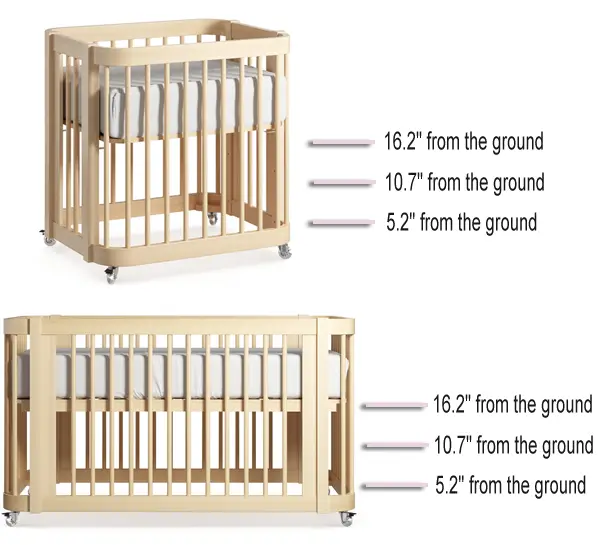
The crib offers three adjustable mattress heights. Adjustments require partial disassembly but are straightforward. The highest setting works well for newborns, while the lowest is appropriate once baby begins pulling to stand. Very tall parents may find the lowest position slightly low when reaching down, especially in the full-size configuration without the wheels installed.
V. Design & Aesthetics
This is where the Nestig Wave crib stands out. The curved side panels create a sculptural silhouette that feels more refined than traditional square cribs. It’s minimalist, but not plain — the rounded edges add softness without overwhelming the room.
The crib is available in Natural Wood, White, and Walnut. We tested the Natural Wood finish, which has a warm tone that works especially well in modern or minimalist nurseries. It adds character without feeling trendy.
In smaller rooms, the mini crib stage feels noticeably lighter and less bulky than a full-size crib. I especially liked that it doesn’t visually dominate the space.
VI. Safety & Stability
We ran our full shaking and push tests in all three stages (mini, full-size, and toddler bed) and didn’t notice any wobbling. The included locking wheels held the crib securely in place when engaged, giving confidence that the crib won’t shift unexpectedly.
The Wave meets all CPSC crib safety standards, which cover everything from slat spacing to structural integrity. Even so, we double-checked a few key points ourselves, including measuring the slat spacing, which came in at under 2 3/8 inches (CPSC-compliant).
The finish felt smooth with no rough edges, and there was no strong chemical smell upon arrival, consistent with the GREENGUARD Gold certification.
VII. Durability & Build Quality
The frame is made from sustainably harvested solid Brazilian pine, with a TSCA-compliant engineered wood mattress support.
During testing, we performed light-scratch, weight-pressure, and slat-flex tests. The finish resisted light surface scratching, and the slats did not flex under moderate pressure. The mattress support felt stable and secure.
One realistic note: like most painted cribs, the finish may show minor wear over time. But overall, the construction feels solid and well-built, with durability that should comfortably last through the toddler stage.
VIII. Maintenance & Long-Term Care
Taking care of the crib is simple. Wipe the surface with a damp cloth, then dry it right away so moisture does not stay on the wood. Avoid using abrasive cleaners, since they can damage the finish over time.
As with any convertible crib, it is important to check regularly that all hardware is tightened, especially after you convert the crib from one stage to another.
IX. Price & Value for Money
At $849 at the time of writing, the Nestig Wave crib sits firmly in the premium category. I view it as a long-term investment rather than a short-term purchase.
It’s a three-stage system — mini crib, full-size crib, and toddler bed — with the mini mattress included, which adds meaningful long-term value. The crib is made to order rather than stocked in large warehouses, which typically results in a delivery window of around four weeks. While that requires planning ahead, especially if you’re close to your due date, it may also appeal to families who value a made-to-order production model and a more intentional manufacturing approach.
Resale value is also worth considering. Well-maintained Nestig cribs tend to retain strong demand on secondhand marketplaces due to the brand’s design reputation and limited production model.
For families who prioritize sustainability, long-term usability, and strong design aesthetics, the price may feel justified. Budget-focused shoppers may find more affordable convertible options.
FAQs
Nestig Wave vs Babyletto Yuzu: Which Is Better?
Both cribs start with a mini crib configuration and expand as your child grows, but they serve slightly different priorities.
At a glance:
- Nestig Wave → Stronger sculptural design, handcrafted feel, premium aesthetic
- Babyletto Yuzu → More compact footprint, lower price, 8-in-1 versatility
The Wave feels more design-driven, with a refined, sculptural silhouette and premium finishes. The Yuzu leans more toward practicality, offering a compact footprint and multiple conversion options while remaining more budget-friendly.
If aesthetics, craftsmanship, and a standout design are your top priorities, the Wave is the stronger choice. If you’re focused on price, space-saving adaptability, and maximum conversion versatility, the Yuzu may offer better value for your family.
We’re preparing a full in-depth Wave vs Yuzu comparison — coming soon.
Comparison Table:
| Crib | Convertibility | Toddler Rail | Storage | Price | Certification | Style |
|---|---|---|---|---|---|---|
| Nestig Wave | mini crib, full-size crib, toddler bed | Yes (not included) | No | ~$850 | GREENGUARD Gold | Modern sculptural |
| Babyletto Yuzu | bassinet, midi crib, midi toddler bed, midi daybed, standard crib, toddler bed, daybed, and junior bed | Yes (included) | No | ~$700 | GREENGUARD Gold | Modern compact |

For a more detailed look at the Yuzu, check out our full Babyletto Yuzu review — it covers materials, assembly, and real-life usability.
Who Should Probably Skip This Crib
If you’re trying to keep nursery costs as low as possible, this likely isn’t the right fit. At $849, plus the cost of a full-size mattress later, this is firmly a higher-tier investment.
It’s also not ideal if you already know you’ll transition to a floor bed or full-size bed very early. The real value of this crib comes from using all three stages — mini, full, and toddler — over several years.
If your priority is simply a safe, straightforward crib without a focus on design or long-term convertibility, there are more budget-friendly options that will meet your needs.
Is the Nestig Wave Crib Worth It?
After assembling and testing all three stages, I believe the Wave is worth it for families who genuinely plan to use the mini crib instead of buying a separate bassinet, appreciate sustainably sourced materials and GREENGUARD Gold certification, and want a crib that feels intentionally designed — not just functional.
It’s sturdy, thoughtfully engineered, and transitions smoothly from a compact newborn setup to a full-size crib without replacing furniture six months later. That’s where the long-term value shows up.
If design, materials, and flexibility matter to you, the Nestig Wave crib delivers. If your top priority is budget alone, there are more affordable cribs that will serve you just as safely.
For the right family, this isn’t just a newborn purchase — it’s a multi-year piece.
Disclosure: This post contains affiliate links, meaning we may earn a small commission at no additional cost to you if you purchase through these links. The review is based on our team’s extensive hands-on testing and parent feedback to provide an honest assessment of the Nestig The Wave Crib.