
Last Updated on March 27, 2026
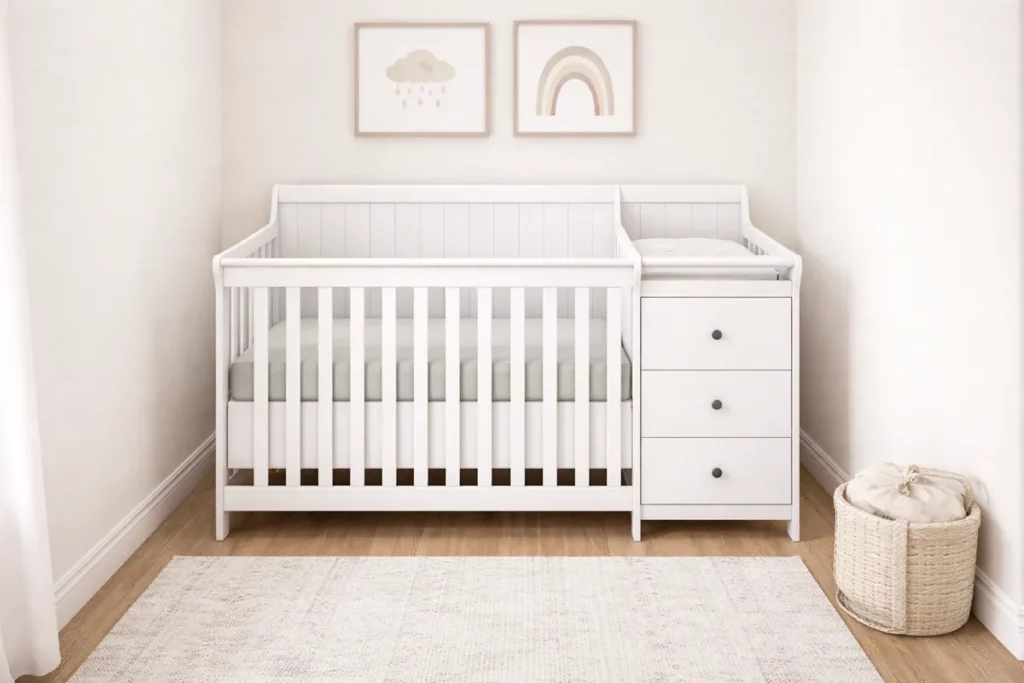
If you’re trying to fit a crib, changing table, and storage into a small nursery, you’ve probably realized — it’s not as simple as it sounds.
That’s exactly where a mini crib with a changing table (also called a mini combo crib) starts to sound like the perfect solution. It combines a crib, a changing area, and storage into one compact piece of furniture, all in a smaller footprint than a full-size setup.
And on paper, it really does sound like the answer.
But here’s what I’ve learned after comparing models and looking at how families actually use them: saving space often comes at the cost of how long and how comfortably you can use the crib.
Mini combo cribs can absolutely make sense, but only if you understand the trade-offs upfront. And those trade-offs are easy to miss when you’re focused on saving space.
- What Is a Mini Crib With a Changing Table?
- Mini Combo Crib vs Full-Size Combo Crib
- Why Mini Combo Cribs Are Usually a Short-Term Solution
- The Biggest Limitation of Mini Cribs With a Changing Table
- So… Is a Mini Combo Crib Worth It?
- Mini Combo Crib Alternatives Most Parents Don’t Consider
- Mattress Size and Compatibility
- Who This Actually Makes Sense For
- When It’s Probably Not the Best Choice
- FAQ: Mini Crib With a Changing Table
- Final Verdict
What Is a Mini Crib With a Changing Table?
A mini crib with a changing table is a compact baby crib with an attached changing station, usually on the right side. Most models also include built-in storage, such as drawers or shelves.
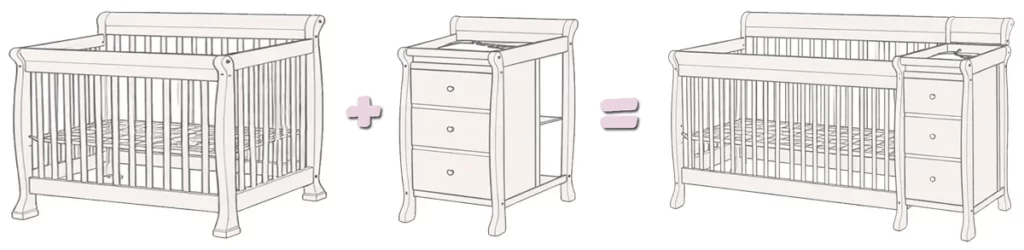
Mini Crib + Changer + Storage = Mini Combo Crib
The key difference from a full-size combo crib is size. The sleeping area is smaller, and the changing table is more compact, which directly affects how long you can realistically use it.
Mini Combo Crib vs Full-Size Combo Crib
| Mini Combo Crib | Full-Size Combo Crib | |
|---|---|---|
| Footprint | Smaller overall | Larger overall |
| Mattress | Mini crib mattress (~38″ x 24″), not fully standardized | Standard crib mattress (52 ⅜″ x 28″), regulated |
| Crib usability | ~12–24 months | ~2–3+ years |
| Convertibility | Daybed, sometimes twin bed | Toddler bed, daybed, full-size bed |
💡 Important insight most parents miss: Even when mini cribs convert, the sleeping space doesn’t get bigger, which limits how long your child can realistically use it.
Facts: Mini vs Full-Size Combo Setup
- A mini combo crib saves space upfront
- A full-size combo crib typically lasts twice as long (or more)
- Many families end up replacing a mini crib sooner than they expect
Why Mini Combo Cribs Are Usually a Short-Term Solution
Mini combo cribs are designed to save space — and they do that well. But that same compact size is also their biggest limitation.
In real life, this usually means your baby outgrows the crib sooner (often within 12–24 months), the changing area starts to feel cramped, and the overall setup doesn’t last as long as many parents expect.
For most families, this ends up being a short-term solution rather than a long-term investment. In smaller apartments especially, I’ve seen parents start with a mini setup and switch to a full-size crib much sooner than planned.
The Biggest Limitation of Mini Cribs With a Changing Table
On paper, conversion sounds like a huge advantage. But here’s the reality: if we set aside the twin bed conversion for a moment, mini combo cribs convert without increasing the actual sleeping space.
This becomes clearer when you look at how these conversions work in everyday use.
A daybed is essentially the same size as the crib — just with one side removed. The same applies to most toddler bed setups, which still use the same compact mattress and frame.
In many cases, a “toddler bed” doesn’t even include a proper safety rail. Instead, it simply means removing the front panel and lowering the mattress — very similar to a daybed in practice.
Because of this, these early conversions don’t significantly extend how long the crib can be used
Twin Bed Conversion:
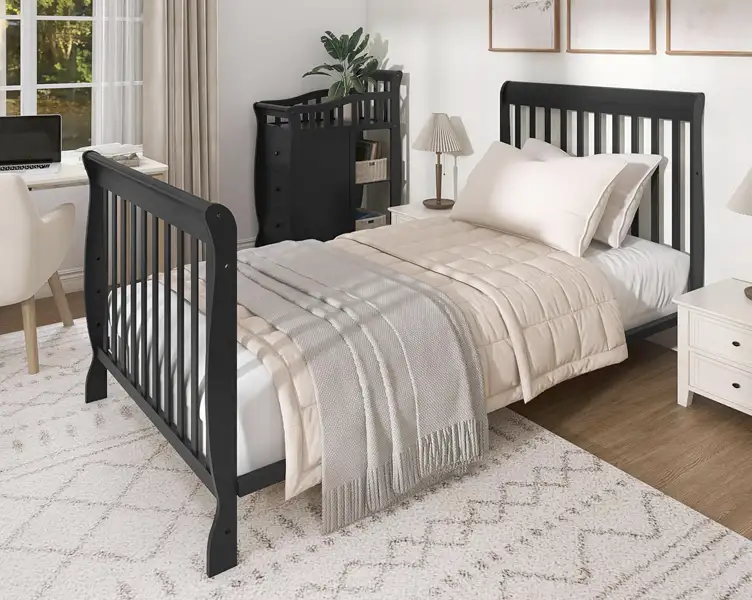
Twin bed conversion can extend usability for years, but it’s important to understand that this is a separate setup used later on.
In most cases:
- You’ll need to buy a separate bed frame or conversion kit
- Only parts of the original crib are reused
So… Is a Mini Combo Crib Worth It?
If your main goal is to save space and you don’t expect to use the crib beyond the first year or two, a mini combo crib can be a very practical choice.
But if you’re looking for something that will last through the toddler years, especially if you plan to use a toddler bed or daybed until age 3–5, a full-size crib is usually the better long-term investment.
Mini Combo Crib Alternatives Most Parents Don’t Consider
A mini combo crib isn’t always the most space-efficient option in real life.
Before you decide, it’s worth looking at a few alternative setups. Many parents assume that combining everything into one unit saves the most space — but in practice, how you arrange the room often matters just as much as what you buy.
Option Comparison (Real Measurements)
To keep things realistic, here’s a side-by-side comparison of popular Dream On Me cribs and changing tables.
Cribs
| Dream On Me | Jayden | Edgewood | Jett | Quinn | Synergy |
|---|---|---|---|---|---|
| Type | Mini Combo Crib | 4-in-1 Mini Convertible | Mini Portable Folding | Full-Size Folding | 5-in-1 Full-Size Convertible |
| L (inch) | 56,75 | 39 | 38 | 53 | 53 |
| W (inch) | 29 | 28 | 26 | 31 | 29 |
| H (inch) | 41 | 37 | 36 | 46 | 39 |
| lbs | 64,5 | 40 | 36 | 46 | 35 |
| Changing table | da | / | / | / | / |
| Conversions | crib + daybed + twin-size bed with or without a footboard (+ nightstand) | crib + daybed + twin-size bed with or without a footboard | / | / | crib + toddler bed + daybed/sofa + full-size bed |
| Portability | / | / | folding, on wheels | folding, on wheels | / |
Changing Tables
| Dream On Me | Sleepy Little Sloth | Emily | Ridgefield |
|---|---|---|---|
| L (inch) | 33,75 | 36,5 | 34 |
| W (inch) | 17,75 | 20 | 20 |
| H (inch) | 33,75 | 36,4 | 30 |
If you want to check current prices for the Dream On Me cribs and changers used in this comparison, you can browse these categories:
What These Setups Look Like in Real Space
On paper, many of these options seem very similar. But when you actually map them out in a small nursery, the difference in how they use space becomes much clearer.
Footprint: ~57″ x 29″
Everything is built into one fixed layout (crib + changer + storage), which makes setup simple — but less flexible.
What this means in real life:
- You’re saving space, but you’re also committing to a fixed layout
- The crib is usually placed along one wall (~57″ long)
- The entire setup stays in one position
- Rearranging later is difficult
What it feels like: Compact and organized, but the room ends up built around it.
Best for:
- Very tight nurseries
- Parents who want a simple, all-in-one setup
Footprint:
- Mini crib: ~38″ x 24–26″
- Changing table: ~34–36″ x 18–20″
What this means in real life:
- The total footprint is similar to a mini combo crib — but more flexible
- The crib and changing area don’t have to sit side-by-side
- You can adjust placement based on your routine
- The setup is easier to change over time
What it feels like: The room often feels more open because nothing is “locked together.”
Best for:
- Parents who want flexibility
- Nurseries where layout matters more than furniture size
Footprint: ~38″ x 26″
→ Lightweight + foldable (often with wheels)
What this means in real life:
- Easy to move or reposition as needed
- Can be rolled out of the way or fold down during the day
- Doesn’t anchor the room layout
What it feels like: The room adapts to you — not the other way around.
Works especially well in:
- Shared bedrooms
- Multi-purpose spaces
Footprint: ~52–55″ x 28–31″
→ Not dramatically bigger than a mini combo crib — but much more usable long-term.
What this means in real life:
- You get significantly more sleeping space
- No attached changer extending the footprint
- You decide how to arrange everything
What surprises many parents: Even though the crib is bigger, the room doesn’t always feel more crowded — especially with a minimalist setup.
What you gain:
- A more comfortable sleep space as your baby grows
- A usable toddler bed and daybed later on
- Longer overall use (often 2–3+ years)
Footprint: ~53–54″ x 31″
→ Foldable + wheels
What this means in real life:
- Full-size sleep space with added flexibility
- Can be repositioned when needed
- Doesn’t permanently anchor the room
What it feels like: A great middle ground — comfort of a full-size crib with more layout flexibility.
Best for:
- Parents who want a full-size sleep space
- Small nurseries where flexibility still matters
Mattress Size and Compatibility
Mini cribs aren’t fully standardized, which means the fit can vary more than many parents expect. In fact, safety standards for non-full-size cribs are defined separately, which you can review in the official Federal Register guidelines.
Most mini crib mattresses are roughly:
- 38 inches long
- 24 inches wide
Mini combo cribs usually come with a basic mattress pad. In reality, it’s often quite thin — more of a temporary solution than a truly supportive mattress, which is why many parents end up upgrading pretty quickly.
Since mini cribs aren’t strictly standardized, getting the right mattress size is especially important:
- Check the internal dimensions of your specific crib
- Compare them with the exact measurements of the mattress
👉 If you’re unsure what size you need or how to compare options, I break it down step-by-step in my full guide on crib mattress sizing.
Once your mattress arrives, always test the fit right away. A safe setup means the mattress fits snugly, with no gaps larger than two fingers between the mattress and the crib sides. If you notice any extra space, it’s not safe for sleep.
By this point, you’ve probably noticed a pattern: mini combo cribs work well early on — but they’re not designed to last for years.
Who This Actually Makes Sense For
So, who is a mini combo crib actually a good fit for?
It tends to work best for parents who already know they’re optimizing for space first — and longevity second.
A mini combo crib can make a lot of sense if you:
- Live in a small apartment or shared space
- Need a compact, all-in-one setup
- Want to keep everything (crib + changing area + storage) in one place
- Already plan to transition to a bigger bed within a year or two
In real life, this is exactly how it tends to play out.
One parent I spoke to used the Dream On Me Jayden 4-in-1 mini convertible crib & changer, and for their space, it worked exactly as intended:
“We live in a small apartment, and this was honestly the only way we could fit both a crib and a changing area without the room feeling cramped. I loved having everything in one place, especially during those early months when we were changing diapers constantly.”
They also mentioned that they always planned it as a short-term solution, which made a big difference in how satisfied they were with the purchase.
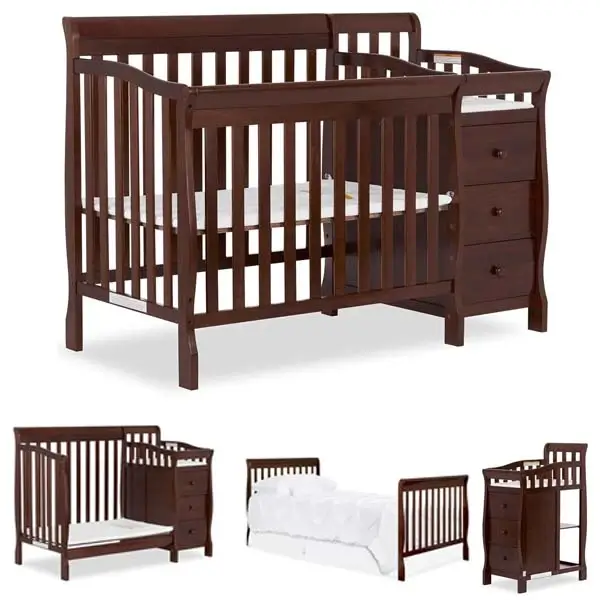
Dream On Me Jayden 4‑in‑1 mini convertible baby crib & changer
When It’s Probably Not the Best Choice
On the flip side, this setup can become limiting pretty quickly if your expectations are different.
Mini combo cribs are usually not ideal if you:
- Want a long-term crib solution that lasts through toddler years
- Prefer a larger, more comfortable changing area
- Don’t want to replace furniture within the first year or two
- Have enough space for a full-size crib
I’ve also seen parents go into this expecting it to last longer — and end up switching sooner than planned.
“We chose a mini combo crib to save space, but by around 18 months, it already felt too small — both for sleeping and diaper changes. The changing table especially became uncomfortable really quickly.”
In that case, they ended up moving to a full-size crib and using a simple dresser with a changing pad on top — a setup they found much more practical for everyday use.
FAQ: Mini Crib With a Changing Table
Final Verdict
So, is a mini crib with a changing table worth it?
It really comes down to what you need right now — not what you hope it will last.
If your priority is saving space and keeping things simple in a smaller nursery, it can be a very practical solution. You get everything in one place, and it works especially well during those early months when convenience matters most.
But the trade-off is real: you’re choosing short-term convenience over long-term usability.
If you already know you’ll be upgrading later and you’re okay with that, a mini combo crib can absolutely be the right choice.
If not, a more flexible setup (like a separate crib and changing area) or a full-size crib will usually give you more value over time, without needing to replace furniture as quickly.
Related Guide:
If you’re still deciding, I’d recommend reading this next: Cribs With Changing Tables (Complete Combo Crib Guide)