
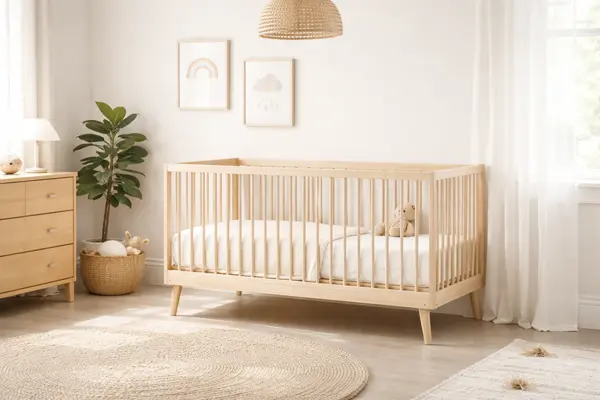
- Why Parents Question the Safety of Scandinavian Cribs
- Do Scandinavian Cribs Meet U.S. Safety Standards?
- Is the Lower Height Safe for Newborns?
- Crib Setup, Airflow, and Everyday Safety
- When a Scandinavian Crib Might NOT Be the Best Choice
- What to Look for in a Scandinavian-Style Crib
- Frequently Asked Questions About Scandinavian Cribs and Newborn Safety
- Final Verdict: Are Scandinavian Cribs Safe for Newborns?
Scandinavian-style cribs have become incredibly popular with modern parents, especially those who love light wood tones, clean lines, and calm, minimalist nurseries. But once the aesthetics fade into the background, a much more important question comes up: Are Scandinavian cribs actually safe for newborns?
The short answer is yes — when you choose the right crib and use it correctly. In this guide, I’ll walk you through what makes a Scandinavian crib safe, what parents tend to worry about most, and when this style might not be the best choice.
If you’re also comparing specific models, you can see our full Scandinavian-style crib guide, where we break down the best options based on safety, features, and everyday use.
Why Parents Question the Safety of Scandinavian Cribs
If you’re expecting your first baby, it’s completely normal to look at Scandinavian cribs a little more closely.
Scandinavian-styled cribs often look:
- Lower to the ground
- More open and airy
- Less bulky than traditional cribs
For some parents, that lighter design raises questions about stability, mattress height, and long-term safety. This is especially common among new parents, who are still learning what really matters for newborn sleep safety.
The good news? Most of these concerns come down to design differences, not safety flaws.
Do Scandinavian Cribs Meet U.S. Safety Standards?
Yes! Any Scandinavian-style crib sold in the U.S. must meet the same safety standards as traditional cribs.
A Scandinavian-style crib sold in the U.S. must meet all current federal crib safety standards, including:
- Fixed sides only (drop-side cribs are banned)
- Proper slat spacing and reinforced slats
- A sturdy mattress support system
- A strong, stable frame that passes durability testing
- Solid headboards and footboards
- Only non-toxic paints and finishes
Many parents also look for JPMA certification, which is a voluntary third-party program that verifies a crib meets CPSC and ASTM standards. While helpful, JPMA certification is not legally required.
Some cribs also carry GREENGUARD or GREENGUARD Gold certification. This is not a safety requirement, but an indoor air quality standard that tests for low chemical and VOC emissions. For newborns, who spend many hours sleeping in the crib, some parents find this additional layer of testing reassuring.
The “Scandinavian” label refers to the style, not a different safety category. From a regulatory standpoint, these cribs are held to the same rules as every other crib on the market.
Is the Lower Height Safe for Newborns?
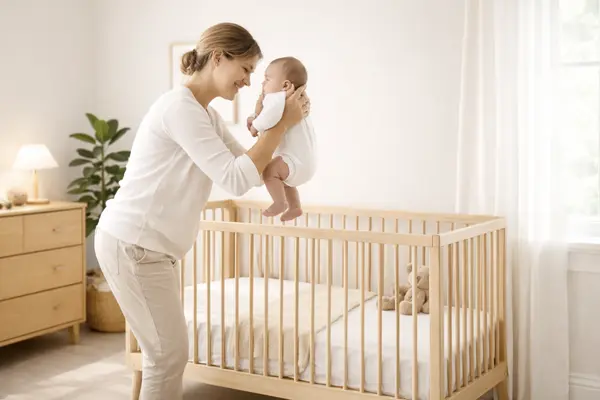
One of the most noticeable features of Scandinavian cribs is that they often sit lower to the ground.
For newborns, this is generally not a safety issue. While babies are placed on the highest mattress setting, they are not mobile yet. More importantly, the lower overall frame does not affect the adjustable mattress height inside the crib — you can read more about why Scandinavian cribs are usually lower to the ground here.
As your baby grows, this becomes even more relevant. A low-profile crib does not allow toddlers to climb out any sooner than a traditional crib. In fact, the lower frame can become a practical benefit, making it easier and safer for parents to lift their baby in and out.
Crib Setup, Airflow, and Everyday Safety
While Scandinavian cribs meet the same safety standards as any other crib, newborn safety also depends on how the crib is set up and used at home. These guidelines apply to all cribs — not just Scandinavian designs.
Scandinavian cribs often feature more open slat designs, which many parents appreciate for airflow and temperature regulation. While airflow alone does not make a crib safer, it can support a more comfortable sleep environment — especially in warmer rooms or well-heated homes.
Just as important is proper setup and day-to-day use. Using a firm, well-fitting mattress, assembling the crib correctly, and following safe sleep practices play a major role in newborn safety, regardless of crib style.
When a Scandinavian Crib Might NOT Be the Best Choice
While Scandinavian cribs are safe for newborns, there are situations where another style may be a better personal fit.
You may want to reconsider if:
- You prefer very high crib sides
- You want a heavier, more traditional solid-wood feel
- You’re uncomfortable with minimalist furniture in general
These are personal comfort preferences, not safety requirements. However, they still matter when you’re caring for a newborn.
What to Look for in a Scandinavian-Style Crib
Not all Scandinavian-style cribs are the same. While they all must meet U.S. safety standards, they can differ significantly in materials, mattress adjustability, and how long they grow with your child. When shopping, check:
- Number of mattress height settings
- Overall sturdiness and materials used
- Whether the crib converts to a toddler bed, daybed, or full-size bed
- Availability of toddler safety rails
- Long-term parent feedback on everyday use
Budget-friendly options like the Dream On Me Hygge, as well as mid-range models like the Babyletto Hudson, are commonly chosen by parents who want Scandinavian design with different feature sets and long-term use options.
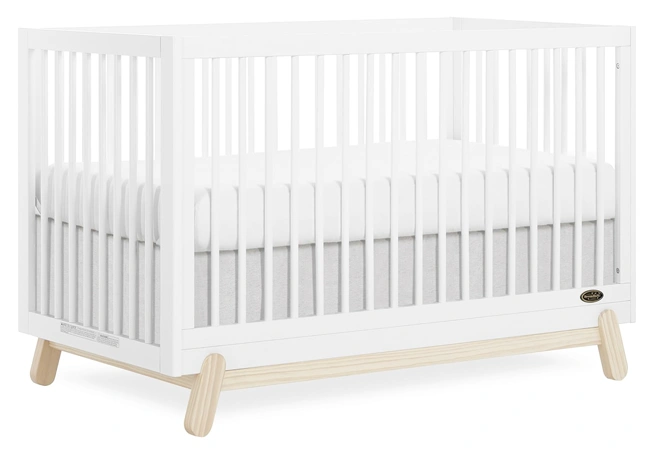
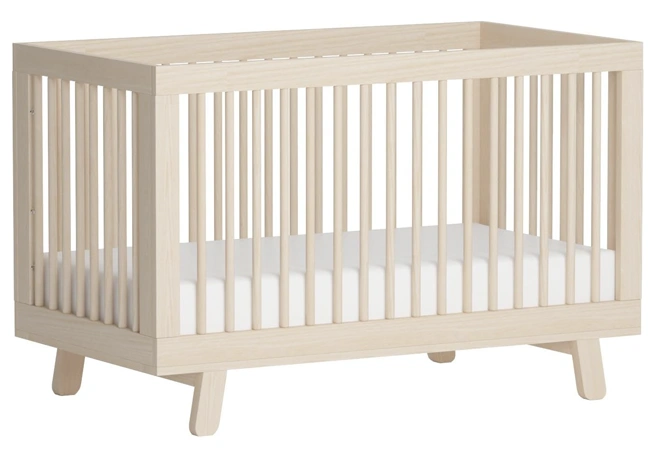
For a side-by-side breakdown of these and other popular models, see our 7 Best Scandinavian-Style Cribs, where we compare materials, adjustability, and long-term value.
Frequently Asked Questions About Scandinavian Cribs and Newborn Safety
Final Verdict: Are Scandinavian Cribs Safe for Newborns?
Yes — Scandinavian cribs are safe for newborns when they meet U.S. safety standards and are set up correctly.
Their lighter, minimalist appearance can be misleading, but structurally and legally, they follow the same safety framework as traditional crib designs. For many families, they strike an excellent balance between safety, functionality, and a calm nursery aesthetic.
If you’re drawn to Scandinavian design and want a crib that works from day one, you can feel confident choosing this style — just focus on safety standards, mattress fit, and proper setup, not appearance alone.