
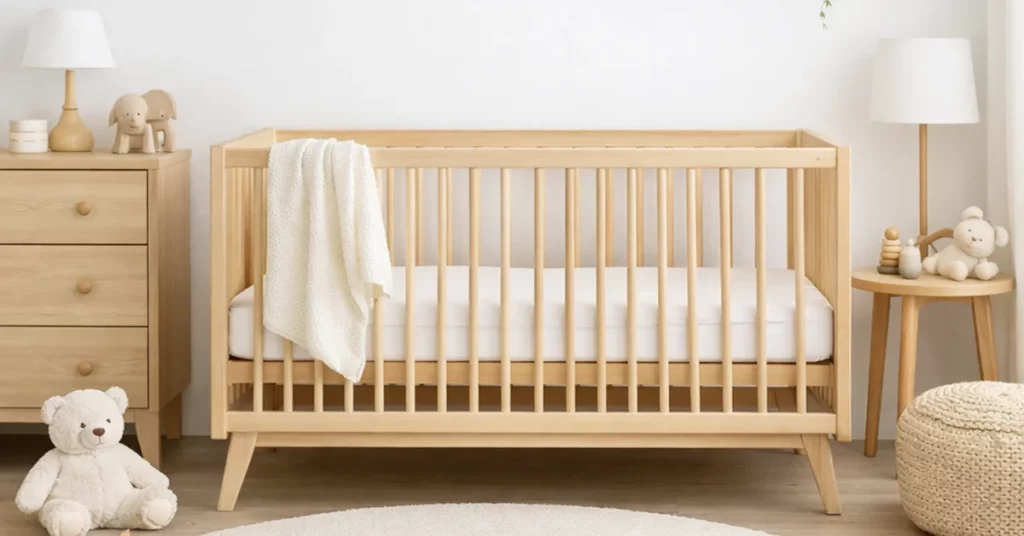
Scandinavian-style cribs are everywhere right now — from Pinterest nurseries and Instagram feeds, to modern baby stores and influencer homes. If you’ve spent any time looking for nursery inspiration online, you’ve probably seen the same light wood cribs pop up again and again. I can see why. Their clean lines, light wood tones, and minimalist feel make them instantly appealing.
But there’s also a common hesitation many parents share: Scandinavian cribs often cost more than traditional crib styles. So the real question becomes: Are Scandinavian cribs actually worth the price, or are you mostly paying for a trend?
The honest answer? It depends on what you value most as a parent — and how you actually plan to use the crib day to day. In this article, I’ll walk you through what you’re really paying for, when the higher price makes sense, when it doesn’t, and how to decide what’s right for your home — not just what looks good online.
- Why Scandinavian Cribs Often Cost More
- What You’re Actually Paying For (Beyond Looks)
- “True” Scandinavian Cribs vs. Scandinavian-Style Options
- When Scandinavian Cribs Are Worth the Price
- When They Might NOT Be Worth It
- Budget-Friendly Scandinavian Alternatives
- A Quick Reality Check About Trends
- The Real Question to Ask Yourself
- Bottom Line
This guide is especially helpful if you’re torn between choosing a Scandinavian-style crib and a more traditional option, and you want to make a decision based on real-life use — not just looks.
Why Scandinavian Cribs Often Cost More
At first glance, Scandinavian cribs can feel overpriced, especially when you compare them to basic, mass-market cribs that meet the same safety standards. But there are a few consistent reasons these cribs tend to sit in the mid-range to premium price category.
1. Design and Materials:
Scandinavian cribs typically focus on clean, timeless design, light or natural wood finishes, and visible legs with open, airy frames. In many cases, these cribs are made from hardwood, such as beech or oak, rather than softer woods or composite materials. Hardwood is more expensive to source and work with, which naturally raises the overall cost. However, it also tends to hold up better over years of daily use.
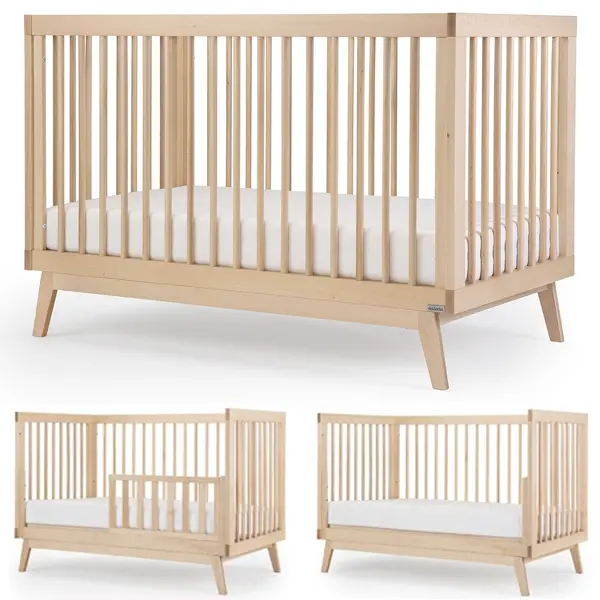
The Dadada Soho 3-in-1 convertible crib, handcrafted from solid beechwood and made in Italy, is a good example of this higher-end Scandinavian approach.
Even when the materials themselves aren’t luxury-grade, Scandinavian designs often require more refined finishes and tighter construction details than traditional, heavier crib styles. You’re paying not just for wood and hardware, but for intentional design and cleaner execution.
Some Scandinavian brands also manufacture their cribs in Europe or follow European-style production standards, which can further increase prices due to higher labor and manufacturing costs. That said, not every Scandinavian-style crib is made in Europe — and not every higher price tag guarantees premium materials, which is why it’s important to look beyond marketing labels.
2. Smaller-Scale Manufacturing
Many Scandinavian brands produce fewer models and color variations. Smaller production runs usually mean fewer bulk manufacturing savings, more hands-on quality control, and slightly higher per-unit costs.
In other words, the price often reflects design focus and consistency rather than mass production.
What You’re Actually Paying For (Beyond Looks)
For many parents, the value of a Scandinavian crib goes beyond visual appeal.
1. Everyday Practical Benefits
In real-world use, Scandinavian-style cribs tend to feel less bulky in smaller nurseries or shared rooms. They are also easier to reach into thanks to lower profiles and help create a calmer, less cluttered visual environment.
These subtle design choices can make daily routines easier — like lifting a sleeping baby without bumping into bulky rails, or moving around a small nursery without feeling cramped.
2. Longevity of Style
Unlike trend-heavy nursery furniture, Scandinavian cribs tend to age well. Many parents appreciate that the crib doesn’t feel outdated after a year or clash with the rest of their home.
With convertible models, this longevity goes a step further: once the crib phase ends, the piece is often converted into a toddler bed or even a small sofa or daybed, allowing it to remain a functional and visual part of the room rather than something that needs to be stored or replaced.
“True” Scandinavian Cribs vs. Scandinavian-Style Options
It’s also important to make a clear distinction here.
Truly Scandinavian cribs, especially those designed and manufactured by European brands using solid wood and premium finishes, often do come with a higher price tag. In these cases, you’re paying for craftsmanship, materials, and smaller-scale production.
At the same time, many Scandinavian-style cribs offer a very similar look and everyday functionality at much more accessible prices. These cribs are inspired by Scandinavian design principles but produced by larger, budget-friendly brands.
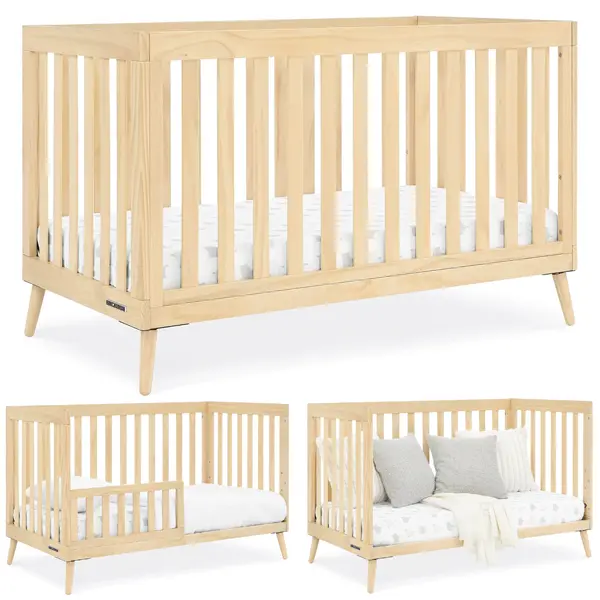
Delta Children Essex 4-in-1 convertible crib, a great Scandinavian-inspired option for an affordable price
If you’re trying to decide which approach makes the most sense for your budget and needs, I’ve put together a detailed comparison of the best options available right now. In my guide to 7 Best Scandinavian-Style Cribs for 2026, I break down which models truly deliver Scandinavian design principles — and which ones offer the look at a more accessible price.
When Scandinavian Cribs Are Worth the Price
A Scandinavian crib is usually worth the price if:
- You like simple, clean nursery furniture that doesn’t feel busy
- You have a smaller room or a space that can easily feel visually crowded
- Your home already leans toward a Scandinavian, modern, or minimalist style, and you want the crib to blend in naturally
- You plan to reuse, convert, or resell the crib later
Mid-range options like the Dream On Me Hygge show that you don’t need to spend luxury-level money to get many of these benefits.
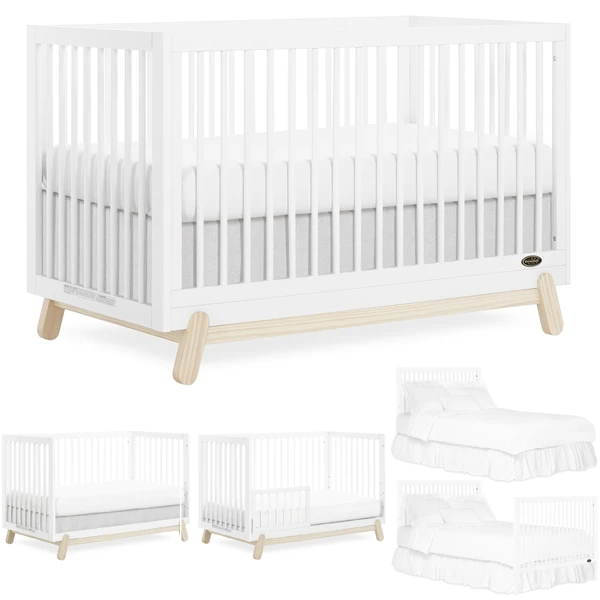
Dream On Me Hygee 5-in-1 convertible crib
When They Might NOT Be Worth It
Despite their popularity, Scandinavian cribs aren’t the best fit for everyone. You may want to look beyond Scandinavian designs if:
- You like a heavier, more traditional furniture style
- Scandinavian design simply isn’t your taste, and you’re naturally drawn to a different aesthetic (classic, farmhouse, vintage, etc.)
- You plan to use the crib for a very short time
In these cases, a well-reviewed crib in a different style can be just as safe, durable, and practical — and feel much more “right” for your home.
Budget-Friendly Scandinavian Alternatives
Not all Scandinavian cribs are expensive. You can find a good value in:
- Simplified designs with fewer finish options
- Brands that focus on functionality over luxury
- Cribs that offer the look without premium add-ons
The Dream On Me Hygge crib is a good example of a budget-conscious Scandinavian option, while models like the Babyletto Hudson sit in the mid-range with more refined finishes.
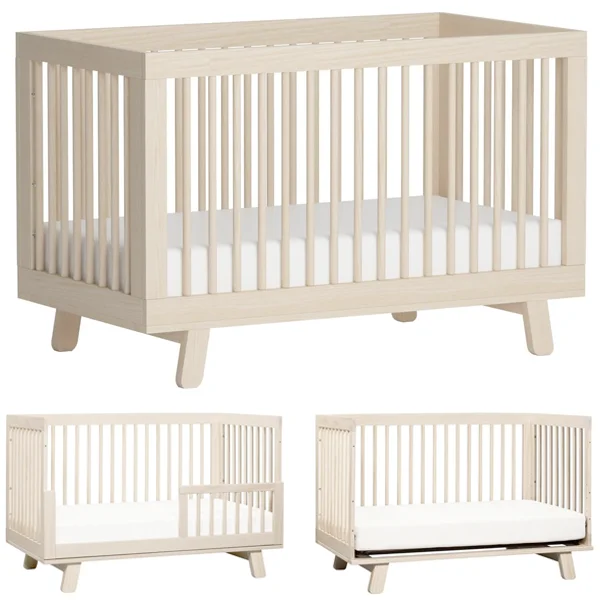
Babyletto Hudson 3-in-1 convertible crib
If you’re drawn to the Scandinavian aesthetic but don’t want to overspend, I’ve rounded up some of the best options available right now. In my guide to the 7 Best Scandinavian-Style Cribs for 2026, I compare cribs across different price points — from budget-friendly picks to more refined mid-range models — to help you find one that fits both your space and your budget.
A Quick Reality Check About Trends
An honest note: Scandinavian cribs are very much a trend right now — something that’s easy to overlook when you’re scrolling Pinterest late at night.
Between Instagram, Pinterest, and influencer nurseries, it’s easy to get pulled toward a style simply because you see it everywhere. If you’re considering a Scandinavian crib mainly because it’s popular, rather than because you genuinely love the look, it may be worth slowing down and exploring other styles as well.
At the end of the day, you’re the one who’ll see this crib every single day, long after a couple of nice Instagram posts are forgotten. A nursery that feels right to you will always matter more than following the latest trend.
The Real Question to Ask Yourself
Instead of asking “Is this crib worth the price?”, a better question is: “Will this crib make everyday life easier or more enjoyable for our family?”
If the answer is yes, whether because of space, design, or personal preference, then the higher price can be justified. If not, there’s no guilt in choosing some other option.
Scandinavian cribs aren’t automatically better than traditional cribs, but they do offer a thoughtful balance of design, practicality, and long-term appeal.
Bottom Line
Scandinavian cribs make sense for parents who value calm spaces, lighter visual design, and furniture that blends naturally into the rest of the home. In those cases, the higher price often feels justified over time.
For families who prefer a more traditional look, want the most affordable option, or simply don’t connect with Scandinavian design, there’s no disadvantage in choosing a different style. Safety and functionality don’t depend on aesthetics.
Social media can strongly influence what we think we should like. But the crib you’ll live with every day matters far more than a few trendy photos online. The best choice is the one that genuinely fits your space, your taste, and how you live as a family.