
Why light wood looks beautiful, what kind of wear to expect, and how to care for your natural wooden crib with confidence.
Light wood cribs are stunning and serene, but how do they hold up once real life with a baby begins?
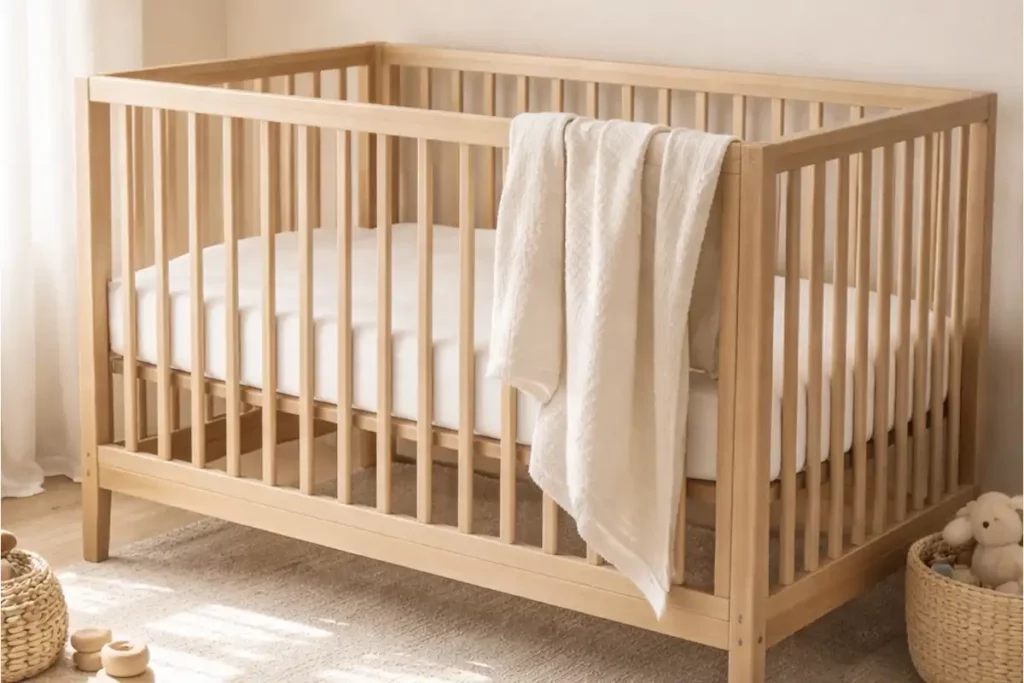
When I first fell in love with a light wood crib, I’ll be honest — I also hesitated.
It looked beautiful in photos. Calm. Airy. The kind of crib you see in thoughtfully styled nurseries. But a part of me kept wondering what it would look like after a few months of real life: late nights, teething, toys bumping into the rails, and all the little moments that don’t make it onto Pinterest.
Parents often ask whether light wood cribs scratch or stain more easily than darker finishes, especially once real life with a baby begins. It’s a fair concern, and one worth answering honestly.
Why Light Wood Cribs Appear to Show Wear More Easily
Light wood doesn’t wear out faster than darker finishes. It just doesn’t hide everyday use as quietly.
Compared to painted or darker wood cribs, light wood finishes don’t hide everyday marks as easily — but the tradeoff is a more natural, softer look as the crib ages.
On lighter finishes, small surface marks tend to catch the eye sooner. Scratches create more contrast against pale wood, and natural grain patterns reflect light in a way that makes tiny imperfections easier to notice. The same marks might exist on a darker crib — you just wouldn’t see them as quickly.
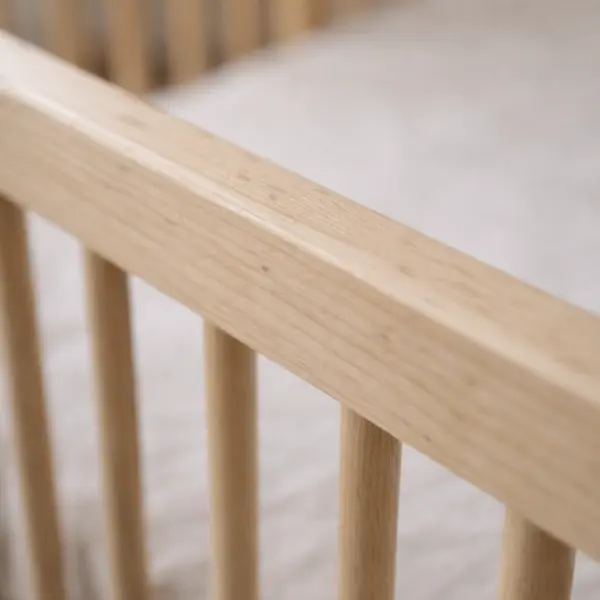
This is especially true for Scandinavian-style cribs, where simplicity, natural materials, and light finishes are part of the design philosophy.
Common Causes of Scratches & Marks
Before I became a parent, I used to notice every tiny mark on furniture. After having a baby, I noticed something else instead — how quickly a crib becomes part of daily life.
Most marks don’t come from poor quality. They come from normal, everyday moments, like:
- Little hands gripping and pulling up on the rails
- Teething babies are discovering that the crib edge is very chewable
- Toys knocking against the sides during playtime
- Buttons, zippers, or belt buckles brushing the wood during diaper changes
None of this means the crib isn’t well-made. It just means it’s being used. And remember, nursery isn’t a showroom, it’s a space where real life happens, often at 3 a.m.
What About Stains on Light Wood Cribs?
Most light wood cribs are finished with sealed, non-toxic coatings that protect the surface. If you wipe up spills quickly with a soft, damp cloth, stains usually don’t have time to set in.
More noticeable discoloration almost always comes from moisture sitting on the wood for too long. That’s not unique to light finishes — any wooden furniture can struggle with prolonged exposure, whether it’s light or dark.
Stains are also much less common than surface scratches. When they do happen, they’re usually caused by everyday baby things like spit-up, drool during teething, milk drips, or the occasional diaper leak.
How to Care for a Light Wood Crib (Without Overthinking It)
You don’t need to baby your baby’s furniture. A little consistency goes a long way.
Here are a few simple tips for caring for a light wood crib:
- Wipe up spills as soon as you notice them using a soft, damp cloth. Quick cleanups prevent moisture from soaking into the finish.
- Skip harsh chemical cleaners or abrasive sponges. They can dull the finish over time and may damage the protective seal that keeps the wood looking good.
- Use crib rail covers during heavy teething phases. They’re inexpensive, easy to remove, and can save the rails from a lot of chewing.
Beyond appearance, basic maintenance also matters for safety. Every few months, it’s a good idea to check that screws and hardware are still secure. This doesn’t prevent scratches, but it does help ensure the crib stays sturdy and safe as your baby becomes more active.
Beyond appearance, it’s also reassuring to know that light wood cribs meet the same safety standards for cribs as any other finish.
As with all cribs sold in the U.S., light wood cribs must meet federal safety standards designed to protect infants during sleep.
And remember, small signs of use are normal. The goal isn’t perfection — it’s a safe, comfortable place for your baby to sleep.
Will Wear Ruin the Look of a Light Wood Crib?
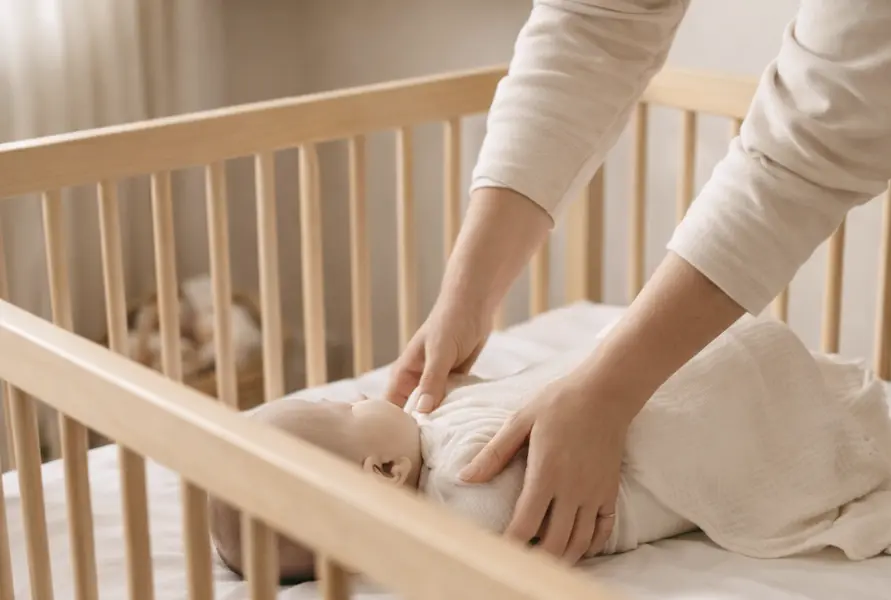
For most parents, it really doesn’t.
Light wood tends to age in a soft, forgiving way. Instead of looking worn out, it usually looks gently lived in. Small marks blend into the grain, especially on simple, minimalist crib designs.
This is especially true for Scandinavian-inspired styles. Because the design is clean and uncluttered, little imperfections don’t stand out as flaws. They just become part of the story — a reminder that the crib has been loved and used.
If You’re Worried About Visible Wear…
That said, a light wood crib isn’t the right emotional fit for everyone. Some parents want their nursery furniture to look brand new for as long as possible — and that’s okay.
A light finish might feel less forgiving if:
- You want a pristine, untouched look year after year
- Every small scratch immediately catches your eye
- You prefer glossy or darker finishes that naturally hide wear
If that sounds like you, a darker wood or painted crib may give you more peace of mind. Just keep in mind that most wear on light wood cribs is cosmetic, not a sign of reduced quality or durability.
Frequently Asked Questions About Light Wood Cribs
Final Thoughts: Are Light Wood Cribs Worth It?
For me, a light wood crib doesn’t feel fragile. It feels real.
It shows life instead of hiding it — the late nights, the teething phases, the tiny hands pulling up for the first time. And if you’re deciding whether a light wood crib is worth the investment, understanding how it holds up in everyday life can make that choice feel much easier.
Not because it stays flawless, but because it holds up where it matters most.