
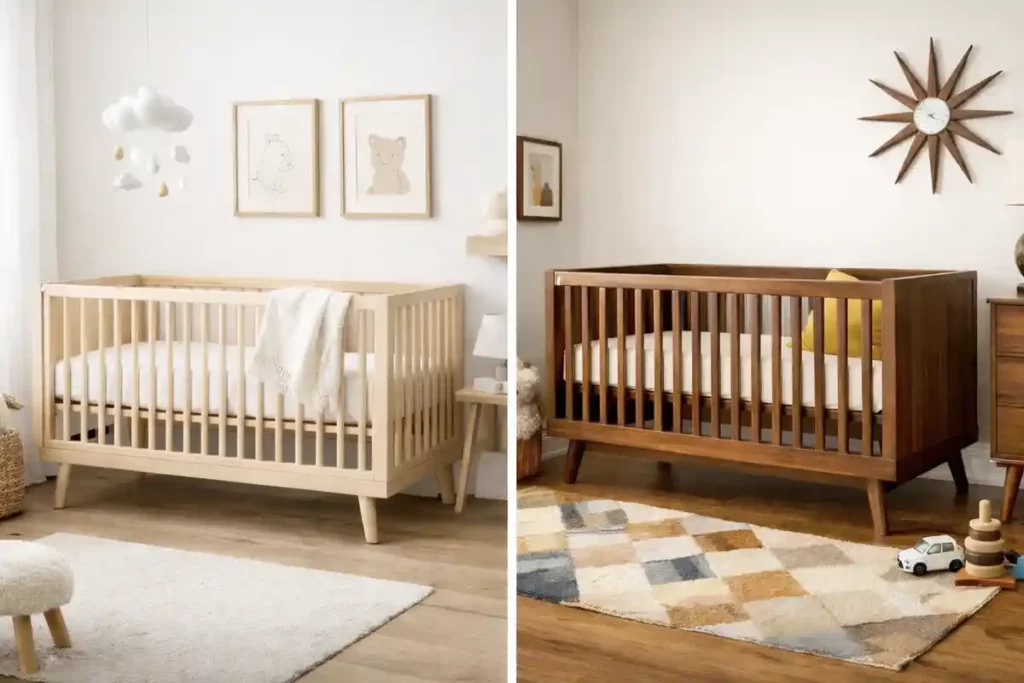
Scandinavian and mid-century modern cribs often get lumped together. Both are considered “modern,” both show up in stylish nurseries, and both usually cost more than traditional cribs.
But when you’re actually living with a crib, feeding a newborn at 2 a.m., handling a small room, or thinking ahead to the toddler stage, the differences between these two styles become hard to ignore.
I’ve put together a practical comparison to help you figure out which style works best for your home and lifestyle.
- Design Philosophy: Calm vs Statement
- How Each Style Feels in a Real Nursery
- Space Considerations
- Durability and Long-Term Use
- Transitioning Beyond the Baby Stage
- Which Style Is Easier to Live With?
- Frequently Asked Questions About Scandinavian and Mid‑Century Modern Cribs
- Final Thoughts: Which One Is Better for Families?
Design Philosophy: Calm vs Statement
This one difference makes a big impact. Scandinavian design is all about calm, light, and practical furniture — qualities that many parents look for when choosing from the best Scandinavian-style cribs for everyday family life. In contrast, mid-century modern design often uses bold shapes, tapered legs, darker or warmer wood, and stands out more in a room.
Neither style is wrong; they just suit different needs.
Scandinavian cribs are designed to blend in.
Mid-century modern cribs are designed to stand out.
If you want to understand the key differences between Scandinavian and Mid-Century Modern furniture in general, you can check this helpful guide.
How Each Style Feels in a Real Nursery
Beyond design theory, the biggest differences show up once the crib is actually in your home. Space, light, and daily routines all affect how each style feels when you’re living with it.
Scandinavian Cribs in Everyday Use
Scandinavian cribs are usually:
- Visually light
- Easy to pair with other furniture
- Less overwhelming in small or shared spaces
They’re especially popular in apartments, master bedrooms, and minimalist homes. A well-known example of this approach is the Babyletto Hudson crib, which combines clean lines and a light visual feel — a big reason it’s often chosen for smaller rooms and shared spaces.
“We chose a Scandinavian-style crib because our bedroom is small, and I didn’t want the crib to feel like it took over the whole space. It just blends in, which actually made the room feel calmer.” — parent feedback
Mid-Century Modern Cribs in Everyday Use
Mid-century cribs tend to feel:
- Heavier and more furniture-like
- More visually dominant
- Like a centerpiece of the room
This look works well in a dedicated nursery with lots of space.
“Our mid-century crib is beautiful, but it definitely became the focal point of the nursery. That worked for us because the room was designed around it.” — parent feedback
Space Considerations
Space is actually more important than style. Even if the cribs are the same size on paper, how they feel in the room can make a noticeable difference.
When I looked at how different crib styles worked in real homes, the biggest differences weren’t in measurements, but in how heavy or light the crib felt once it was actually in the room.
Scandinavian cribs:
- Often have open legs
- Leave visible space underneath
- Look and feel less bulky
Mid-century modern cribs:
- Often sit lower and more solid
- Use thicker slats or panels
- Can make a small room look even smaller
If you’re short on space, Scandinavian cribs usually feel easier to fit in. From comparing cribs in real homes and reviewing long-term parent feedback, this sense of “visual weight” comes up again and again—especially in apartments and shared bedrooms, where even subtle design differences affect how spacious a room feels day to day.
Durability and Long-Term Use
Both Scandinavian and mid-century modern cribs can last for years. How well they hold up depends more on build quality, materials, and construction than on the design style itself.
That said, some long-term differences do come up in everyday use.
Scandinavian cribs tend to age more quietly. Their simple lines and lighter finishes don’t draw attention to wear as quickly, and small scratches or scuffs are less noticeable over time.
Mid-century modern cribs often use richer wood tones and bolder shapes. While they can feel very solid and well-made, signs of wear may stand out more. Mid-century cribs can also feel dated if trends shift.
When price is similar, many parents feel Scandinavian cribs offer better long-term value because they adapt more easily as the child grows and remain visually relevant longer.
For families thinking several years ahead — not just through the baby stage — this quiet durability and flexibility often matters more than standout design.
Transitioning Beyond the Baby Stage
Many families don’t consider this at first, but it becomes important later on.
Scandinavian cribs often:
- Convert smoothly into toddler beds
- Blend into older-child rooms
- Feel less “nursery-specific”
Mid-century cribs:
- Can look beautiful converted
- But their bold style might not fit every room
It really depends on whether you want furniture that blends in or something that stands out.
Some parents mention that while they loved the mid-century look during the baby stage, it required more effort to restyle the room later so the furniture didn’t feel out of place. Scandinavian designs tend to need fewer visual adjustments as children grow.
Which Style Is Easier to Live With?
If you’re thinking just about practicality:
Scandinavian cribs tend to win if you:
- Value calm over bold design
- Have limited space
- Want flexibility long-term
- Prefer nursery furniture that doesn’t take over the whole room
Mid-century modern cribs may be better if you:
- Love statement furniture
- Have a large, dedicated nursery
- Want a strong design identity
Frequently Asked Questions About Scandinavian and Mid‑Century Modern Cribs
Final Thoughts: Which One Is Better for Families?
Neither Scandinavian nor mid-century modern cribs are objectively “better.” But they do serve different kinds of homes and priorities.
Scandinavian cribs tend to be easier to live with day to day. They’re visually calm, adaptable to small spaces, and flexible as your child grows. For many families, that quiet practicality ends up mattering more than making a design statement.
Mid-century modern cribs shine when style is a priority and space isn’t a limitation. In a large, dedicated nursery, they can become a beautiful focal point and set the tone for the entire room.
If you want a crib you’ll notice every day, mid-century modern may be the right choice. However, if you want a crib that quietly fits into your life — and keeps fitting as your family changes — Scandinavian design is often the safer long-term option.