
Design Features Parents Should Know
“Scandinavian-style crib” is a term you’ll see everywhere — but what does it actually mean?
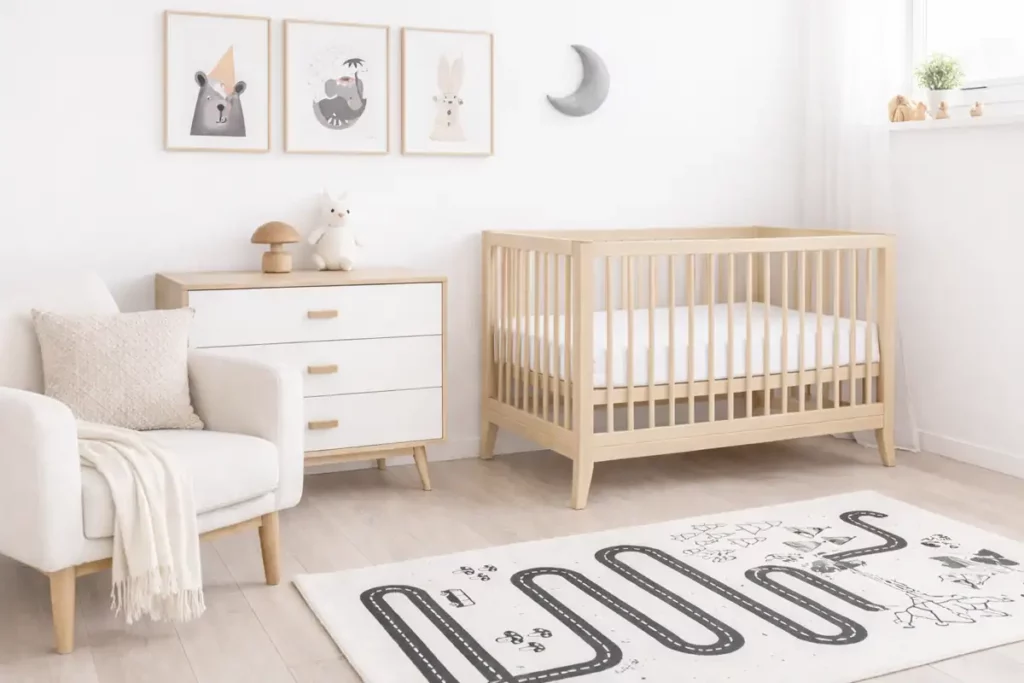
Not every crib with angled legs or light wood truly fits Scandinavian design principles. And for parents trying to choose nursery furniture, understanding the difference can help you avoid paying extra just for a label.
For many parents, Scandinavian-style cribs aren’t just about looks — they’re about choosing furniture that feels calm, practical, and still fits the home years later.
If you’re also comparing specific models, you can explore our guide to the best Scandinavian-style cribs, where we break down real-world use, materials, and long-term value.
Let’s see what really makes a crib Scandinavian in style and what doesn’t.
- The Roots of Scandinavian Design
- Design Features of Scandinavian-Style Cribs
- What Is NOT Truly Scandinavian Style (Common Confusion)
- Why Parents Are Drawn to Scandinavian Cribs
- Scandinavian Style vs. Traditional Cribs
- Does Scandinavian Design Affect Safety?
- Frequently Asked Questions About Scandinavian-Style Cribs
- Final Thoughts: Is Scandinavian Style Right for You?
The Roots of Scandinavian Design
Scandinavian design originates from Nordic countries such as Sweden, Denmark, and Norway. At its core, it focuses on creating functional, calm living environments that feel intentional rather than decorative.
Key principles include:
- Function over decoration
- Calm, uncluttered spaces
- Natural materials
- Timeless design choices
Globally, brands like IKEA helped popularize Scandinavian design by making minimalist, functional furniture accessible to a wider audience. While IKEA doesn’t define Scandinavian design on its own, it introduced many families to its core ideas — simplicity, practicality, and light, livable spaces.
In baby furniture, this philosophy translates into cribs that feel thoughtfully designed, visually quiet, and easy to live with long after the newborn stage.
Design Features of Scandinavian-Style Cribs
While Scandinavian cribs can look slightly different depending on the brand, most share a set of recognizable design traits. These features focus on visual lightness, practicality, and long-term usability rather than decorative details.
1. Clean, Minimal Lines
Scandinavian cribs avoid ornate details. You’ll rarely see:
- Carved panels
- Decorative moldings
- Oversized headboards
Instead, the focus is on straight lines and balanced proportions that don’t visually overwhelm the room.
2. Light or Natural Wood Tones
Most Scandinavian cribs use:
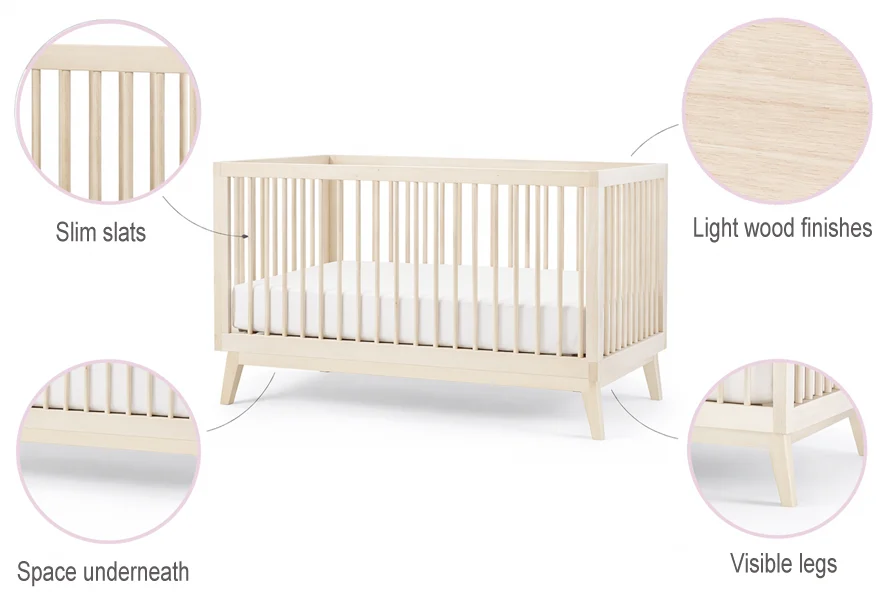
- Light wood finishes
- Soft neutrals
- Matte or satin coatings
These tones reflect light and help nurseries feel more open and calm — especially important in smaller spaces or shared bedrooms.
Many Scandinavian-style cribs use light or natural wood finishes, which leads some parents to wonder how light wood cribs hold up over time. While lighter finishes can make everyday marks more noticeable, they’re chosen intentionally for their warmth, softness, and ability to age naturally rather than look dated.
A good example of Scandinavian-inspired design is the Dream On Me Hygge crib. While it’s available in multiple finishes, the lighter wood or white options best reflect classic Scandinavian design principles.
3. Open Frames and Visible Legs
A defining feature is the open-leg design. Many Scandinavian cribs:
- Sit on visible legs
- Leave space underneath
- Feel elevated rather than boxy
This creates a lighter visual footprint, even when the crib is full-size.
4. Slim Slats and Balanced Spacing
Slats in Scandinavian cribs tend to be:
- Narrow
- Evenly spaced
- Visually understated
While the slats on Scandinavian-style cribs may appear slimmer, they are held to the same safety standards as any other crib. Spacing must still meet strict regulations to ensure a safe sleep environment. For a closer look at what proper spacing involves, you can read our full guide to crib slat safety.
5. Lower Visual Profile
Many Scandinavian cribs appear lower to the ground than traditional designs. This doesn’t affect safety — mattress height inside the crib remains adjustable — but it changes how the crib feels in the room.
Parents often find these cribs easier to integrate into shared spaces or master bedrooms.
What Is NOT Truly Scandinavian Style (Common Confusion)
Not every “modern” crib is Scandinavian.
A crib may not be truly Scandinavian if it:
- Has chunky panels or heavy headboards
- Uses dark, glossy finishes
- Feels overly decorative or trendy
- Focuses on style over function
Angled legs alone don’t make a crib Scandinavian.
Why Parents Are Drawn to Scandinavian Cribs
Beyond looks, parents often choose Scandinavian-style cribs because they:
- Blend into the home long-term
- Feel calmer and less cluttered
- Transition well as baby grows
- Don’t scream “nursery furniture”
This makes them especially popular for families who value design continuity.
Scandinavian Style vs. Traditional Cribs
| Feature | Scandinavian Cribs | Traditional Cribs |
|---|---|---|
| Overall look | Light, minimal, airy | Heavier, more decorative |
| Frame design | Slim frames, visible legs | Solid frames, enclosed base |
| Visual impact | Blends into the home | Stands out as nursery furniture |
| Design focus | Function + simplicity | Classic furniture styling |
| Long-term fit in the home | Ages better | More nursery-specific |
Neither is better — it simply depends on your space and preferences.
Does Scandinavian Design Affect Safety?
No. Scandinavian design affects how a crib looks and feels in a space, but it does not change safety requirements.
All cribs sold in the U.S. must meet current safety standards set by the Consumer Product Safety Commission (CPSC), regardless of style or design aesthetic.
What matters most for crib safety is:
- Proper mattress fit
- Correct assembly
- Following safe sleep guidelines
Regardless of design style, parents should always verify that a crib meets current CPSC safety standards and is appropriate for their child’s age and development. Design choices influence appearance — not safety compliance.
Parents with newborns often have additional questions about mattress height, slat spacing, and safe sleep guidelines, which we cover in more detail in our guide to Scandinavian crib safety for newborns.
Frequently Asked Questions About Scandinavian-Style Cribs
Final Thoughts: Is Scandinavian Style Right for You?
Scandinavian-style cribs tend to work best for families who value calm, uncluttered spaces and furniture that blends naturally into the home. They’re especially appealing in smaller nurseries or shared bedrooms, where visual lightness matters just as much as function.
If you’re drawn to timeless design and practical details over ornate styling, Scandinavian design may feel like a natural fit. And if you love more traditional furniture, that’s perfectly valid too — the best crib is always the one that works for your space and lifestyle.